


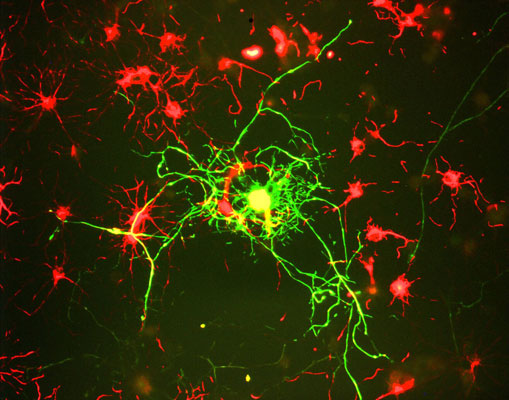

Anti-NEFM antibody (C-Term) [3H11] (STJA0003701)
SPECIFICATIONS
ClonalityMonoclonal
HostMouse
ConjugationUnconjugated
IsotypeIgG1
ImmunogenPreparation containing the extreme C-terminus expressed in and purification from E. Coli.
General Information
| Short Description | Mouse monoclonal anti-NEFM/NF-M (C-Term) for use in WB, IHC and ICC in Bovine, Chicken, Human, Mouse and Rat samples. Datasheet included with dilution recommendations, and related reagents. |
| Applications | WB/IHC/ICC |
| Host | Mouse |
| Reactivity | Bovine/Chicken/Human/Mouse/Rat |
| Note | STRICTLY FOR FURTHER SCIENTIFIC RESEARCH USE ONLY (RUO). MUST NOT TO BE USED IN DIAGNOSTIC OR THERAPEUTIC APPLICATIONS. |
Product Properties
| Clonality | Monoclonal |
| Clone ID | 3H11 |
| Isotype | IgG1 |
| Conjugation | Unconjugated |
| Purification | This antibody was protein g purified culture from supernatant. |
| Dilution Range | WB 1:1000IHC 1:500-1:5000ICC 1:100-1:500 |
| Formulation | 100 ul in PBS + 10 mM Sodium Azide. |
| Storage Instruction | Store at-20°C for up to 1 year from the date of receipt, and avoid repeat freeze-thaw cycles. |
Target Information
| Gene Symbol | Nefm |
| Gene ID | 24588 |
| Uniprot ID | NFM_RAT |
| Immunogen | Preparation containing the extreme C-terminus expressed in and purification from E. Coli. |
| Immunogen Region | C-Term |
Additional Info
| Tissue Specificity | Expressed in the dorsal root ganglion neurons (at protein level). |
| Post Translational Modifications | There are a number of repeats of the tripeptide K-S-P, NFM is phosphorylated on a number of the serines in this motif. It is thought that phosphorylation of NFM results in the formation of interfilament cross bridges that are important in the maintenance of axonal caliber. Phosphorylation seems to play a major role in the functioning of the larger neurofilament polypeptides (NF-M and NF-H), the levels of phosphorylation being altered developmentally and coincidentally with a change in the neurofilament function. Phosphorylated in the head and rod regions by the PKC kinase PKN1, leading to the inhibition of polymerization. |
| Function | Neurofilaments usually contain three intermediate filament proteins: NEFL, NEFM, and NEFH which are involved in the maintenance of neuronal caliber. May additionally cooperate with the neuronal intermediate filament proteins PRPH and INA to form neuronal filamentous networks. |
| Protein Name | Neurofilament Medium PolypeptideNf-M160 Kda Neurofilament ProteinNeurofilament 3Neurofilament Triplet M Protein |
| Database Links | |
| Cellular Localisation | CytoplasmCytoskeletonCell ProjectionAxon |
| Alternative Antibody Names | Anti-Neurofilament Medium Polypeptide antibodyAnti-Nf-M antibodyAnti-160 Kda Neurofilament Protein antibodyAnti-Neurofilament 3 antibodyAnti-Neurofilament Triplet M Protein antibodyAnti-Nefm antibodyAnti-Nef3 antibodyAnti-Nfm antibody |
Information sourced from Uniprot.org