




Anti-IGF-1 antibody (49-118aa) [AT6F8] (STJA0041693)
SPECIFICATIONS
ClonalityMonoclonal
HostMouse
ConjugationUnconjugated
IsotypeIgG2bk
ImmunogenRecombinant human IGF1 (49-118aa) purified from E. coli
General Information
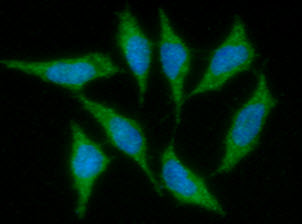
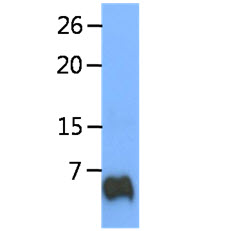
| Short Description | Mouse monoclonal anti-IGF-1 (49-118aa) for use in ELISA, WB, ICC and IF in Human samples. Datasheet included with dilution recommendations, and related reagents. |
| Applications | ELISA/WB/ICC/IF |
| Host | Mouse |
| Reactivity | Human |
| Note | STRICTLY FOR FURTHER SCIENTIFIC RESEARCH USE ONLY (RUO). MUST NOT TO BE USED IN DIAGNOSTIC OR THERAPEUTIC APPLICATIONS. |
Product Properties
| Clonality | Monoclonal |
| Clone ID | AT6F8 |
| Isotype | IgG2bk |
| Conjugation | Unconjugated |
| Concentration | 1 mg/mL |
| Purification | By protein-A affinity chromatography |
| Formulation | Liquid in phosphate-Buffered Saline (pH 7.4) with 0.02% Sodium Azide, 10% Glycerol |
| Storage Instruction | For short term storage, keep at +2C to +8C for up to 1 week. For long term storage, aliquot and store at-20C, and avoid repeat freeze-thaw cycles. |
Target Information
| Gene Symbol | IGF1 |
| Gene ID | 3479 |
| Uniprot ID | IGF1_HUMAN |
| Accession Number | NP_000609 |
| Immunogen | Recombinant human IGF1 (49-118aa) purified from E. coli |
| Immunogen Region | 49-118aa |
Additional Info
| Function | The insulin-like growth factors, isolated from plasma, are structurally and functionally related to insulin but have a much higher growth-promoting activity. May be a physiological regulator of 1-14C-2-deoxy-D-glucose (2DG) transport and glycogen synthesis in osteoblasts. Stimulates glucose transport in bone-derived osteoblastic (PyMS) cells and is effective at much lower concentrations than insulin, not only regarding glycogen and DNA synthesis but also with regard to enhancing glucose uptake. May play a role in synapse maturation. Ca(2+)-dependent exocytosis of IGF1 is required for sensory perception of smell in the olfactory bulb. Acts as a ligand for IGF1R. Binds to the alpha subunit of IGF1R, leading to the activation of the intrinsic tyrosine kinase activity which autophosphorylates tyrosine residues in the beta subunit thus initiating a cascade of down-stream signaling events leading to activation of the PI3K-AKT/PKB and the Ras-MAPK pathways. Binds to integrins ITGAV:ITGB3 and ITGA6:ITGB4. Its binding to integrins and subsequent ternary complex formation with integrins and IGFR1 are essential for IGF1 signaling. Induces the phosphorylation and activation of IGFR1, MAPK3/ERK1, MAPK1/ERK2 and AKT1. As part of the MAPK/ERK signaling pathway, acts as a negative regulator of apoptosis in cardiomyocytes via promotion of STUB1/CHIP-mediated ubiquitination and degradation of ICER-type isoforms of CREM. |
| Protein Name | Insulin-Like Growth Factor 1Insulin-Like Growth Factor IIgf-IMechano Growth FactorMgfSomatomedin-C |
| Database Links | Reactome: R-HSA-114608Reactome: R-HSA-2404192Reactome: R-HSA-2428928Reactome: R-HSA-2428933Reactome: R-HSA-381426Reactome: R-HSA-422085 |
| Cellular Localisation | Secreted |
| Alternative Antibody Names | Anti-Insulin-Like Growth Factor 1 antibodyAnti-Insulin-Like Growth Factor I antibodyAnti-Igf-I antibodyAnti-Mechano Growth Factor antibodyAnti-Mgf antibodyAnti-Somatomedin-C antibodyAnti-IGF1 antibodyAnti-IBP1 antibodyAnti-IGF-1 antibody |
Information sourced from Uniprot.org