


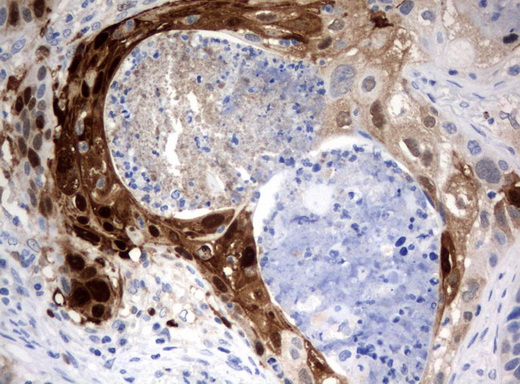
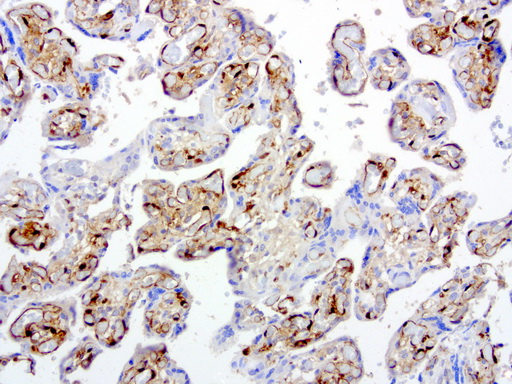

Anti-IDO1 antibody [ZN126] (STJA0033368)
SPECIFICATIONS
ClonalityMonoclonal
HostMouse
ConjugationUnconjugated
IsotypeIgG1
ImmunogenFull length human recombinant protein of human IDO1 (NP_002155) produced in HEK293T cell.
General Information
| Short Description | Mouse monoclonal anti-IDO1 for use in IHC-P in Human samples. Datasheet included with dilution recommendations, and related reagents. |
| Applications | IHC-P |
| Host | Mouse |
| Reactivity | Human |
| Note | STRICTLY FOR FURTHER SCIENTIFIC RESEARCH USE ONLY (RUO). MUST NOT TO BE USED IN DIAGNOSTIC OR THERAPEUTIC APPLICATIONS. |
Product Properties
| Clonality | Monoclonal |
| Clone ID | ZN126 |
| Isotype | IgG1 |
| Conjugation | Unconjugated |
| Concentration | 0.5-1.0 mg/mL |
| Purification | Affinity Chromatography |
| Dilution Range | IHC 1:50-1:100 |
| Formulation | PBS (PH 7.3) containing 1% BSA, 50% glycerol and 0.02% sodium azide. |
| Storage Instruction | Store at 4°C short term. Aliquot and store at-20°C long term. Avoid freeze/thaw cycles. |
Target Information
| Gene Symbol | IDO1 |
| Gene ID | 3620 |
| Uniprot ID | I23O1_HUMAN |
| Immunogen | Full length human recombinant protein of human IDO1 (NP_002155) produced in HEK293T cell. |
Additional Info
| Tissue Specificity | Expressed in mature dendritic cells located in lymphoid organs (including lymph nodes, spleen, tonsils, Peyers's patches, the gut lamina propria, and the thymic medulla), in some epithelial cells of the female genital tract, as well as in endothelial cells of term placenta and in lung parenchyma. Weakly or not expressed in most normal tissues, but mostly inducible in most tissues. Expressed in more than 50% of tumors, either by tumoral, stromal, or endothelial cells (expression in tumor is associated with a worse clinical outcome). Not overexpressed in tumor-draining lymph nodes. |
| Function | Catalyzes the first and rate limiting step of the catabolism of the essential amino acid tryptophan along the kynurenine pathway. Involved in the peripheral immune tolerance, contributing to maintain homeostasis by preventing autoimmunity or immunopathology that would result from uncontrolled and overreacting immune responses. Tryptophan shortage inhibits T lymphocytes division and accumulation of tryptophan catabolites induces T-cell apoptosis and differentiation of regulatory T-cells. Acts as a suppressor of anti-tumor immunity. Limits the growth of intracellular pathogens by depriving tryptophan. Protects the fetus from maternal immune rejection. |
| Protein Name | Indoleamine 2 -3-Dioxygenase 1Ido-1Indoleamine-Pyrrole 2 -3-Dioxygenase |
| Database Links | Reactome: R-HSA-71240 |
| Cellular Localisation | CytoplasmCytosol |
| Alternative Antibody Names | Anti-Indoleamine 2 -3-Dioxygenase 1 antibodyAnti-Ido-1 antibodyAnti-Indoleamine-Pyrrole 2 -3-Dioxygenase antibodyAnti-IDO1 antibodyAnti-IDO antibodyAnti-INDO antibody |
Information sourced from Uniprot.org