

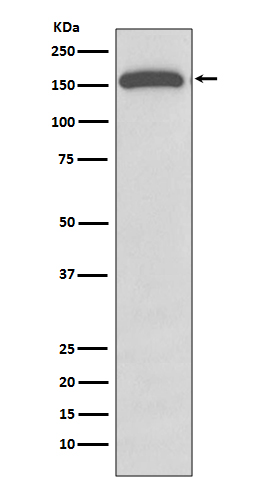

Anti-GLI1 antibody [R05-3C2] (STJA0036092)
SPECIFICATIONS
ClonalityMonoclonal
HostRabbit
ConjugationUnconjugated
IsotypeIgG
ImmunogenA synthesized peptide derived from human Gli1
General Information
| Short Description | Rabbit monoclonal anti-GLI1 for use in WB in Human samples. Datasheet included with dilution recommendations, and related reagents. |
| Applications | WB |
| Host | Rabbit |
| Reactivity | Human |
| Note | STRICTLY FOR FURTHER SCIENTIFIC RESEARCH USE ONLY (RUO). MUST NOT TO BE USED IN DIAGNOSTIC OR THERAPEUTIC APPLICATIONS. |
Product Properties
| Clonality | Monoclonal |
| Clone ID | R05-3C2 |
| Isotype | IgG |
| Conjugation | Unconjugated |
| Purification | Affinity Chromatography |
| Dilution Range | WB 1:500-1:1000 |
| Formulation | Rabbit IgG in phosphate buffered saline, pH 7.4, 150mM NaCl, 0.02% sodium azide and 50% glycerol. |
| Storage Instruction | Store at 4°C short term. Aliquot and store at-20°C long term. Avoid freeze/thaw cycles. |
Target Information
| Gene Symbol | GLI1 |
| Gene ID | 2735 |
| Uniprot ID | GLI1_HUMAN |
| Immunogen | A synthesized peptide derived from human Gli1 |
Additional Info
| Tissue Specificity | Detected in testis (at protein level). Testis, myometrium and fallopian tube. Also expressed in the brain with highest expression in the cerebellum, optic nerve and olfactory tract. Isoform 1 is detected in brain, spleen, pancreas, liver, kidney and placenta.isoform 2 is not detectable in these tissues. |
| Post Translational Modifications | Phosphorylated in vitro by ULK3. Acetylation at Lys-518 down-regulates transcriptional activity. Deacetylated by HDAC1. Ubiquitinated by the CRL2(FEM1B) complex, suppressing GLI1 transcriptional activator activity. |
| Function | Acts as a transcriptional activator. Binds to the DNA consensus sequence 5'-GACCACCCA-3'. Regulates the transcription of specific genes during normal development. Plays a role in craniofacial development and digital development, as well as development of the central nervous system and gastrointestinal tract. Mediates SHH signaling. Plays a role in cell proliferation and differentiation via its role in SHH signaling. Isoform 2: Acts as a transcriptional activator, but activates a different set of genes than isoform 1. Activates expression of CD24, unlike isoform 1. Mediates SHH signaling. Promotes cancer cell migration. |
| Protein Name | Zinc Finger Protein Gli1Glioma-Associated OncogeneOncogene Gli |
| Database Links | Reactome: R-HSA-5610780Reactome: R-HSA-5610787Reactome: R-HSA-5632684Reactome: R-HSA-5635851 |
| Cellular Localisation | CytoplasmNucleusTethered In The Cytoplasm By Binding To SufuActivation And Translocation To The Nucleus Is Promoted By Interaction With Stk36Phosphorylation By Ulk3 May Promote Nuclear LocalizationTranslocation To The Nucleus Is Promoted By Interaction With Zic1Isoform 2: Cytoplasm |
| Alternative Antibody Names | Anti-Zinc Finger Protein Gli1 antibodyAnti-Glioma-Associated Oncogene antibodyAnti-Oncogene Gli antibodyAnti-GLI1 antibodyAnti-GLI antibody |
Information sourced from Uniprot.org