

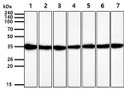


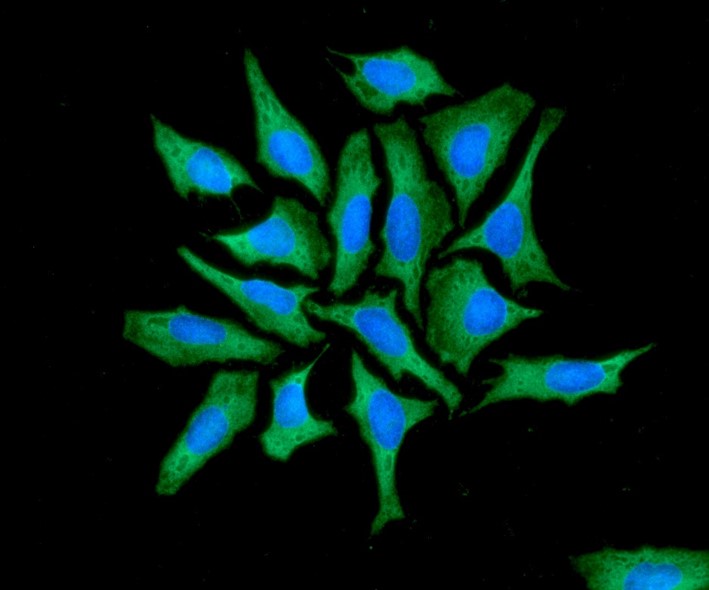

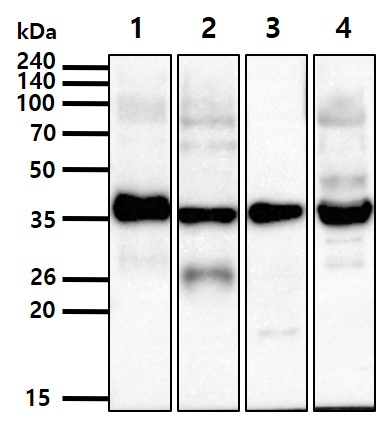
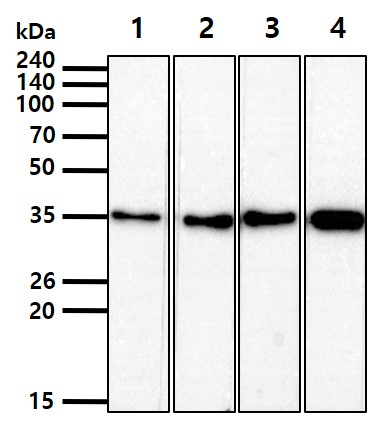

Anti-GAPDH antibody [AT4E8] (STJA0041932)
SPECIFICATIONS
ClonalityMonoclonal
HostMouse
ConjugationUnconjugated
IsotypeIgG2bk
ImmunogenGAPDH from rabbit muscle
General Information
| Short Description | Mouse monoclonal anti-GAPDH for use in ELISA, WB, ICC and IF in Rabbit samples. Datasheet included with dilution recommendations, and related reagents. |
| Applications | ELISA/WB/ICC/IF |
| Host | Mouse |
| Reactivity | Rabbit |
| Note | STRICTLY FOR FURTHER SCIENTIFIC RESEARCH USE ONLY (RUO). MUST NOT TO BE USED IN DIAGNOSTIC OR THERAPEUTIC APPLICATIONS. |
Product Properties
| Clonality | Monoclonal |
| Clone ID | AT4E8 |
| Isotype | IgG2bk |
| Conjugation | Unconjugated |
| Concentration | 1 mg/mL |
| Purification | By protein-A affinity chromatography |
| Formulation | Liquid in phosphate-Buffered Saline (pH 7.4) with 0.02% Sodium Azide, 10% Glycerol |
| Storage Instruction | For short term storage, keep at +2C to +8C for up to 1 week. For long term storage, aliquot and store at-20C, and avoid repeat freeze-thaw cycles. |
Target Information
| Accession Number | NP_001075722.1 |
| Immunogen | GAPDH from rabbit muscle |
Additional Info
| Background | Multiple roles for glyceraldehyde-3-phosphate dehydrogenase (GAPDH) have been recently appreciated. GAPDH is found in the particulate fractions, such as the nucleus, the mitochondria, and the small vesicular fractions. GAPDH gene expression is specifically increased during programmed neuronal cell death. When cells are exposed to various stressors, dynamic subcellular re-distribution of GAPDH occurs. GAPDH is also involved in various diseases, especially neurodegenerative disorders and cancers. As a membrane protein, GAPDH functions in endocytosis in the cytoplasm, it is involved in the translational control of gene expression in the nucleus, it functions in nuclear tRNA export, in DNA replication, and in DNA repair. |
Information sourced from Uniprot.org