


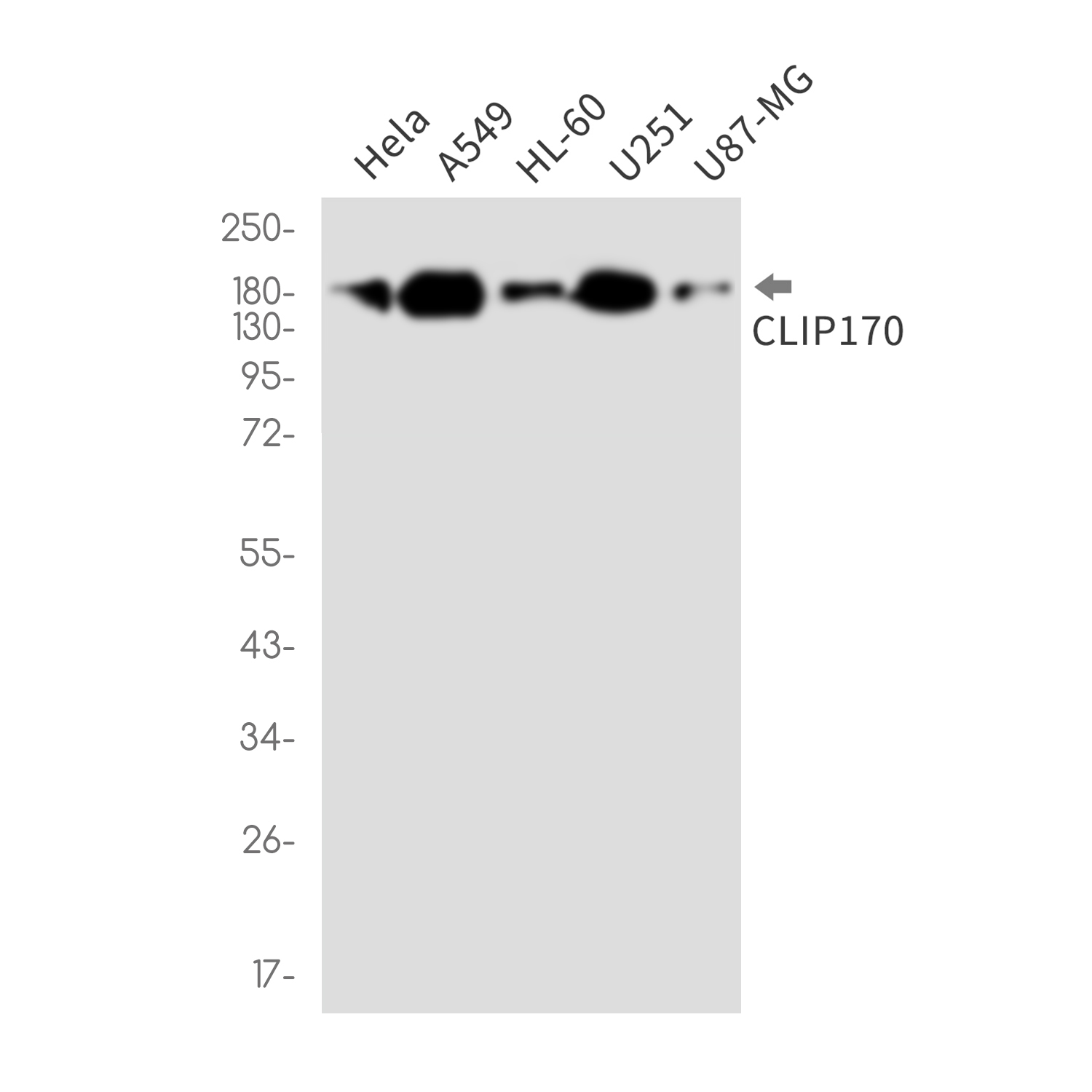
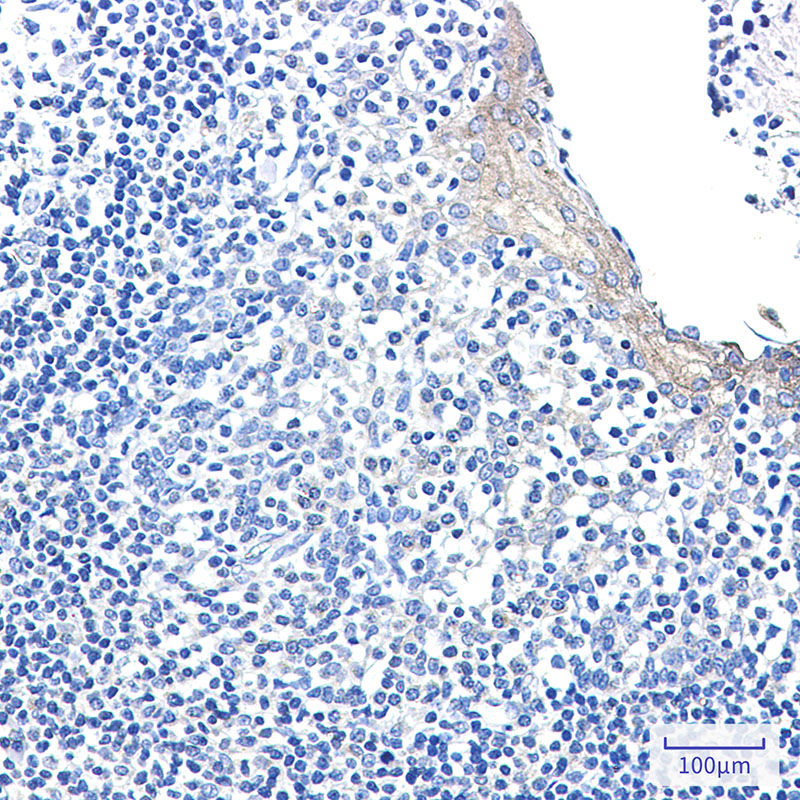
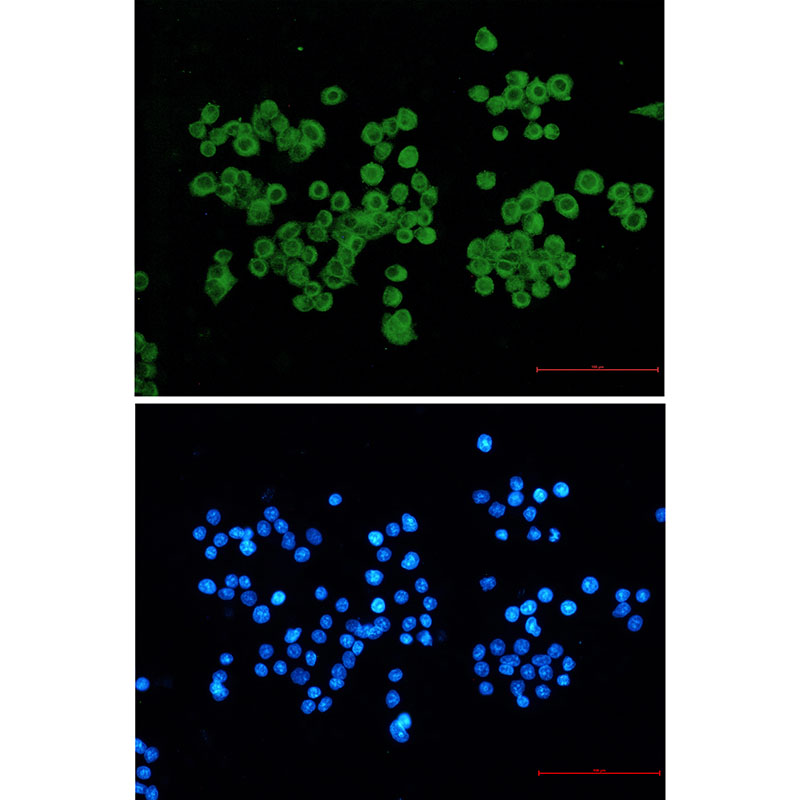

Anti-CLIP170 antibody [R07-1F3] (STJA0035160)
SPECIFICATIONS
ClonalityMonoclonal
HostRabbit
ConjugationUnconjugated
IsotypeIgG
ImmunogenA synthetic peptide of human CLIP170
General Information
| Short Description | Rabbit monoclonal anti-CLIP170 for use in WB, IHC-F, IHC-P, ICC, IF and IP in Human samples. Datasheet included with dilution recommendations, and related reagents. |
| Applications | WB/IHC-F/IHC-P/ICC/IF/IP |
| Host | Rabbit |
| Reactivity | Human |
| Note | STRICTLY FOR FURTHER SCIENTIFIC RESEARCH USE ONLY (RUO). MUST NOT TO BE USED IN DIAGNOSTIC OR THERAPEUTIC APPLICATIONS. |
Product Properties
| Clonality | Monoclonal |
| Clone ID | R07-1F3 |
| Isotype | IgG |
| Conjugation | Unconjugated |
| Concentration | 0.3 mg/mL |
| Purification | Affinity Purified |
| Dilution Range | WB 1:500-1:1000IHC 1:50-1:100IF 1:50-1:200IP 1:20 |
| Formulation | 50mM Tris-Glycine (pH 7.4) , 0.15M NaCl, 40% Glycerol, 0.01% Sodium azide and 0.05% BSA |
| Storage Instruction | Store at 4°C short term. Aliquot and store at-20°C long term. Avoid freeze/thaw cycles. |
Target Information
| Gene Symbol | CLIP1 |
| Gene ID | 6249 |
| Uniprot ID | CLIP1_HUMAN |
| Immunogen | A synthetic peptide of human CLIP170 |
Additional Info
| Tissue Specificity | Detected in dendritic cells (at protein level). Highly expressed in the Reed-Sternberg cells of Hodgkin disease. |
| Post Translational Modifications | Phosphorylated. Phosphorylation induces conformational changes by increasing the affinity of the N-terminus for C-terminus, resulting in inhibition of its function thus decreasing its binding to microtubules and DCTN1. Exhibits a folded, autoinhibited conformation when phosphorylated and an open conformation when dephosphorylated with increased binding affinity to microtubules and DCTN1. Phosphorylation regulates its recruitment to tyrosinated microtubules and the recruitment of vesicular cargo to microtubules in neurons. Phosphorylation by MTOR may positively regulate CLIP1 association with microtubules. |
| Function | Binds to the plus end of microtubules and regulates the dynamics of the microtubule cytoskeleton. Promotes microtubule growth and microtubule bundling. Links cytoplasmic vesicles to microtubules and thereby plays an important role in intracellular vesicle trafficking. Plays a role macropinocytosis and endosome trafficking. |
| Protein Name | Cap-Gly Domain-Containing Linker Protein 1Cytoplasmic Linker Protein 1Cytoplasmic Linker Protein 170 Alpha-2Clip-170Reed-Sternberg Intermediate Filament-Associated ProteinRestin |
| Database Links | Reactome: R-HSA-141444Reactome: R-HSA-2467813Reactome: R-HSA-2500257Reactome: R-HSA-5626467Reactome: R-HSA-5663220Reactome: R-HSA-68877Reactome: R-HSA-9648025Reactome: R-HSA-9842640 |
| Cellular Localisation | CytoplasmCytoskeletonCytoplasmic Vesicle MembranePeripheral Membrane ProteinCytoplasmic SideCell ProjectionRuffleLocalizes To Microtubule Plus EndsLocalizes Preferentially To The Ends Of Tyrosinated MicrotubulesAccumulates In Plasma Membrane Regions With Ruffling And ProtrusionsAssociates With The Membranes Of Intermediate Macropinocytic Vesicles |
| Alternative Antibody Names | Anti-Cap-Gly Domain-Containing Linker Protein 1 antibodyAnti-Cytoplasmic Linker Protein 1 antibodyAnti-Cytoplasmic Linker Protein 170 Alpha-2 antibodyAnti-Clip-170 antibodyAnti-Reed-Sternberg Intermediate Filament-Associated Protein antibodyAnti-Restin antibodyAnti-CLIP1 antibodyAnti-CYLN1 antibodyAnti-RSN antibody |
Information sourced from Uniprot.org