
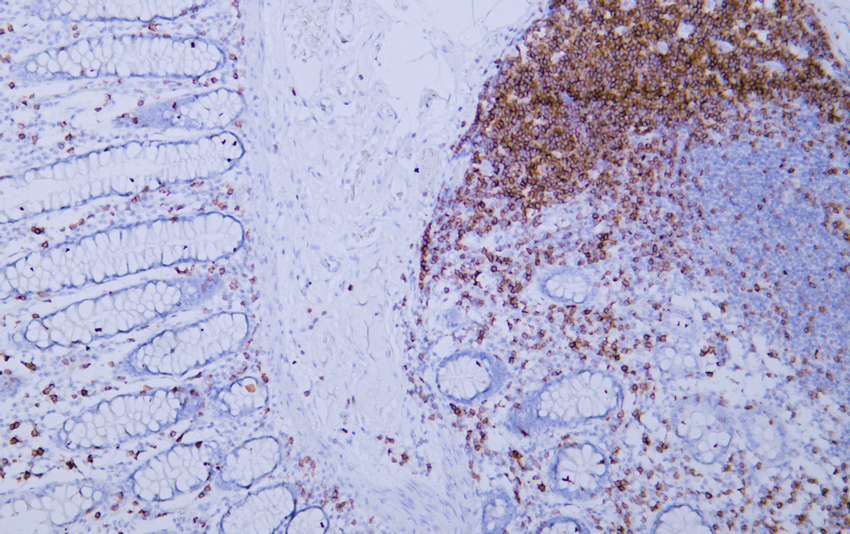
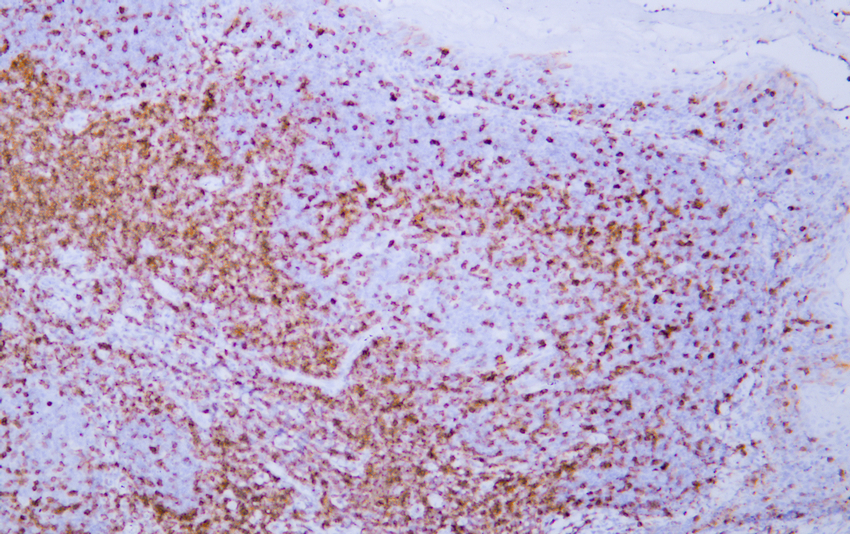

Anti-CD5 antibody (200-300) [ABT-CD5] (STJA0038967)
SPECIFICATIONS
ClonalityMonoclonal
HostMouse
ConjugationUnconjugated
IsotypeIgG2ak
ImmunogenSynthesized peptide derived from human CD5 AA range: 200-300
General Information
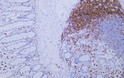
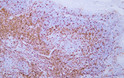
| Short Description | Mouse monoclonal anti-T-Cell Surface Glycoprotein Cd5 (200-300) for use in IHC, WB, IF and ELISA in Human samples. Datasheet included with dilution recommendations, and related reagents. |
| Applications | IHC/WB/IF/ELISA |
| Host | Mouse |
| Reactivity | Human |
| Note | STRICTLY FOR FURTHER SCIENTIFIC RESEARCH USE ONLY (RUO). MUST NOT TO BE USED IN DIAGNOSTIC OR THERAPEUTIC APPLICATIONS. |
Product Properties
| Clonality | Monoclonal |
| Clone ID | ABT-CD5 |
| Isotype | IgG2ak |
| Conjugation | Unconjugated |
| Purification | Protein G |
| Dilution Range | IHC 1:200-1000WB 1:500-2000IF 1:100-500ELISA 1:1000-5000 |
| Formulation | PBS, 50% glycerol, 0.05% Proclin 300, 0.05%BSA |
| Storage Instruction | Store at-20°C for up to 1 year from the date of receipt, and avoid repeat freeze-thaw cycles. |
Target Information
| Gene Symbol | CD5 |
| Gene ID | 921 |
| Uniprot ID | CD5_HUMAN |
| Immunogen | Synthesized peptide derived from human CD5 AA range: 200-300 |
| Immunogen Region | 200-300 |
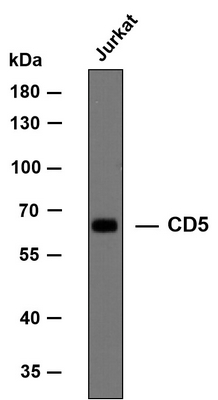
| Specificity | The antibody can specifically recognize human CD5 protein. In western blotting of Jurkat cell lysate, the antibody can label a 55 kDa band corresponding to CD5. |
Additional Info
| Function | Lymphoid-specific receptor expressed by all T-cells and in a subset of B-cells known as B1a cells. Plays a role in the regulation of TCR and BCR signaling, thymocyte selection, T-cell effector differentiation and immune tolerance. Acts by interacting with several ligands expressed on B-cells such as CD5L or CD72 and thereby plays an important role in contact-mediated, T-dependent B-cell activation and in the maintenance of regulatory T and B-cell homeostasis. Functions as a negative regulator of TCR signaling during thymocyte development by associating with several signaling proteins including LCK, CD3Z chain, PI3K or CBL. Mechanistically, co-engagement of CD3 with CD5 enhances phosphorylated CBL recruitment leading to increased VAV1 phosphorylation and degradation. Modulates B-cell biology through ERK1/2 activation in a Ca(2+)-dependent pathway via the non-selective Ca(2+) channel TRPC1, leading to IL-10 production. |
| Protein Name | T-Cell Surface Glycoprotein Cd5Lymphocyte Antigen T1/Leu-1Cd Antigen Cd5 |
| Database Links | |
| Cellular Localisation | Cell MembraneSingle-Pass Type I Membrane Protein |
| Alternative Antibody Names | Anti-T-Cell Surface Glycoprotein Cd5 antibodyAnti-Lymphocyte Antigen T1/Leu-1 antibodyAnti-Cd Antigen Cd5 antibodyAnti-CD5 antibodyAnti-LEU1 antibody |
Information sourced from Uniprot.org