

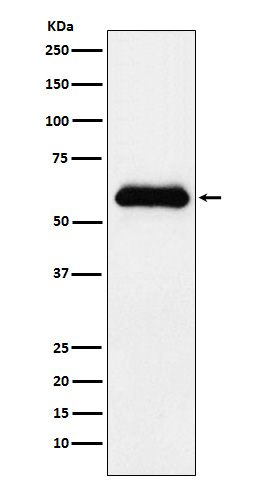

Anti-AACT antibody [R03-4U6] (STJA0036592)
SPECIFICATIONS
ClonalityMonoclonal
HostRabbit
ConjugationUnconjugated
IsotypeIgG
ImmunogenA synthesized peptide derived from human alpha 1 Antichymotrypsin
General Information
| Short Description | Rabbit monoclonal anti-AACT for use in WB, IHC-P, ICC, IF and IP in Human samples. Datasheet included with dilution recommendations, and related reagents. |
| Applications | WB/IHC-P/ICC/IF/IP |
| Host | Rabbit |
| Reactivity | Human |
| Note | STRICTLY FOR FURTHER SCIENTIFIC RESEARCH USE ONLY (RUO). MUST NOT TO BE USED IN DIAGNOSTIC OR THERAPEUTIC APPLICATIONS. |
Product Properties
| Clonality | Monoclonal |
| Clone ID | R03-4U6 |
| Isotype | IgG |
| Conjugation | Unconjugated |
| Purification | Affinity Chromatography |
| Dilution Range | WB 1:500-1:1000IHC 1:50-1:100IF 1:50-1:200IP 1:30 |
| Formulation | Rabbit IgG in phosphate buffered saline, pH 7.4, 150mM NaCl, 0.02% sodium azide and 50% glycerol. |
| Storage Instruction | Store at 4°C short term. Aliquot and store at-20°C long term. Avoid freeze/thaw cycles. |
Target Information
| Gene Symbol | SERPINA3 |
| Gene ID | 12 |
| Uniprot ID | AACT_HUMAN |
| Immunogen | A synthesized peptide derived from human alpha 1 Antichymotrypsin |
Additional Info
| Tissue Specificity | Plasma. Synthesized in the liver. Like the related alpha-1-antitrypsin, its concentration increases in the acute phase of inflammation or infection. Found in the amyloid plaques from the hippocampus of Alzheimer disease brains. |
| Post Translational Modifications | N- and O-glycosylated. |
| Function | Although its physiological function is unclear, it can inhibit neutrophil cathepsin G and mast cell chymase, both of which can convert angiotensin-1 to the active angiotensin-2. |
| Protein Name | Alpha-1-AntichymotrypsinActCell Growth-Inhibiting Gene 24/25 ProteinSerpin A3 Cleaved Into - Alpha-1-Antichymotrypsin His-Pro-Less |
| Database Links | Reactome: R-HSA-114608Reactome: R-HSA-6798695 |
| Cellular Localisation | Secreted |
| Alternative Antibody Names | Anti-Alpha-1-Antichymotrypsin antibodyAnti-Act antibodyAnti-Cell Growth-Inhibiting Gene 24/25 Protein antibodyAnti-Serpin A3 Cleaved Into - Alpha-1-Antichymotrypsin His-Pro-Less antibodyAnti-SERPINA3 antibodyAnti-AACT antibodyAnti-GIG24 antibodyAnti-GIG25 antibody |
Information sourced from Uniprot.org