

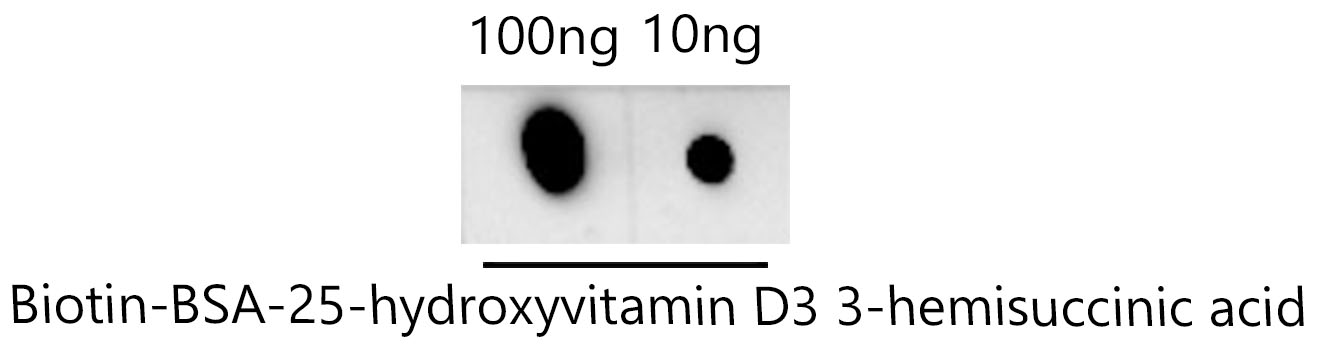

Anti-25-OH-VD antibody [S5669RM] (STJ11105669)
SPECIFICATIONS
ClonalityMonoclonal
HostRabbit
ConjugationUnconjugated
IsotypeIgG
General Information
| Short Description | Rabbit monoclonal 25-OH-VD antibody for use in DB and ELISA in species independent samples. Datasheet included with dilution recommendations, and related reagents. |
| Applications | DB/ELISA |
| Host | Rabbit |
| Reactivity | Species Independent |
| Note | STRICTLY FOR FURTHER SCIENTIFIC RESEARCH USE ONLY (RUO). MUST NOT TO BE USED IN DIAGNOSTIC OR THERAPEUTIC APPLICATIONS. |
Product Properties
| Clonality | Monoclonal |
| Clone ID | S5669RM |
| Isotype | IgG |
| Conjugation | Unconjugated |
| Concentration | Lot specific |
| Purification | Affinity purification |
| Dilution Range | DB:1:500-1:1000ELISA:Recommended starting concentration is 1 Mu g/mL. Please optimize the concentration based on your specific assay requirements. |
| Formulation | PBS with 0.05% Proclin300, 0.05% BSA, 50% Glycerol, pH 7.3. |
| Storage Instruction | Store at-20°C for up to 1 year from the date of receipt, and avoid repeat freeze-thaw cycles. |
Target Information
| Specificity | Chemical compounds corresponding to Vitamin D (25-OH-VD) |
Additional Info
| Background | 25-OH-VD, is the primary circulating form of vitamin D in human body after its initial metabolism. It serves as the preferred biomarker for assessing vitamin D status due to its plasma concentration accurately reflecting total body stores. Derived from the hydroxylation of vitamin D precursors (vitamin D3 or D2) in the liver, 25-OH-VD is a precursor to the biologically active 1, 25- (OH) 2-D3 formed in the kidneys. Its long half-life and stable levels make it the standard analyte for laboratory tests to diagnose vitamin D deficiency or excess, crucial in preventing and treating conditions like osteoporosis, rickets, and various chronic diseases linked to vitamin D, including cardiovascular issues, immune disorders, muscle dysfunction, diabetes, and certain cancers. |
Information sourced from Uniprot.org