
Nanobodies for advanced research
Nanobodies are also referred to as single domain antibodies, or VHH single domain antibodies. They are unique antibody fragments derived from camelid heavy-chain-only antibodies. These single domain antibodies have a small molecular weight (~15 kDa), about one-tenth the size of conventional antibodies, which enables superior tissue penetration, stability, and access to hidden antigen sites.
Our single domain antibodies and VHH single domain antibodies offer exceptional specificity and versatility, making them indispensable tools for your research.
Why use nanobodies (VHH single domain antibodies)?
- Smaller & more stable: Single domain antibodies maintain binding affinity even under demanding experimental conditions, offering superior stability and performance compared to conventional antibodies.
- Highly specific: Due to the structure of nanobodies, they target conformational and epitopes inaccessible to larger antibodies.
- Versatile applications: Ideal for Immunofluorescence, ELISA, Flow Cytometry, Western Blot, Surface Plasmon Resonance and Radioimmunoassay (RIA).
- Recombinant production: Ensures consistent quality and batch-to-batch reproducibility.
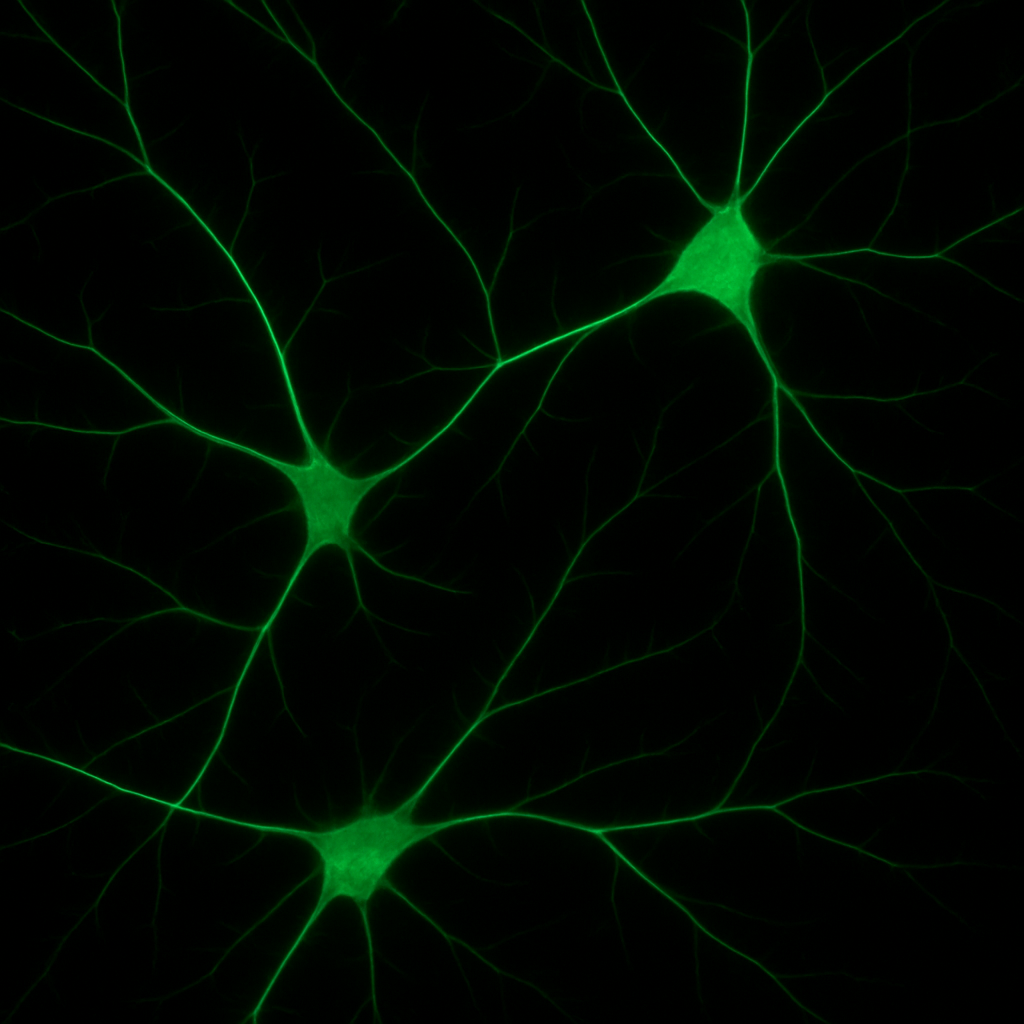
Nanobodies for epitope tags: GFP, mCherry and V5
Nanobodies raised against epitope tags can provide researchers with compact, high-affinity tools for detecting and isolating tagged proteins in various experimental systems. Unlike traditional antibodies, nanobodies are smaller, more stable, and ideal for high-resolution imaging, immunoprecipitation, and live-cell applications.
Anti-GFP nanobody (STJN000447)
Anti-GFP nanobody binds green fluorescent protein (GFP) with exceptional specificity and affinity. It’s widely used in live-cell imaging, co-localisation studies, and protein tracking due to its ability to access tightly packed cellular environments.
Anti-mCherry nanobody (STJN000495)
mCherry nanobody binds specifically to the mCherry fluorescent protein. Its small size and high specificity allow it to reach confined cellular regions, supporting live-cell imaging, protein co-localization, and tracking the movement of proteins tagged with mCherry. A dependable choice for dynamic imaging.
Anti-V5-tag-strain W3 nanobody (STJN000597)
V5 nanobody is a versatile tool for working proteins conjugated with the V5 protein tag. It provides specific detection, purification tool for monitoring proteins with the v5 protein tag. With its exceptional affinity and small size, this nanobody is ideal for various applications, including ELISA and immunofluorescence.
Assessing VHH antibody development workflows
Anti-VHH nanobody [cAb-Lys2] is a specialised reagent designed for the characterisation and validation of VHH-type nanobodies, which are derived from camelid heavy-chain-only antibodies. It plays a key role in detecting VHH nanobody expression in engineered cells or fusion constructs, and is widely used to analyse nanobody surface display in platforms.
Additionally, cAb-Lys2 serves as a valuable isotype control in flow cytometry or immunoassays involving VHH-based reagents. This nanobody also supports quality control workflows by confirming successful expression and purification of recombinant VHH nanobodies to quantify nanobody library. Rather than targeting a specific antigen, cAb-Lys2 is a versatile tool for streamlining nanobody development research workflows.
Featured Nanobody products
| Target | Product (Clone) | SKU | Applications | Reactivity | Host |
|---|---|---|---|---|---|
| EGFR/ERBB1/HER1 | Anti-EGFR/ERBB1/HER1 nanobody [SAA1213] | STJN000067 | ELISA / FC / SPR | Human | Alpaca |
| Vimentin (VIM) | Anti-VIM/Vimentin nanobody [SAA1226] | STJN000124 | ELISA / IF / SPR / WB | Human | Alpaca |
| CRMP1 (DPYSL1) | Anti-CRMP1 nanobody [SAA1228] | STJN000269 | ELISA / IP / WB | Human | Alpaca |
| TP53 (p53) | Anti-TP53/p53 nanobody [SAA1165] | STJN000100 | ELISA / IP | Human | Alpaca |
| PTH1R | Anti-PTH1R nanobody [SAA1275] | STJN000255 | ELISA / RIA | Human | Alpaca |
| CD7 | Anti-CD7 nanobody [SAA1260] | STJN000127 | ELISA / FC | Human | Alpaca |
| CLEC9A (CD370) | Anti-CD370/CLEC9A nanobody [SAA1331] | STJN000327 | ELISA / FC | Human | Alpaca |
| TUFM | Anti-TUFM nanobody [SAA1227] | STJN000231 | ELISA / IP / WB | Human | Alpaca |
| SARS-CoV-2 Spike (S) | Anti-SARS-CoV-2 S Protein nanobody [SAA1022] | STJN000367 | ELISA | SARS-CoV-2 | Alpaca |
Nanobodies (VHH Single Domain Antibodies)
St John's Laboratory offers over 700 nanobodies for research applications including IF, WB, ELISA, flow cytometry and IP. Our VHH single domain antibodies cover epitope tags, fluorescent proteins, immune checkpoints, structural targets and more, providing researchers with compact, high-affinity tools for applications where conventional antibodies are impractical.
Browse All NanobodiesWhat Are Nanobodies?
Nanobodies, also called VHH antibodies or single domain antibodies (sdAbs), are the smallest functional antigen-binding fragments derived from the heavy-chain-only antibodies (HCAbs) found naturally in camelids such as llamas, alpacas and camels. Unlike conventional antibodies, which require both heavy and light chains to form a functional binding domain, nanobodies consist of a single variable domain (VHH) capable of binding antigen independently.
At approximately 15 kDa, a nanobody is roughly one-tenth the molecular weight of a conventional IgG antibody. This small size gives nanobodies access to cryptic epitopes, enzyme active sites and receptor clefts that are sterically inaccessible to larger antibody formats. They are produced recombinantly in bacterial or yeast expression systems, enabling high yield, batch-to-batch consistency and straightforward engineering for conjugation or fusion applications.
Key Properties of VHH Single Domain Antibodies
- Approximately 15 kDa molecular weight, one-tenth the size of IgG
- Single variable domain (VHH) derived from camelid heavy-chain-only antibodies
- Access cryptic epitopes and sterically hindered binding sites
- Exceptional thermal and chemical stability compared to conventional antibodies
- Recombinant production ensures lot-to-lot reproducibility
- Compatible with IF, WB, ELISA, FC, IP, SPR and live-cell imaging
- Easy to engineer as Fc fusions, conjugates or bispecific constructs
Nanobody vs Antibody: Key Differences
Understanding when to use a nanobody rather than a conventional antibody depends on the experimental requirements. The table below summarises the key structural and functional differences to consider when selecting a reagent for your research.
| Property | Nanobody (VHH) | Conventional IgG Antibody |
|---|---|---|
| Molecular weight | ~15 kDa | ~150 kDa |
| Structure | Single VHH domain | Two heavy chains + two light chains |
| Cryptic epitope access | Yes | Limited |
| Thermal stability | High (reversible unfolding) | Lower (irreversible denaturation) |
| Tissue penetration | Superior | Limited by size |
| Production | Recombinant (E. coli, yeast) | Hybridoma or recombinant |
| Lot-to-lot consistency | Excellent (recombinant) | Variable (hybridoma) to excellent (recombinant) |
| Live-cell imaging | Well-suited (small, stable) | Challenging at full IgG size |
| Engineering | Straightforward (single domain) | More complex |
When to Choose a Nanobody
Nanobodies are the preferred choice for high-resolution imaging where secondary antibody background is problematic, for targeting enzyme active sites or receptor binding pockets inaccessible to IgG, and for applications requiring high thermal or chemical stability such as competitive assays or harsh fixation protocols.
Nanobody Size and Molecular Weight
At approximately 15 kDa, nanobodies diffuse rapidly through tissue and access dense cellular environments. Their small nanobody size makes them particularly useful for super-resolution microscopy (STORM, STED) where the 10-15 nm linkage error of IgG-secondary antibody systems can limit spatial resolution.
Nanobody Structure and Stability
The nanobody structure consists of a single VHH domain with three complementarity-determining regions (CDRs) that frequently adopt longer CDR3 loops than conventional VH domains, enabling penetration of enzyme clefts and virus canyons. Their disulfide-stabilised core contributes to exceptional thermal stability, with many VHH antibodies retaining binding activity above 70 degrees C.
Recombinant Nanobody Production
All nanobodies in this range are produced recombinantly, eliminating the batch variability associated with hybridoma-derived antibodies. Recombinant production also enables straightforward engineering of Fc fusions, nanobody-enzyme conjugates, bispecific formats and fluorescent protein fusions for custom research applications.
Epitope Tag Nanobodies
Nanobodies raised against epitope tags offer compact, high-affinity tools for detecting, localising and isolating tagged proteins across a wide range of experimental systems. Their small size makes them particularly suited to applications where conventional anti-tag antibodies introduce steric interference or unacceptable background, including super-resolution imaging, immunoprecipitation and live-cell tracking.
Fluorescent Protein Nanobodies
Nanobodies targeting fluorescent proteins are widely used in advanced imaging workflows where the small size of VHH antibodies provides a significant advantage over IgG-based detection. The reduced linkage error compared to primary plus secondary antibody systems improves spatial resolution in super-resolution microscopy applications such as STED and STORM, and their stability in live-cell conditions enables real-time protein tracking.
Anti-VHH Nanobodies for Nanobody Research
Anti-VHH antibodies and nanobodies are specialised reagents used to detect, characterise and validate VHH-type nanobodies in research workflows. They are particularly useful when developing nanobody-based tools, confirming successful expression of recombinant VHH constructs, or using nanobodies as isotype controls in flow cytometry and immunoassay settings.
Nanobody Applications in Research
VHH single domain antibodies have been adopted across a wide range of research applications. Their small size, stability and recombinant origin make them suitable wherever conventional antibodies present challenges with sensitivity, steric access, signal-to-noise ratio or lot-to-lot variability.
Immunofluorescence (IF)
Nanobodies reduce linkage error in fluorescence microscopy by up to 10-fold compared to primary plus secondary antibody systems, improving spatial resolution. Their stability in formaldehyde and methanol fixation conditions makes them robust reagents for standard immunofluorescence workflows.
Western Blot (WB)
VHH nanobodies provide clean, specific signals in western blot with low background, particularly for targets with epitopes that are partially masked by denaturing conditions. Their small size means they can be detected directly with anti-VHH secondary antibodies without requiring species-matched secondaries.
Flow Cytometry (FC)
The small size of nanobodies reduces steric hindrance on cell surfaces, enabling better access to densely expressed antigens and receptor complexes. Fluorescently conjugated nanobodies can be used directly without secondary antibody steps, reducing protocol time and non-specific background.
Immunoprecipitation (IP)
Nanobodies immobilised on resin provide efficient pull-down of tagged proteins in co-immunoprecipitation experiments. GFP nanobody resin in particular has become a widely adopted tool for rapid, gentle immunoprecipitation of GFP-tagged fusion proteins from cell lysates.
ELISA
The stability of VHH nanobodies at elevated temperatures and over extended incubation periods makes them well-suited for sandwich ELISA formats, both as capture and detection reagents. Nanobody-based ELISA platforms offer advantages in assay miniaturisation and in detecting small conformational epitopes.
Nanobody FC Fusion
Nanobody Fc fusion proteins combine the small, stable VHH binding domain with an IgG Fc region to extend serum half-life, enable bivalency and allow purification via Protein A or G. Nanobody Fc fusions are widely used in research models requiring longer in vivo persistence or avidity-dependent binding.
Our Commitment to You
700+ nanobodies and VHH single domain antibodies
Recombinant production for lot-to-lot consistency
Validated for IF, WB, FC, ELISA, IP and SPR
Free shipping, check local agent for availability
1-year product guarantee on all nanobodies
Looking for a Specific Nanobody?
Browse the full range of over 700 VHH single domain antibodies, including GFP nanobodies, mCherry nanobodies, V5 nanobodies, anti-VHH antibodies and nanobodies across a wide range of research targets.
Browse All NanobodiesFor Research Use Only - All products are intended for research purposes and are not for use in diagnostic procedures