| Post Translational Modifications | The soluble form derives from the membrane form by proteolytic processing. N-linked glycan is a mixture of high mannose and complex type. Glycan structure does not influence binding affinity to CD40. Not O-glycosylated. |
| Function | Cytokine that acts as a ligand to CD40/TNFRSF5. Costimulates T-cell proliferation and cytokine production. Its cross-linking on T-cells generates a costimulatory signal which enhances the production of IL4 and IL10 in conjunction with the TCR/CD3 ligation and CD28 costimulation. Induces the activation of NF-kappa-B. Induces the activation of kinases MAPK8 and PAK2 in T-cells. Induces tyrosine phosphorylation of isoform 3 of CD28. Mediates B-cell proliferation in the absence of co-stimulus as well as IgE production in the presence of IL4. Involved in immunoglobulin class switching. CD40 ligand, soluble form: Acts as a ligand for integrins, specifically ITGA5:ITGB1 and ITGAV:ITGB3.both integrins and the CD40 receptor are required for activation of CD40-CD40LG signaling, which have cell-type dependent effects, such as B-cell activation, NF-kappa-B signaling and anti-apoptotic signaling. |
| Protein Name | Cd40 LigandCd40-LT-Cell Antigen Gp39Tnf-Related Activation ProteinTrapTumor Necrosis Factor Ligand Superfamily Member 5Cd Antigen Cd154 Cleaved Into - Cd40 Ligand - Membrane Form - Cd40 Ligand - Soluble FormScd40l |
| Database Links | Reactome: R-HSA-198933Reactome: R-HSA-5668541Reactome: R-HSA-5676594 |
| Cellular Localisation | Cell MembraneSingle-Pass Type Ii Membrane ProteinCell SurfaceCd40 LigandSoluble Form: SecretedRelease Of Soluble Cd40l From Platelets Is Partially Regulated By Gp Iib/IiiaActin PolymerizationAnd A Matrix Metalloproteinases (Mmp) Inhibitor-Sensitive Pathway |
| Alternative Nanobody Names | Anti-Cd40 Ligand nanobodyAnti-Cd40-L nanobodyAnti-T-Cell Antigen Gp39 nanobodyAnti-Tnf-Related Activation Protein nanobodyAnti-Trap nanobodyAnti-Tumor Necrosis Factor Ligand Superfamily Member 5 nanobodyAnti-Cd Antigen Cd154 Cleaved Into - Cd40 Ligand - Membrane Form - Cd40 Ligand - Soluble Form nanobodyAnti-Scd40l nanobodyAnti-CD40LG nanobodyAnti-CD40L nanobodyAnti-TNFSF5 nanobodyAnti-TRAP nanobody |
Information sourced from Uniprot.org

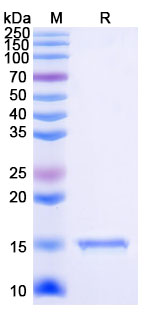
![Anti-CD154/CD40LG/TNFSF5 nanobody [SAA1196] (STJN000193)](https://cdn11.bigcommerce.com/s-zso2xnchw9/images/stencil/124x110/products/200806/412988/STJN000193-SDS-PAGE-1__93220.1749232511.jpg?c=1 "Anti-CD154/CD40LG/TNFSF5 nanobody [SAA1196] (STJN000193)")
![Anti-CD154/CD40LG/TNFSF5 nanobody [SAA1196] (STJN000193)](https://cdn11.bigcommerce.com/s-zso2xnchw9/images/stencil/1280x1280/products/200806/412988/STJN000193-SDS-PAGE-1__93220.1749232511.jpg?c=1 "Anti-CD154/CD40LG/TNFSF5 nanobody [SAA1196] (STJN000193)")