


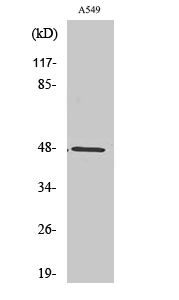
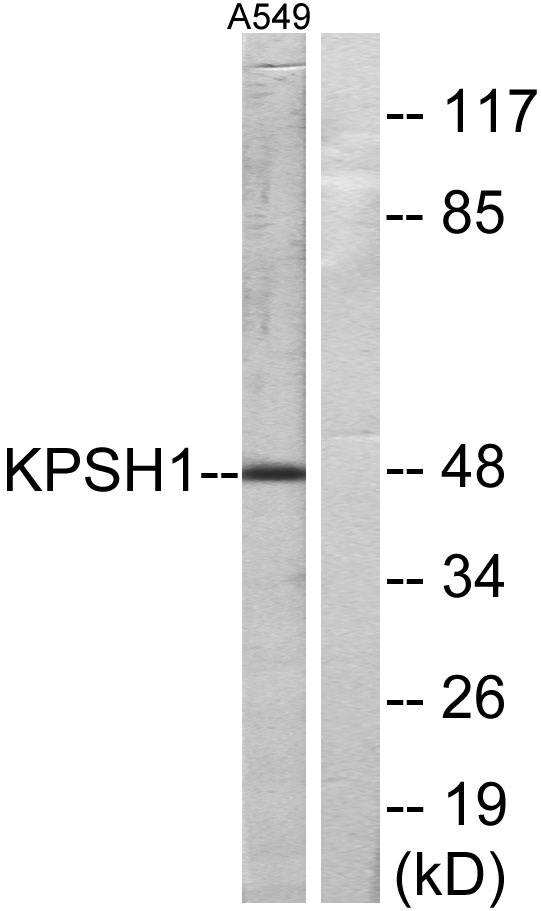
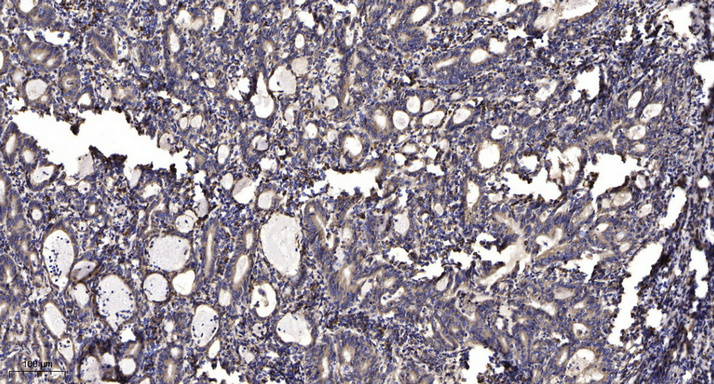

Anti-PSKH1 antibody (261-310 aa) (STJ95248)
SPECIFICATIONS
ClonalityPolyclonal
HostRabbit
ConjugationUnconjugated
IsotypeIgG
ImmunogenThe antiserum was produced against synthesized peptide derived from the human KPSH1 at the amino acid range 261-310
General Information
| Short Description | Rabbit polyclonal anti-Serine/threonine-protein kinase H1 (261-310 aa) for use in WB, IHC, IF and ELISA in Human and Mouse samples. Datasheet included with dilution recommendations, and related reagents. |
| Applications | WB/IHC/IF/ELISA |
| Host | Rabbit |
| Reactivity | Human/Mouse |
| Note | STRICTLY FOR FURTHER SCIENTIFIC RESEARCH USE ONLY (RUO). MUST NOT TO BE USED IN DIAGNOSTIC OR THERAPEUTIC APPLICATIONS. |
Product Properties
| Clonality | Polyclonal |
| Isotype | IgG |
| Conjugation | Unconjugated |
| Concentration | 1 mg/mL |
| Purification | The antibody was affinity-purified from rabbit antiserum by affinity-chromatography using epitope-specific immunogen. |
| Dilution Range | WB 1:500-1:2000IHC 1:100-1:300ELISA 1:20000IF 1:50-200 |
| Formulation | Liquid in PBS containing 50% Glycerol, 0.5% BSA and 0.02% Sodium Azide. |
| Storage Instruction | Store at-20°C for up to 1 year from the date of receipt, and avoid repeat freeze-thaw cycles. |
Target Information
| Gene Symbol | PSKH1 |
| Gene ID | 5681 |
| Uniprot ID | KPSH1_HUMAN |
| Immunogen | The antiserum was produced against synthesized peptide derived from the human KPSH1 at the amino acid range 261-310 |
| Immunogen Region | 261-310 aa |
| Specificity | PSK-H1 Polyclonal Antibody detects endogenous levels of PSK-H1 protein. |
Additional Info
| Post Translational Modifications | Autophosphorylated on serine residues. Myristoylated. Required for membrane association. Prerequisite for palmitoylation to occur. Palmitoylated. |
| Function | Serine/threonine protein kinase that may be involved in the regulation of pre-mRNA processing. It may phosphorylate components of nuclear splice factor compartments (SFC), such as non-snRNP splicing factors containing a serine/arginine-rich domain (SR proteins). Reversible phosphorylation of SR proteins may cause their release into the nucleoplasm and change their local concentration, thereby influencing alternative splicing. |
| Protein Name | Serine/Threonine-Protein Kinase H1Protein Serine Kinase H1Psk-H1 |
| Database Links | |
| Cellular Localisation | Golgi ApparatusCytoplasmCytoskeletonMicrotubule Organizing CenterCentrosomeNucleus SpeckleEndoplasmic Reticulum MembraneLipid-AnchorCell MembraneLocalized In The Brefeldin A-Sensitive Golgi CompartmentAt CentrosomesIn The Nucleus With A Somewhat Speckle-Like PresenceMembrane-Associated To The Endoplasmic Reticulum (Er) And The Plasma Membrane (Pm)And More Diffusely In The CytoplasmFound To Concentrate In Splicing Factor Compartments (Sfcs) Within The Nucleus Of Interphase CellsThe Acylation-Negative Form May Be Only Cytoplasmic And NuclearAcylation Seems To Allow The Sequestering To The Intracellular MembranesMyristoylation May Mediate Targeting To The Intracellular Non-Golgi Membranes And Palmitoylation May Mediate The Targeting To The Golgi MembranesDual Acylation Is Required To Stabilize The Interaction With Golgi Membranes |
| Alternative Antibody Names | Anti-Serine/Threonine-Protein Kinase H1 antibodyAnti-Protein Serine Kinase H1 antibodyAnti-Psk-H1 antibodyAnti-PSKH1 antibody |
Information sourced from Uniprot.org