


Anti-polo-like kinase 3 antibody (320-333) (STJ72976)
SPECIFICATIONS
ClonalityPolyclonal
HostGoat
ConjugationUnconjugated
IsotypeIgG
General Information
| Short Description | Goat polyclonal antibody anti-polo-like kinase 3 (320-333) is suitable for use in ELISA, Western Blot and Immunohistochemistry research applications. |
| Applications | Pep-ELISA/WB/IHC |
| Host | Goat |
| Reactivity | Human |
| Note | STRICTLY FOR FURTHER SCIENTIFIC RESEARCH USE ONLY (RUO). MUST NOT TO BE USED IN DIAGNOSTIC OR THERAPEUTIC APPLICATIONS. |
Product Properties
| Clonality | Polyclonal |
| Isotype | IgG |
| Conjugation | Unconjugated |
| Concentration | 0.5 mg/mL |
| Purification | Purified from goat serum by ammonium sulphate precipitation followed by antigen affinity chromatography using the immunizing peptide. |
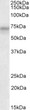
| Dilution Range | Peptide ELISA: antibody detection limit dilution 1:128000.WB: Approx 70kDa band observed in lysates of cell line HeLa (calculated MW of 71.6kDa according to NP_004064.2). Recommended concentration: 1-3µg/ml. Primary incubation 1 hour at rroom te |
| Formulation | 0.5 mg/ml in Tris saline, 0.02% sodium azide, pH7.3 with 0.5% bovine serum albumin. NA |
| Storage Instruction | Store at-20°C on receipt and minimise freeze-thaw cycles. |
Target Information
| Gene Symbol | PLK3 |
| Gene ID | 1263 |
| Uniprot ID | PLK3_HUMAN |
| Accession Number | NP_004064.2 |
| Immunogen Region | 320-333 |
| Immunogen Sequence | PDRLPISSCVTVPD |
Additional Info
| Post Translational Modifications | Phosphorylated in an ATM-dependent manner following DNA damage. Phosphorylated as cells enter mitosis and dephosphorylated as cells exit mitosis. |
| Function | Serine/threonine-protein kinase involved in cell cycle regulation, response to stress and Golgi disassembly. Polo-like kinases act by binding and phosphorylating proteins that are already phosphorylated on a specific motif recognized by the POLO box domains. Phosphorylates ATF2, BCL2L1, CDC25A, CDC25C, CHEK2, HIF1A, JUN, p53/TP53, p73/TP73, PTEN, TOP2A and VRK1. Involved in cell cycle regulation: required for entry into S phase and cytokinesis. Phosphorylates BCL2L1, leading to regulate the G2 checkpoint and progression to cytokinesis during mitosis. Plays a key role in response to stress: rapidly activated upon stress stimulation, such as ionizing radiation, reactive oxygen species (ROS), hyperosmotic stress, UV irradiation and hypoxia. Involved in DNA damage response and G1/S transition checkpoint by phosphorylating CDC25A, p53/TP53 and p73/TP73. Phosphorylates p53/TP53 in response to reactive oxygen species (ROS), thereby promoting p53/TP53-mediated apoptosis. Phosphorylates CHEK2 in response to DNA damage, promoting the G2/M transition checkpoint. Phosphorylates the transcription factor p73/TP73 in response to DNA damage, leading to inhibit p73/TP73-mediated transcriptional activation and pro-apoptotic functions. Phosphorylates HIF1A and JUN is response to hypoxia. Phosphorylates ATF2 following hyperosmotic stress in corneal epithelium. Also involved in Golgi disassembly during the cell cycle: part of a MEK1/MAP2K1-dependent pathway that induces Golgi fragmentation during mitosis by mediating phosphorylation of VRK1. May participate in endomitotic cell cycle, a form of mitosis in which both karyokinesis and cytokinesis are interrupted and is a hallmark of megakaryocyte differentiation, via its interaction with CIB1. |
| Protein Name | Serine/Threonine-Protein Kinase Plk3Cytokine-Inducible Serine/Threonine-Protein KinaseFgf-Inducible KinasePolo-Like Kinase 3Plk-3Proliferation-Related Kinase |
| Database Links | Reactome: R-HSA-6804115Reactome: R-HSA-6804756 |
| Cellular Localisation | CytoplasmNucleusNucleolusGolgi ApparatusCytoskeletonMicrotubule Organizing CenterCentrosomeTranslocates To The Nucleus Upon Cisplatin TreatmentLocalizes To The Golgi Apparatus During InterphaseAccording To A ReportPlk3 Localizes Only In The Nucleolus And Not In The CentrosomeOr In Any Other Location In The CytoplasmThe Discrepancies In Results May Be Explained By The Plk3 Antibody SpecificityBy Cell Line-Specific Expression Or Post-Translational Modifications |
| Alternative Antibody Names | Anti-Serine/Threonine-Protein Kinase Plk3 antibodyAnti-Cytokine-Inducible Serine/Threonine-Protein Kinase antibodyAnti-Fgf-Inducible Kinase antibodyAnti-Polo-Like Kinase 3 antibodyAnti-Plk-3 antibodyAnti-Proliferation-Related Kinase antibodyAnti-PLK3 antibodyAnti-CNK antibodyAnti-FNK antibodyAnti-PRK antibody |
Information sourced from Uniprot.org