


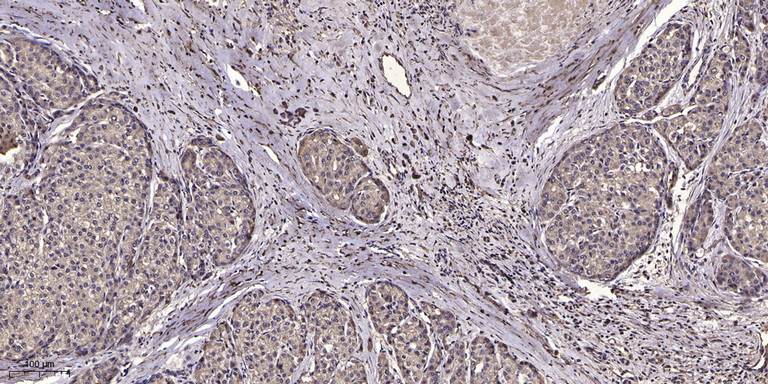
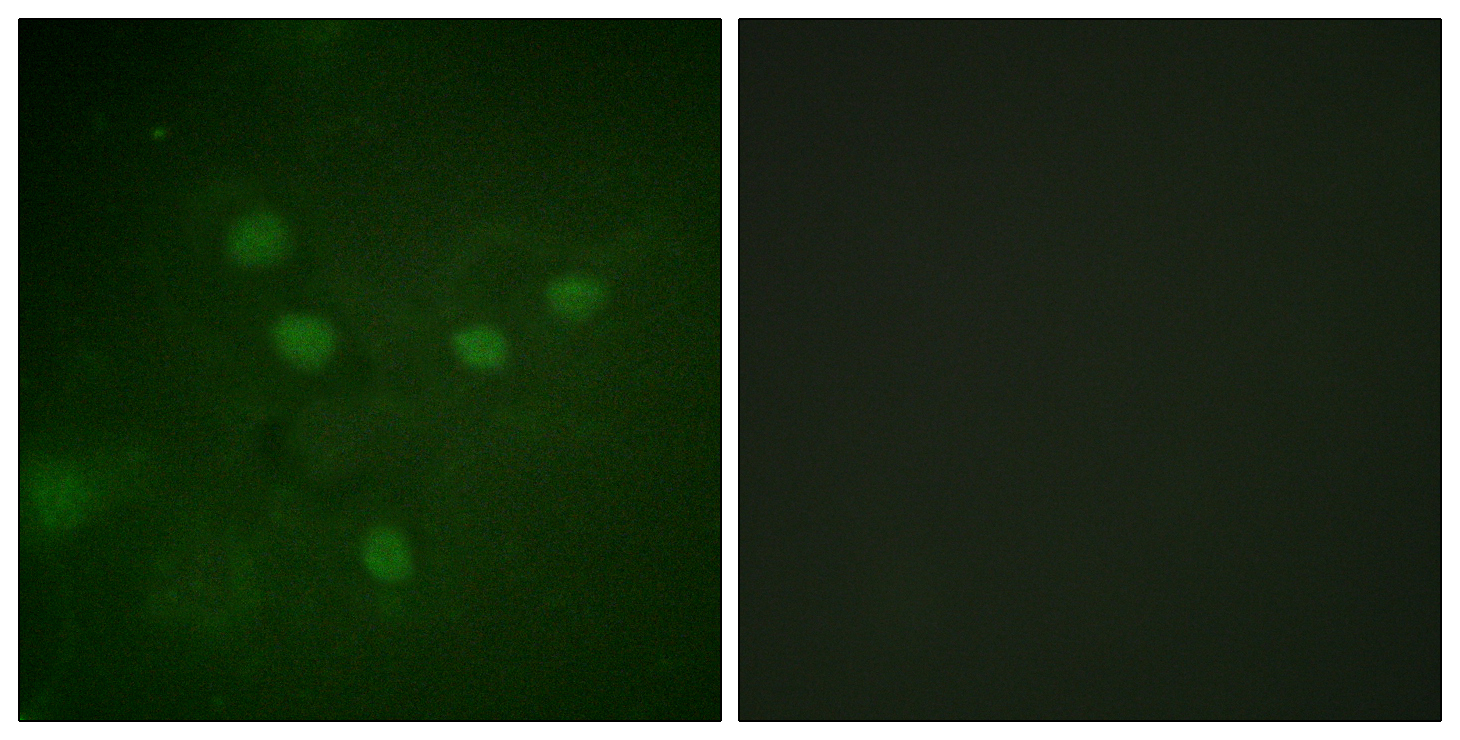


Anti-Phospho-NFAT5-Ser1197 antibody (1171-1220 aa) (STJ91355)
SPECIFICATIONS
ClonalityPolyclonal
HostRabbit
ConjugationUnconjugated
IsotypeIgG
ImmunogenThe antiserum was produced against synthesized peptide derived from the human NFAT5 around the phosphorylation site of Ser1197 at the amino acid range 1171-1220
General Information
| Short Description | Rabbit polyclonal anti-Phospho-Nuclear factor of activated T-cells 5-Ser1197 (1171-1220 aa) for use in WB and IHC in Human and Mouse samples. Datasheet included with dilution recommendations, and related reagents. |
| Applications | WB/IHC |
| Host | Rabbit |
| Reactivity | Human/Mouse |
| Note | STRICTLY FOR FURTHER SCIENTIFIC RESEARCH USE ONLY (RUO). MUST NOT TO BE USED IN DIAGNOSTIC OR THERAPEUTIC APPLICATIONS. |
Product Properties
| Clonality | Polyclonal |
| Isotype | IgG |
| Conjugation | Unconjugated |
| Concentration | 1 mg/mL |
| Purification | The antibody was affinity-purified from rabbit antiserum by affinity-chromatography using epitope-specific immunogen. |
| Dilution Range | WB 1:500-2000IHC-P 1:50-300 |
| Formulation | Liquid in PBS containing 50% Glycerol, 0.5% BSA and 0.02% Sodium Azide. |
| Storage Instruction | Store at-20°C for up to 1 year from the date of receipt, and avoid repeat freeze-thaw cycles. |
Target Information
| Gene Symbol | NFAT5 |
| Gene ID | 10725 |
| Uniprot ID | NFAT5_HUMAN |
| Immunogen | The antiserum was produced against synthesized peptide derived from the human NFAT5 around the phosphorylation site of Ser1197 at the amino acid range 1171-1220 |
| Immunogen Region | 1171-1220 aa |
| Specificity | Phospho-NFAT5 (S1197) Polyclonal Antibody detects endogenous levels of NFAT5 protein only when phosphorylated at S1197. |
Additional Info
| Post Translational Modifications | Phosphorylated. Phosphorylated at Thr-135 by CDK5 in response to osmotic stress.this phosphorylation mediates its rapid nuclear localization. Poly-ADP-ribosylated by PARP1 in response to DNA damage, promoting recruitment to sites of R-loop-associated DNA damage. |
| Function | Transcription factor involved, among others, in the transcriptional regulation of osmoprotective and inflammatory genes. Binds the DNA consensus sequence 5'-ACTAGTGGAAACATATAATCCAATGGTGACCGCT-3'. Mediates the transcriptional response to hypertonicity. Positively regulates the transcription of LCN2 and S100A4 genes.optimal transactivation of these genes requires the presence of DDX5/DDX17. Also involved in the DNA damage response by preventing formation of R-loops.R-loops are composed of a DNA:RNA hybrid and the associated non-template single-stranded DNA. |
| Protein Name | Nuclear Factor Of Activated T-Cells 5Nf-At5T-Cell Transcription Factor Nfat5Tonicity-Responsive Enhancer-Binding ProteinTone-Binding ProteinTonebp |
| Database Links | |
| Cellular Localisation | NucleusCytoplasmChromosomeNuclear Distribution Increases Under Hypertonic ConditionsRecruited To Sites Of R-Loop-Associated Dna Damage Following Poly-Adp-Ribosylation By Parp1 |
| Alternative Antibody Names | Anti-Nuclear Factor Of Activated T-Cells 5 antibodyAnti-Nf-At5 antibodyAnti-T-Cell Transcription Factor Nfat5 antibodyAnti-Tonicity-Responsive Enhancer-Binding Protein antibodyAnti-Tone-Binding Protein antibodyAnti-Tonebp antibodyAnti-NFAT5 antibodyAnti-KIAA0827 antibodyAnti-TONEBP antibody |
Information sourced from Uniprot.org