



Anti-LITAF antibody (1-161aa) [AT1F9] (STJA0041569)
SPECIFICATIONS
ClonalityMonoclonal
HostMouse
ConjugationUnconjugated
IsotypeIgG2bk
ImmunogenRecombinant human LITAF (1-161aa) purified from E. coli
General Information
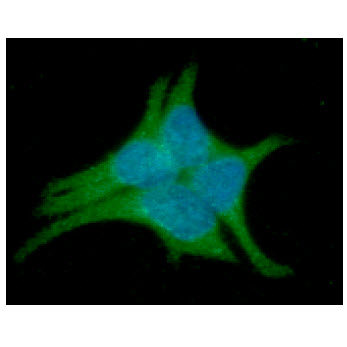
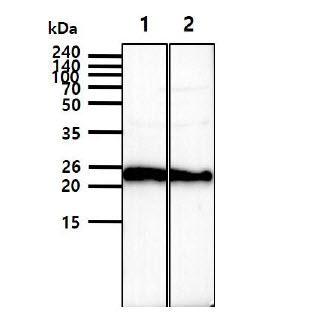
| Short Description | Mouse monoclonal anti-LITAF (1-161aa) for use in ELISA, WB, ICC and IF in Human samples. Datasheet included with dilution recommendations, and related reagents. |
| Applications | ELISA/WB/ICC/IF |
| Host | Mouse |
| Reactivity | Human |
| Note | STRICTLY FOR FURTHER SCIENTIFIC RESEARCH USE ONLY (RUO). MUST NOT TO BE USED IN DIAGNOSTIC OR THERAPEUTIC APPLICATIONS. |
Product Properties
| Clonality | Monoclonal |
| Clone ID | AT1F9 |
| Isotype | IgG2bk |
| Conjugation | Unconjugated |
| Concentration | 1 mg/mL |
| Purification | By protein-G affinity chromatography |
| Formulation | Liquid in phosphate-Buffered Saline (pH 7.4) with 0.02% Sodium Azide, 10% Glycerol |
| Storage Instruction | For short term storage, keep at +2C to +8C for up to 1 week. For long term storage, aliquot and store at-20C, and avoid repeat freeze-thaw cycles. |
Target Information
| Gene Symbol | LITAF |
| Gene ID | 9516 |
| Uniprot ID | LITAF_HUMAN |
| Accession Number | NP_004853 |
| Immunogen | Recombinant human LITAF (1-161aa) purified from E. coli |
| Immunogen Region | 1-161aa |
Additional Info
| Tissue Specificity | Ubiquitously and abundantly expressed. Expressed predominantly in the placenta, peripheral blood leukocytes, lymph nodes and spleen. |
| Post Translational Modifications | Phosphorylated on tyrosine residues in response to EGF. |
| Function | Plays a role in endosomal protein trafficking and in targeting proteins for lysosomal degradation. Plays a role in targeting endocytosed EGFR and ERGG3 for lysosomal degradation, and thereby helps down-regulate downstream signaling cascades. Helps recruit the ESCRT complex components TSG101, HGS and STAM to cytoplasmic membranes. Probably plays a role in regulating protein degradation via its interaction with NEDD4. May also contribute to the regulation of gene expression in the nucleus. Binds DNA (in vitro) and may play a synergistic role with STAT6 in the nucleus in regulating the expression of various cytokines. May regulate the expression of numerous cytokines, such as TNF, CCL2, CCL5, CXCL1, IL1A and IL10. |
| Protein Name | Lipopolysaccharide-Induced Tumor Necrosis Factor-Alpha FactorLps-Induced Tnf-Alpha FactorSmall Integral Membrane Protein Of Lysosome/Late EndosomeP53-Induced Gene 7 Protein |
| Database Links | |
| Cellular Localisation | CytoplasmNucleusLysosome MembranePeripheral Membrane ProteinCytoplasmic SideEarly Endosome MembraneLate Endosome MembraneEndosome MembraneCell MembraneGolgi Apparatus MembraneAssociated With Membranes Of LysosomesEarly And Late EndosomesCan Translocate From The Cytoplasm Into The NucleusDetected At Schmidt-Lanterman Incisures And In Nodal Regions Of Myelinating Schwann Cells |
| Alternative Antibody Names | Anti-Lipopolysaccharide-Induced Tumor Necrosis Factor-Alpha Factor antibodyAnti-Lps-Induced Tnf-Alpha Factor antibodyAnti-Small Integral Membrane Protein Of Lysosome/Late Endosome antibodyAnti-P53-Induced Gene 7 Protein antibodyAnti-LITAF antibodyAnti-PIG7 antibodyAnti-SIMPLE antibody |
Information sourced from Uniprot.org