| Post Translational Modifications | Phosphorylation at Thr-286 by MAP kinases is required for ubiquitination and degradation by the DCX(AMBRA1) complex. It also plays an essential role for recognition by the FBXO31 component of SCF (SKP1-cullin-F-box) protein ligase complex following DNA damage. Ubiquitinated at Lys-269 by the DCX(AMBRA1) complex during the transition from G1 to S cell phase, leading to its degradation: ubiquitination is dependent on Thr-286 phosphorylation. The DCX(AMBRA1) complex represents the major regulator of CCND1 stability during the G1/S transition. Also ubiquitinated by the SCF(FBXO4) and Cul7-RING(FBXW8) ubiquitin-protein ligase complexes. Following DNA damage it is ubiquitinated by the SCF(FBXO31) protein ligase complex. SCF(FBXO31) ubiquitination is dependent on Thr-286 phosphorylation. Ubiquitinated also by UHRF2 apparently in a phosphorylation-independent manner. Ubiquitination leads to its degradation and G1 arrest. Deubiquitinated by USP2.leading to its stabilization. |
| Function | Regulatory component of the cyclin D1-CDK4 (DC) complex that phosphorylates and inhibits members of the retinoblastoma (RB) protein family including RB1 and regulates the cell-cycle during G(1)/S transition. Phosphorylation of RB1 allows dissociation of the transcription factor E2F from the RB/E2F complex and the subsequent transcription of E2F target genes which are responsible for the progression through the G(1) phase. Hypophosphorylates RB1 in early G(1) phase. Cyclin D-CDK4 complexes are major integrators of various mitogenenic and antimitogenic signals. Also a substrate for SMAD3, phosphorylating SMAD3 in a cell-cycle-dependent manner and repressing its transcriptional activity. Component of the ternary complex, cyclin D1/CDK4/CDKN1B, required for nuclear translocation and activity of the cyclin D-CDK4 complex. Exhibits transcriptional corepressor activity with INSM1 on the NEUROD1 and INS promoters in a cell cycle-independent manner. |
| Protein Name | G1/S-Specific Cyclin-D1B-Cell Lymphoma 1 ProteinBcl-1Bcl-1 OncogenePrad1 Oncogene |
| Database Links | Reactome: R-HSA-187577Reactome: R-HSA-1912408Reactome: R-HSA-3214858Reactome: R-HSA-6785807Reactome: R-HSA-69231Reactome: R-HSA-75815Reactome: R-HSA-8849470Reactome: R-HSA-8853884Reactome: R-HSA-8878166Reactome: R-HSA-8934593Reactome: R-HSA-8951430Reactome: R-HSA-8951936Reactome: R-HSA-9018519Reactome: R-HSA-9634638Reactome: R-HSA-9661069Reactome: R-HSA-9754119Reactome: R-HSA-9825892 |
| Cellular Localisation | NucleusCytoplasmNucleus MembraneCyclin D-Cdk4 Complexes Accumulate At The Nuclear Membrane And Are Then Translocated To The Nucleus Through Interaction With Kip/Cip Family Members |
| Alternative Antibody Names | Anti-G1/S-Specific Cyclin-D1 antibodyAnti-B-Cell Lymphoma 1 Protein antibodyAnti-Bcl-1 antibodyAnti-Bcl-1 Oncogene antibodyAnti-Prad1 Oncogene antibodyAnti-CCND1 antibodyAnti-BCL1 antibodyAnti-PRAD1 antibody |
Information sourced from Uniprot.org


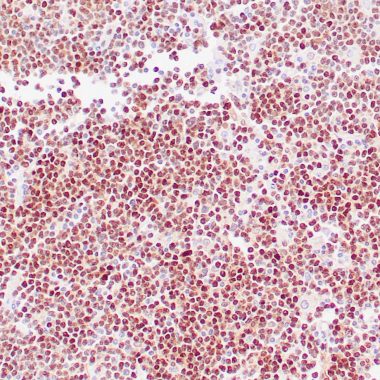
![Anti-Cyclin D1 antibody [P2D11F11] (STJ16101725)](https://cdn11.bigcommerce.com/s-zso2xnchw9/images/stencil/600x533/products/152231/347083/STJ16101725_1__39993.1681999345.jpg?c=1 "Anti-Cyclin D1 antibody [P2D11F11] (STJ16101725)")