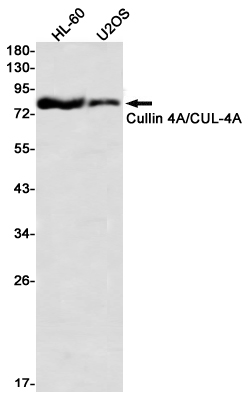
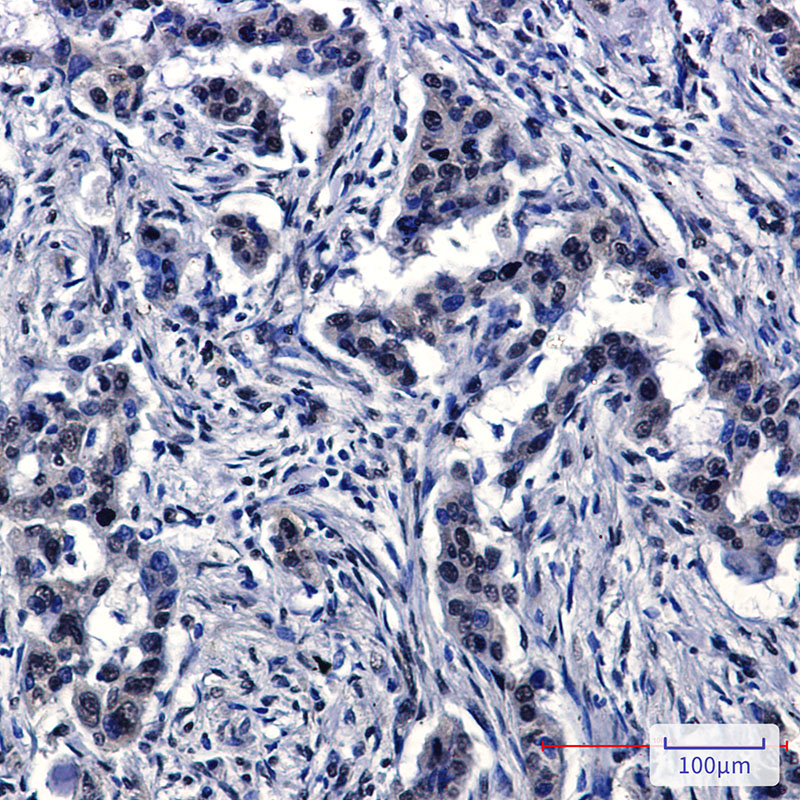
| Post Translational Modifications | Neddylated.required for activity of cullin-RING-based E3 ubiquitin-protein ligase complexes. Deneddylated via its interaction with the COP9 signalosome (CSN) complex. (Microbial infection) Deneddylated by Epstein-Barr virus BPLF1 leading to a S-phase-like environment that is required for efficient replication of the viral genome. |
| Function | Core component of multiple cullin-RING-based E3 ubiquitin-protein ligase complexes which mediate the ubiquitination of target proteins. As a scaffold protein may contribute to catalysis through positioning of the substrate and the ubiquitin-conjugating enzyme. The E3 ubiquitin-protein ligase activity of the complex is dependent on the neddylation of the cullin subunit and is inhibited by the association of the deneddylated cullin subunit with TIP120A/CAND1. The functional specificity of the E3 ubiquitin-protein ligase complex depends on the variable substrate recognition component. DCX(DET1-COP1) directs ubiquitination of JUN. DCX(DDB2) directs ubiquitination of XPC. DCX(DDB2) ubiquitinates histones H3-H4 and is required for efficient histone deposition during replication-coupled (H3.1) and replication-independent (H3.3) nucleosome assembly, probably by facilitating the transfer of H3 from ASF1A/ASF1B to other chaperones involved in histone deposition. DCX(DTL) plays a role in PCNA-dependent polyubiquitination of CDT1 and MDM2-dependent ubiquitination of p53/TP53 in response to radiation-induced DNA damage and during DNA replication. DCX(DTL) directs autoubiquitination of DTL. In association with DDB1 and SKP2 probably is involved in ubiquitination of CDKN1B/p27kip. Is involved in ubiquitination of HOXA9. The DDB1-CUL4A-DTL E3 ligase complex regulates the circadian clock function by mediating the ubiquitination and degradation of CRY1. The DCX(ERCC8) complex (also named CSA complex) plays a role in transcription-coupled repair (TCR). A number of DCX complexes (containing either TRPC4AP or DCAF12 as substrate-recognition component) are part of the DesCEND (destruction via C-end degrons) pathway, which recognizes a C-degron located at the extreme C terminus of target proteins, leading to their ubiquitination and degradation. The DCX(AMBRA1) complex is a master regulator of the transition from G1 to S cell phase by mediating ubiquitination of phosphorylated cyclin-D (CCND1, CCND2 and CCND3). The DCX(AMBRA1) complex also acts as a regulator of Cul5-RING (CRL5) E3 ubiquitin-protein ligase complexes by mediating ubiquitination and degradation of Elongin-C (ELOC) component of CRL5 complexes. With CUL4B, contributes to ribosome biogenesis. |
| Protein Name | Cullin-4aCul-4a |
| Database Links | Reactome: R-HSA-110314Reactome: R-HSA-5696394Reactome: R-HSA-5696395Reactome: R-HSA-5696400Reactome: R-HSA-6781823Reactome: R-HSA-6781827Reactome: R-HSA-6782135Reactome: R-HSA-6782210Reactome: R-HSA-8951664 |
| Cellular Localisation | |
| Alternative Antibody Names | Anti-Cullin-4a antibodyAnti-Cul-4a antibodyAnti-CUL4A antibody |
Information sourced from Uniprot.org