



Anti-CLDN4 antibody (150-209 aa) [PT1925] (STJ196954)
SPECIFICATIONS
ClonalityMonoclonal
HostMouse
ConjugationUnconjugated
IsotypeIgG2bk
ImmunogenSynthesized peptide derived from the human Claudin 4 at the amino acid range 150-209
General Information
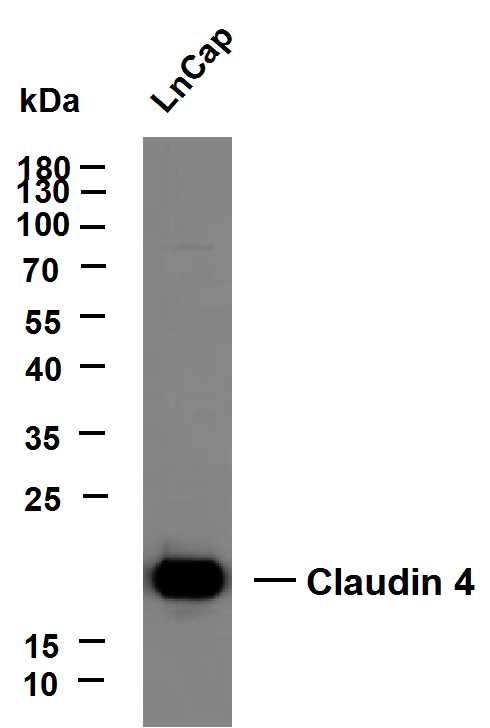
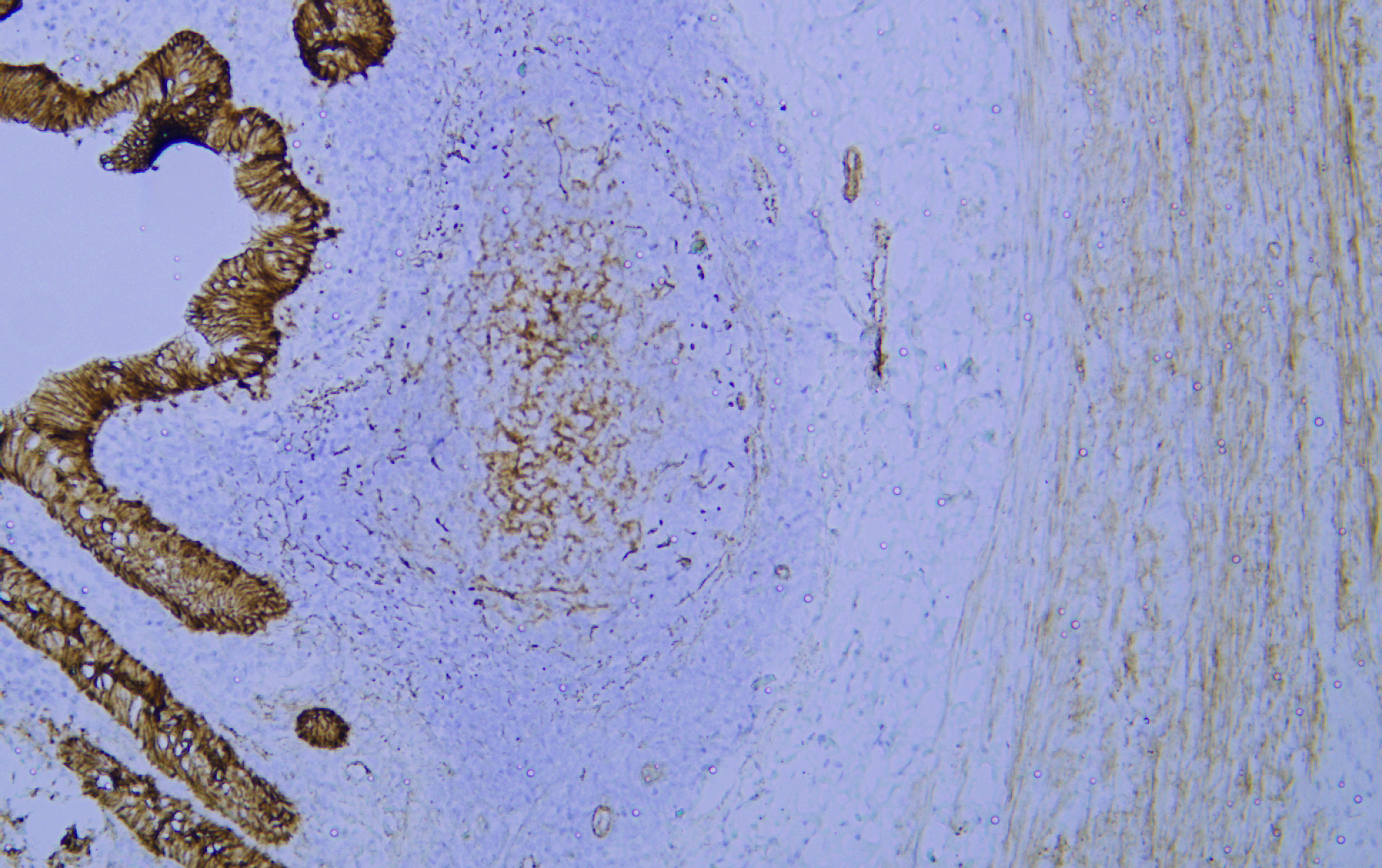
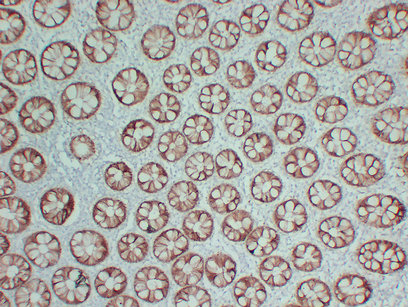
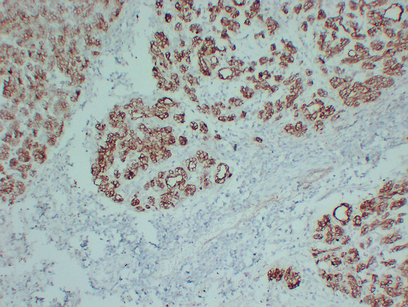
| Short Description | Mouse monoclonal anti-Claudin-4 (150-209 aa) for use in IHC, IF and WB in Human, Mouse and Rat samples. Datasheet included with dilution recommendations, and related reagents. |
| Applications | IHC/IF/WB |
| Host | Mouse |
| Reactivity | Human/Mouse/Rat |
| Note | STRICTLY FOR FURTHER SCIENTIFIC RESEARCH USE ONLY (RUO). MUST NOT TO BE USED IN DIAGNOSTIC OR THERAPEUTIC APPLICATIONS. |
Product Properties
| Clonality | Monoclonal |
| Clone ID | PT1925 |
| Isotype | IgG2bk |
| Conjugation | Unconjugated |
| Purification | The antibody was affinity-purified from mouse ascites by affinity-chromatography using specific immunogen. |
| Dilution Range | IHC-P 1:100-500WB 1:500-2000IF 1:50-200 |
| Formulation | Liquid in PBS containing 50% Glycerol, 0.5% BSA and 0.02% Sodium Azide. |
| Storage Instruction | Store at-20°C for up to 1 year from the date of receipt, and avoid repeat freeze-thaw cycles. |
Target Information
| Gene Symbol | CLDN4 |
| Gene ID | 1364 |
| Uniprot ID | CLD4_HUMAN |
| Immunogen | Synthesized peptide derived from the human Claudin 4 at the amino acid range 150-209 |
| Immunogen Region | 150-209 aa |
| Specificity | This antibody detects endogenous levels of human Claudin 4. Heat-induced epitope retrieval (HIER) TRIS-EDTA of pH8.0 was highly recommended as antigen repair method in paraffin section. The antibody w |
Additional Info
| Function | Can associate with other claudins to regulate tight junction structural and functional strand dynamics. May coassemble with CLDN8 into tight junction strands containing anion-selective channels that convey paracellular chloride permeability in renal collecting ducts. May integrate into CLDN3 strands to modulate localized tight junction barrier properties. May disrupt strand assembly of channel-forming CLDN2 and CLDN15 and inhibit cation conductance. Cannot form tight junction strands on its own. |
| Protein Name | Claudin-4Clostridium Perfringens Enterotoxin ReceptorCpe-RCpe-ReceptorWilliams-Beuren Syndrome Chromosomal Region 8 Protein |
| Database Links | Reactome: R-HSA-420029 |
| Cellular Localisation | Cell JunctionTight JunctionCell MembraneMulti-Pass Membrane Protein |
| Alternative Antibody Names | Anti-Claudin-4 antibodyAnti-Clostridium Perfringens Enterotoxin Receptor antibodyAnti-Cpe-R antibodyAnti-Cpe-Receptor antibodyAnti-Williams-Beuren Syndrome Chromosomal Region 8 Protein antibodyAnti-CLDN4 antibodyAnti-CPER antibodyAnti-CPETR1 antibodyAnti-WBSCR8 antibody |
Information sourced from Uniprot.org