
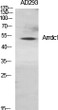

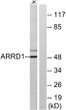

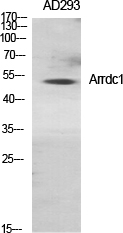
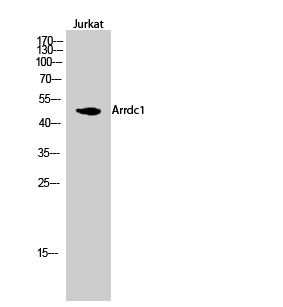
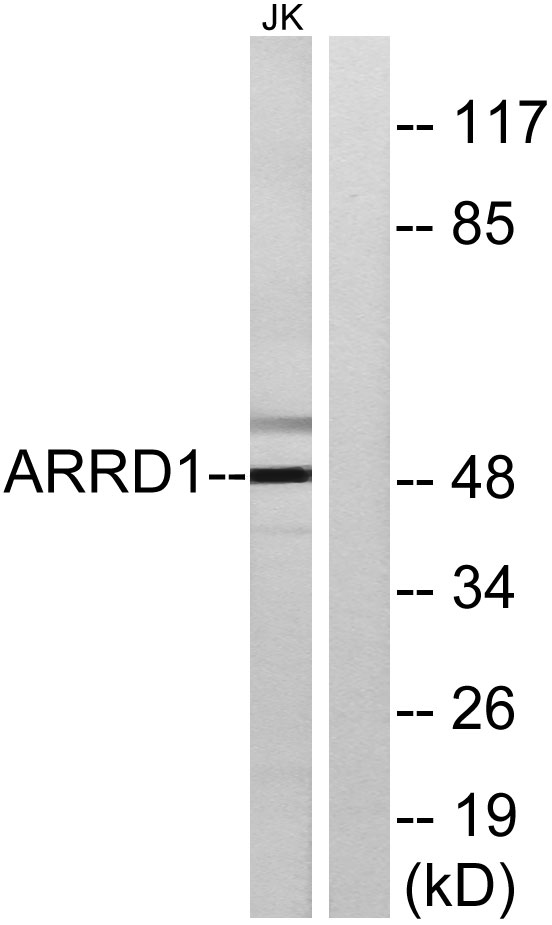
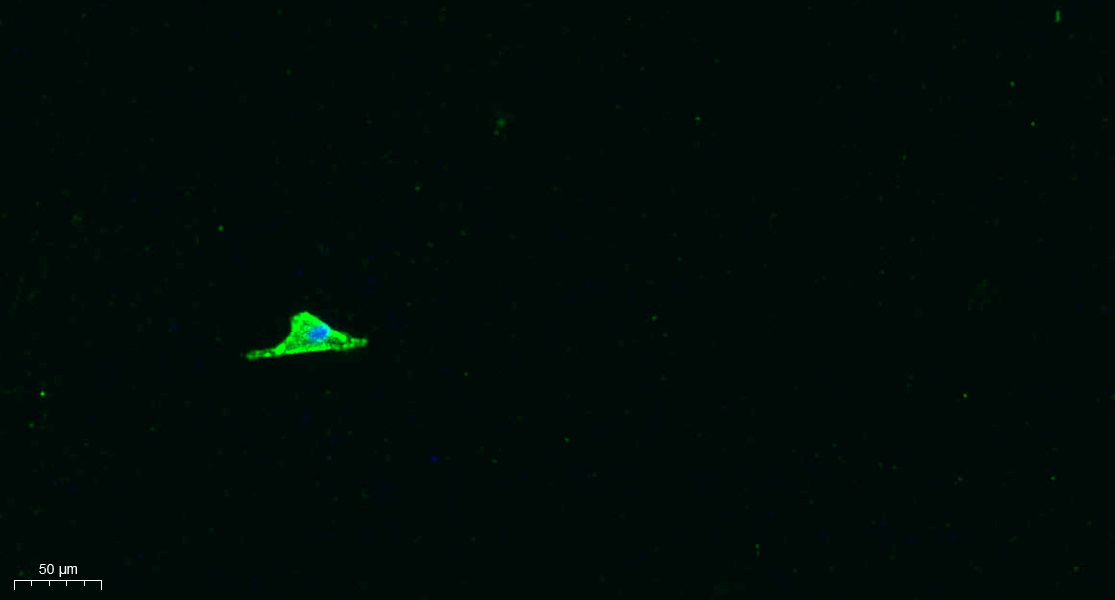

Anti-ARRDC1 antibody (167-216 aa) (STJ91703)
SPECIFICATIONS
ClonalityPolyclonal
HostRabbit
ConjugationUnconjugated
IsotypeIgG
ImmunogenThe antiserum was produced against synthesized peptide derived from the human ARRD1 at the amino acid range 167-216
General Information
| Short Description | Rabbit polyclonal anti-Arrestin domain-containing protein 1 (167-216 aa) for use in WB, IF and ELISA in Human, Mouse and Rat samples. Datasheet included with dilution recommendations, and related reagents. |
| Applications | WB/IF/ELISA |
| Host | Rabbit |
| Reactivity | Human/Mouse/Rat |
| Note | STRICTLY FOR FURTHER SCIENTIFIC RESEARCH USE ONLY (RUO). MUST NOT TO BE USED IN DIAGNOSTIC OR THERAPEUTIC APPLICATIONS. |
Product Properties
| Clonality | Polyclonal |
| Isotype | IgG |
| Conjugation | Unconjugated |
| Concentration | 1 mg/mL |
| Purification | The antibody was affinity-purified from rabbit antiserum by affinity-chromatography using epitope-specific immunogen. |
| Dilution Range | WB 1:500-2000IF 1:100-300ELISA 1:5000-20000 |
| Formulation | Liquid in PBS containing 50% Glycerol, 0.5% BSA and 0.02% Sodium Azide. |
| Storage Instruction | Store at-20°C for up to 1 year from the date of receipt, and avoid repeat freeze-thaw cycles. |
Target Information
| Gene Symbol | ARRDC1 |
| Gene ID | 92714 |
| Uniprot ID | ARRD1_HUMAN |
| Immunogen | The antiserum was produced against synthesized peptide derived from the human ARRD1 at the amino acid range 167-216 |
| Immunogen Region | 167-216 aa |
| Specificity | Arrdc1 Polyclonal Antibody detects endogenous levels of Arrdc1 protein. |
Additional Info
| Function | Functions as an adapter recruiting ubiquitin-protein ligases to their specific substrates. Through an ubiquitination-dependent mechanism plays for instance a role in the incorporation of SLC11A2 into extracellular vesicles. More generally, plays a role in the extracellular transport of proteins between cells through the release in the extracellular space of microvesicles. By participating in the ITCH-mediated ubiquitination and subsequent degradation of NOTCH1, negatively regulates the NOTCH signaling pathway. |
| Protein Name | Arrestin Domain-Containing Protein 1Alpha-Arrestin 1 |
| Database Links | |
| Cellular Localisation | Cell MembraneAlso Found In Extracellular Vesicles Different From Exosomes |
| Alternative Antibody Names | Anti-Arrestin Domain-Containing Protein 1 antibodyAnti-Alpha-Arrestin 1 antibodyAnti-ARRDC1 antibody |
Information sourced from Uniprot.org