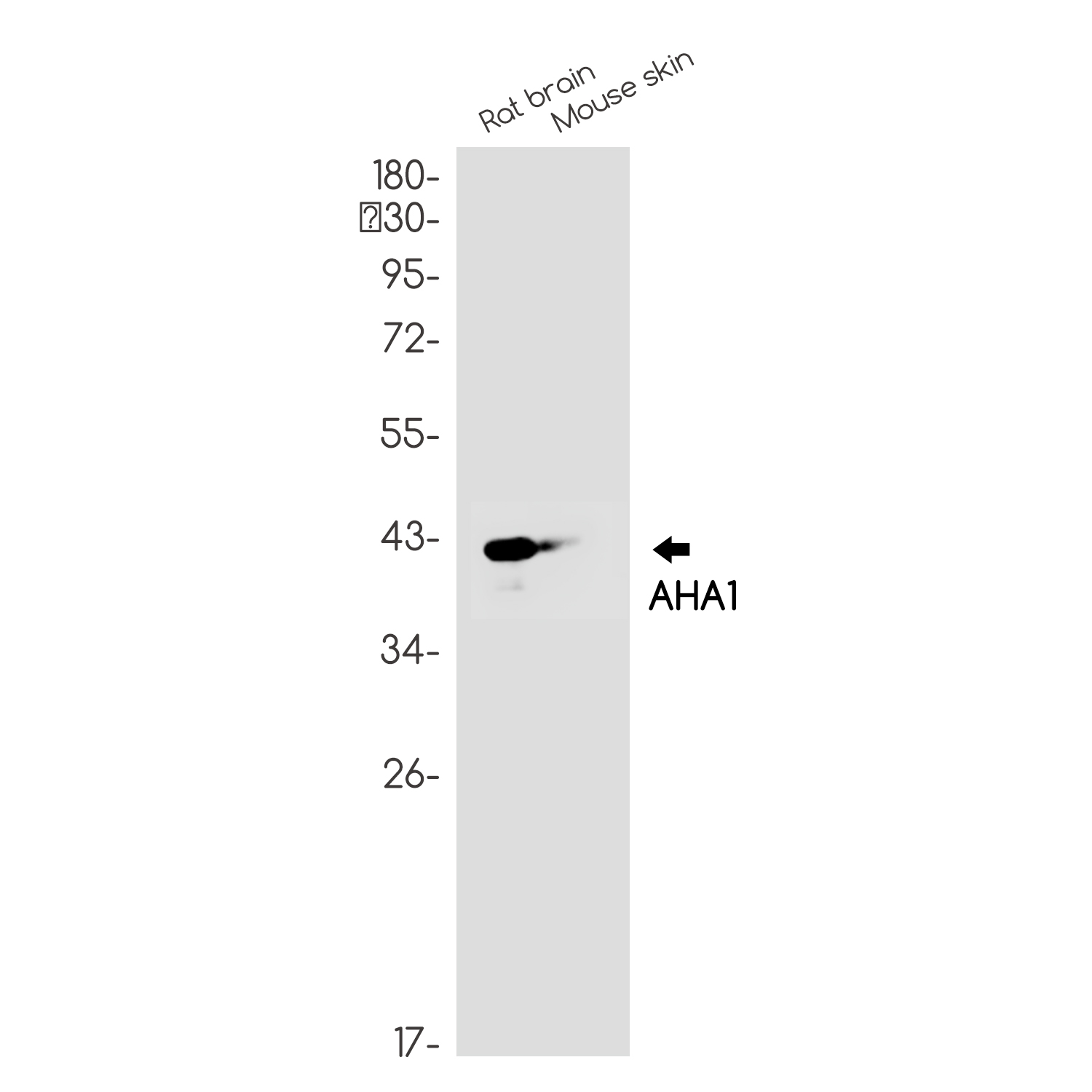
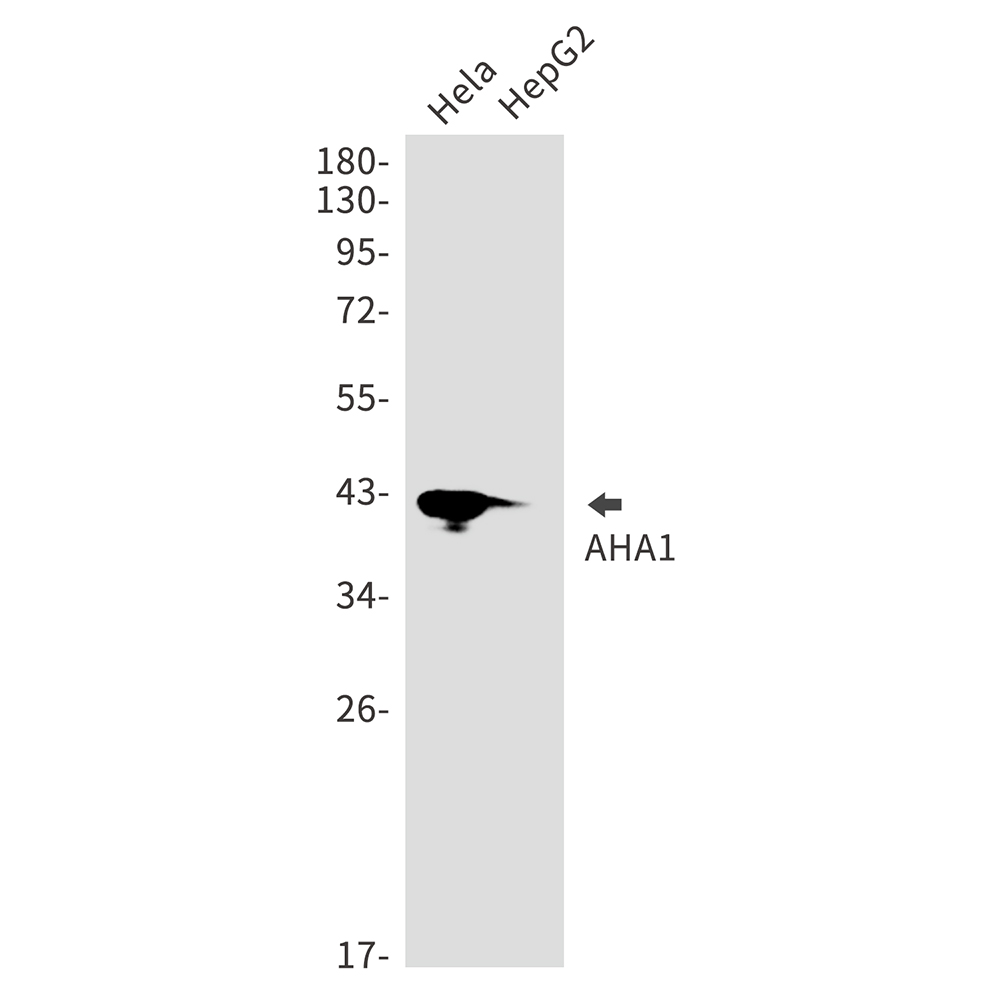
| Tissue Specificity | Expressed in numerous tissues, including brain, heart, skeletal muscle and kidney and, at lower levels, liver and placenta. |
| Post Translational Modifications | Phosphorylation at Tyr-223 enhances binding to chaperone HSP90AA1. |
| Function | Acts as a co-chaperone of HSP90AA1. Activates the ATPase activity of HSP90AA1 leading to increase in its chaperone activity. Competes with the inhibitory co-chaperone FNIP1 for binding to HSP90AA1, thereby providing a reciprocal regulatory mechanism for chaperoning of client proteins. Competes with the inhibitory co-chaperone TSC1 for binding to HSP90AA1, thereby providing a reciprocal regulatory mechanism for chaperoning of client proteins. |
| Protein Name | Activator Of 90 Kda Heat Shock Protein Atpase Homolog 1Aha1P38 |
| Database Links | |
| Cellular Localisation | CytoplasmCytosolEndoplasmic ReticulumMay Transiently Interact With The Endoplasmic Reticulum |
| Alternative Antibody Names | Anti-Activator Of 90 Kda Heat Shock Protein Atpase Homolog 1 antibodyAnti-Aha1 antibodyAnti-P38 antibodyAnti-AHSA1 antibodyAnti-C14orf3 antibodyAnti-HSPC322 antibody |
Information sourced from Uniprot.org