


SARS-CoV-2 (2019-nCoV) Spike S1 Subunit protein (Recombinant) (His-Tag) (STJP019440)
SPECIFICATIONS
HostHEK293 Cells
ImmunogenSARS-CoV-2 (2019-nCoV)
General Information
| Short Description | Recombinant-SARS-CoV-2 (2019-nCoV) Spike S1 Subunit-His-Tag protein was developed from hek293 cells and has a target region of His-Tag. For use in research applications. |
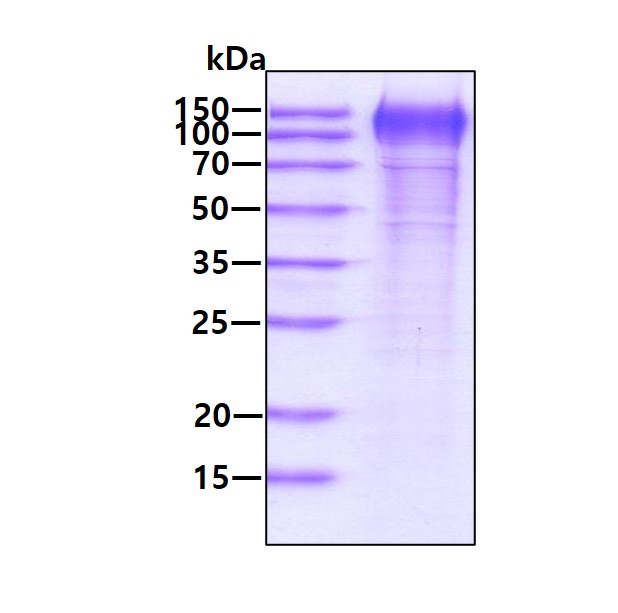
| Applications | SDS-PAGE/Bioactivity |
| Host | HEK293 Cells |
| Note | STRICTLY FOR FURTHER SCIENTIFIC RESEARCH USE ONLY (RUO). MUST NOT TO BE USED IN DIAGNOSTIC OR THERAPEUTIC APPLICATIONS. |
Product Properties
| Concentration | 0.25 mg/mL |
| Formulation | Liquid in phosphate-Buffered Saline (pH 7.4) containing 10% Glycerol |
| Storage Instruction | For short term storage, keep at +2C to +8C for up to 1 week. For long term storage, aliquot and store at-20C, and avoid repeat freeze-thaw cycles. |
| Endotoxin | < 1 EU per 1ug of protein (determined by LAL method) |
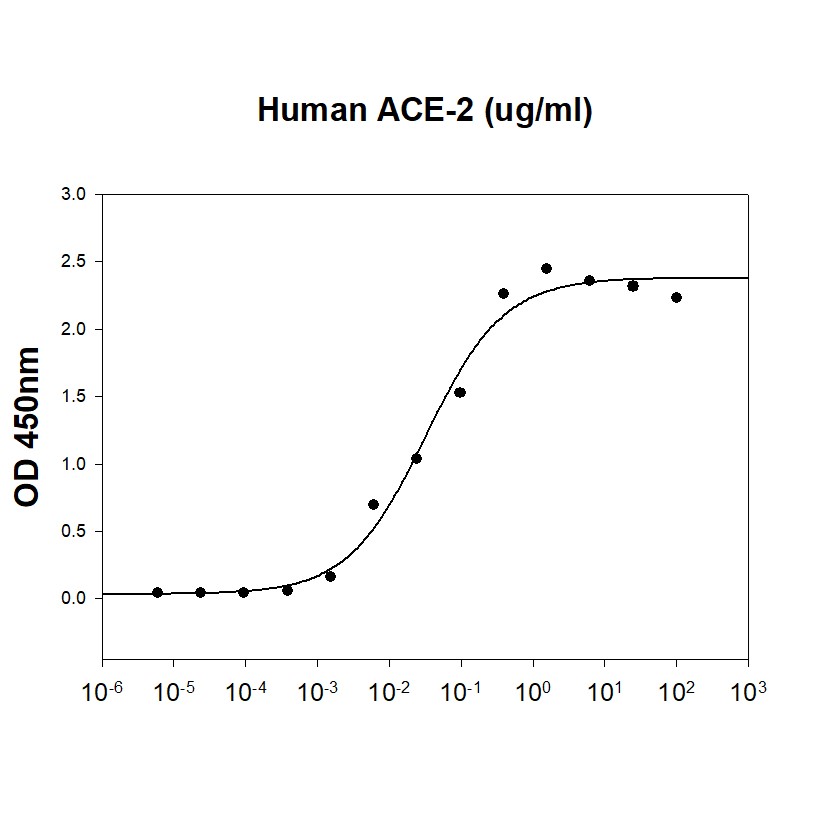
| Immunoreactivity | Measured by its binding ability in a functional ELISA with Human ACE-2 |
Target Information
| Accession Number | QHD43416.1 |
| Immunogen | SARS-CoV-2 (2019-nCoV) |
| Immunogen Region | 16-685aa |
| Immunogen Sequence |
Additional Info
| Background | An epidemic of acute respiratory syndrome in humans, which appeared in Wuhan, China in December 2019, was caused by a novel coronavirus (SARS-CoV-2). This disease was named as "Coronavirus Disease 2019" (COVID-19). This virus shares highly homological sequence with SARS-CoV, and causes acute, highly lethal pneumonia coronavirus disease 2019 (COVID-19) with clinical symptoms similar to those reported for SARS-CoV and MERS-CoV. The genome of this and other emerging pathogenic human CoVs encodes four major structural proteins [spike (S) , envelope (E) , membrane (M) , and nucleocapsid (N) ], approximately 16 nonstructural proteins (nsp1–16) , and five to eight accessory proteins. Among them, the S protein plays an essential role in viral attachment, fusion, entry, and transmission. It comprises an N-terminal S1 subunit responsible for virus–receptor binding and a C-terminal S2 subunit responsible for virus–cell membrane fusion. S1 is further divided into an N-terminal domain (NTD) and a receptor-binding domain (RBD). SARS-CoV-2 and SARS-CoV bind angiotensin-converting enzyme 2 (ACE2) while MERS-CoV binds dipeptidyl peptidase 4 (DPP4) , as receptors on the host cell expressing ACE2 (e.g., pneumocytes, enterocytes) or DPP4 (e.g., liver or lung cells including Huh-7, MRC-5, and Calu-3). During infection, CoV first binds the host cell through interaction between its S1-RBD and the cell membrane receptor, triggering conformational changes in the S2 subunit that result in virus fusion and entry into the target cell. Recombinant SARS-CoV-2 (2019-nCoV) Spike S1 Subunit, fused to His-tag at C-terminus, was expressed in HEK293 cell and purified by using conventional chromatography techniques. |
Information sourced from Uniprot.org