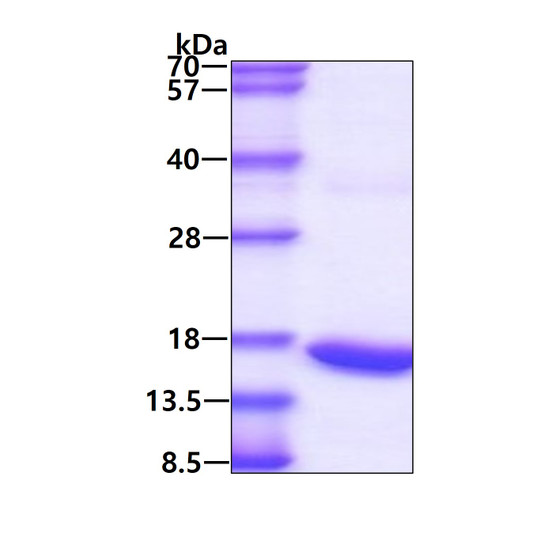
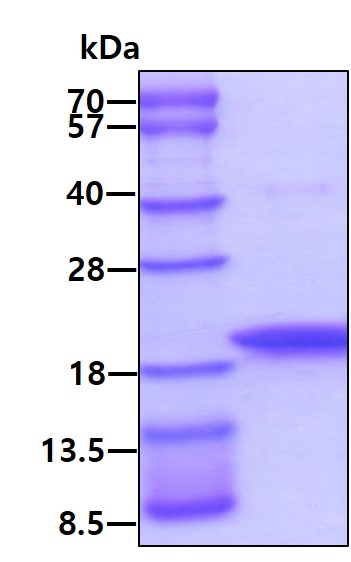
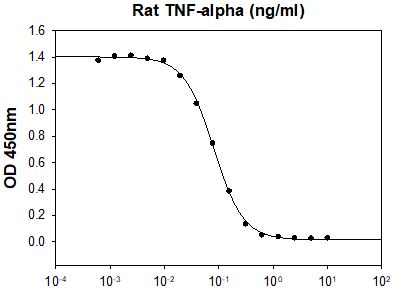
| Post Translational Modifications | The soluble form derives from the membrane form by proteolytic processing. The membrane-bound form is further proteolytically processed by SPPL2A or SPPL2B through regulated intramembrane proteolysis producing TNF intracellular domains (ICD1 and ICD2) released in the cytosol and TNF C-domain 1 and C-domain 2 secreted into the extracellular space. The membrane form, but not the soluble form, is phosphorylated on serine residues. Dephosphorylation of the membrane form occurs by binding to soluble TNFRSF1A/TNFR1. O-glycosylated.glycans contain galactose, N-acetylgalactosamine and N-acetylneuraminic acid. Tumor necrosis factor, soluble form: The soluble form is demyristoylated by SIRT6, promoting its secretion. |
| Function | Cytokine that binds to TNFRSF1A/TNFR1 and TNFRSF1B/TNFBR. It is mainly secreted by macrophages and can induce cell death of certain tumor cell lines. It is potent pyrogen causing fever by direct action or by stimulation of interleukin-1 secretion and is implicated in the induction of cachexia, Under certain conditions it can stimulate cell proliferation and induce cell differentiation. Induces insulin resistance in adipocytes via inhibition of insulin-induced IRS1 tyrosine phosphorylation and insulin-induced glucose uptake. Induces GKAP42 protein degradation in adipocytes which is partially responsible for TNF-induced insulin resistance. Plays a role in angiogenesis by inducing VEGF production synergistically with IL1B and IL6. Promotes osteoclastogenesis and therefore mediates bone resorption. The TNF intracellular domain (ICD) form induces IL12 production in dendritic cells. |
| Protein Name | Tumor Necrosis FactorCachectinTnf-AlphaTumor Necrosis Factor Ligand Superfamily Member 2Tnf-A Cleaved Into - Tumor Necrosis Factor - Membrane FormN-Terminal FragmentNtf - Intracellular Domain 1Icd1 - Intracellular Domain 2Icd2 - C-Domain 1 - C-Domain 2 - Tumor Necrosis Factor - Soluble Form |
| Database Links | Reactome: R-RNO-5357786Reactome: -RNO-5357905Reactome: -RNO-5357956Reactome: -RNO-5626978Reactome: -RNO-5668541Reactome: -RNO-75893 |
| Cellular Localisation | Cell MembraneSingle-Pass Type Ii Membrane ProteinTumor Necrosis FactorMembrane Form: MembraneSoluble Form: SecretedC-Domain 1: SecretedC-Domain 2: Secreted |
| Alternative Protein Names | Tumor Necrosis Factor proteinCachectin proteinTnf-Alpha proteinTumor Necrosis Factor Ligand Superfamily Member 2 proteinTnf-A Cleaved Into - Tumor Necrosis Factor - Membrane Form proteinN-Terminal Fragment proteinNtf - Intracellular Domain 1 proteinIcd1 - Intracellular Domain 2 proteinIcd2 - C-Domain 1 - C-Domain 2 - Tumor Necrosis Factor - Soluble Form proteinTnf proteinTnfa proteinTnfsf2 protein |
Information sourced from Uniprot.org