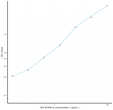
This SCNN1a Sandwich ELISA Kit, Ready-To-Use is an in-vitro enzyme-linked immunosorbent assay for the measurement of samples in rat serum, plasma, tissue homogenates or other biological fluids..
Applications
ELISA
Reactivity
Rat
Sensitivity
0.059ng/mL
Detection Limit
0.156-10ng/mL
Note
STRICTLY FOR FURTHER SCIENTIFIC RESEARCH USE ONLY (RUO). MUST NOT TO BE USED IN DIAGNOSTIC OR THERAPEUTIC APPLICATIONS.
Product Properties
Storage Instruction
The whole kit may be stored at-20°C for up to 12 months from receipt. An unopened kit may be stored in the fridge at 2-8°C for up to 6 months. Once opened store individual kit contents according to components table provided with the kit.
serum, plasma, tissue homogenates or other biological fluids.
Additional Info
Tissue Specificity
Detected in kidney, lung and testis (at protein level). In the testis, detected within the seminiferous tubules but not in the interstitial cells (at protein level).
Post Translational Modifications
Ubiquitinated. Can be ubiquitinated at multiple sites and undergo monoubiquitination and polyubiquitination. Ubiquitination by NEDD4 or NEDD4L inhibits the ENaC channel through endocytosis, intracellular retention and degradation of its individual subunits. N-glycosylated. ENaC is activated through the proteolytic maturation of its subunits. Furin cleaves the SCNN1A subunit, which results in a stepwise increase in the open probability of the channel due to the release of an inhibitory tract. BPIFA1, which is recruited by the SCNN1B subunit, prevents the proteolytic activation of ENaC.
Function
This is one of the three pore-forming subunits of the heterotrimeric epithelial sodium channel (ENaC), a critical regulator of sodium balance and fluid homeostasis. ENaC operates in epithelial tissues, where it mediates the electrodiffusion of sodium ions from extracellular fluid through the apical membrane of cells, with water following osmotically. It plays a key role in maintaining sodium homeostasis through electrogenic sodium reabsorption in the kidneys. Additionally, ENaC is essential for airway surface liquid homeostasis, which is crucial for proper mucus clearance.
Apical Cell MembraneMulti-Pass Membrane ProteinCell ProjectionCiliumCytoplasmic GranuleCytoplasmCytoplasmic VesicleSecretory VesicleAcrosomeFlagellumIn Multi-Ciliated CellsLocated On CiliaIn Non-Ciliated Epithelial CellsRestricted To Apical SurfacesIn EpidermisLocated Nearly Uniformly In The Cytoplasm In A Granular DistributionIn Sebaceous GlandsObserved Only In The Cytoplasmic Space In Between The Lipid VesiclesIn Eccrine Sweat GlandsMainly Located At The Apical Surface Of The Cells Facing The LumenIn SkinIn Arrector Pili Muscle Cells And In AdipocytesLocated In The Cytoplasm And Colocalized With Actin FibersIn SpermatogoniaSpermatocytes And Round SpermatidsLocated In The CytoplasmPrior To SpermiationLocation Shifts From The Cytoplasm To The Spermatid TailIn SpermatozoaLocalizes At The Acrosome And The Central Region Of The Sperm Flagellum