

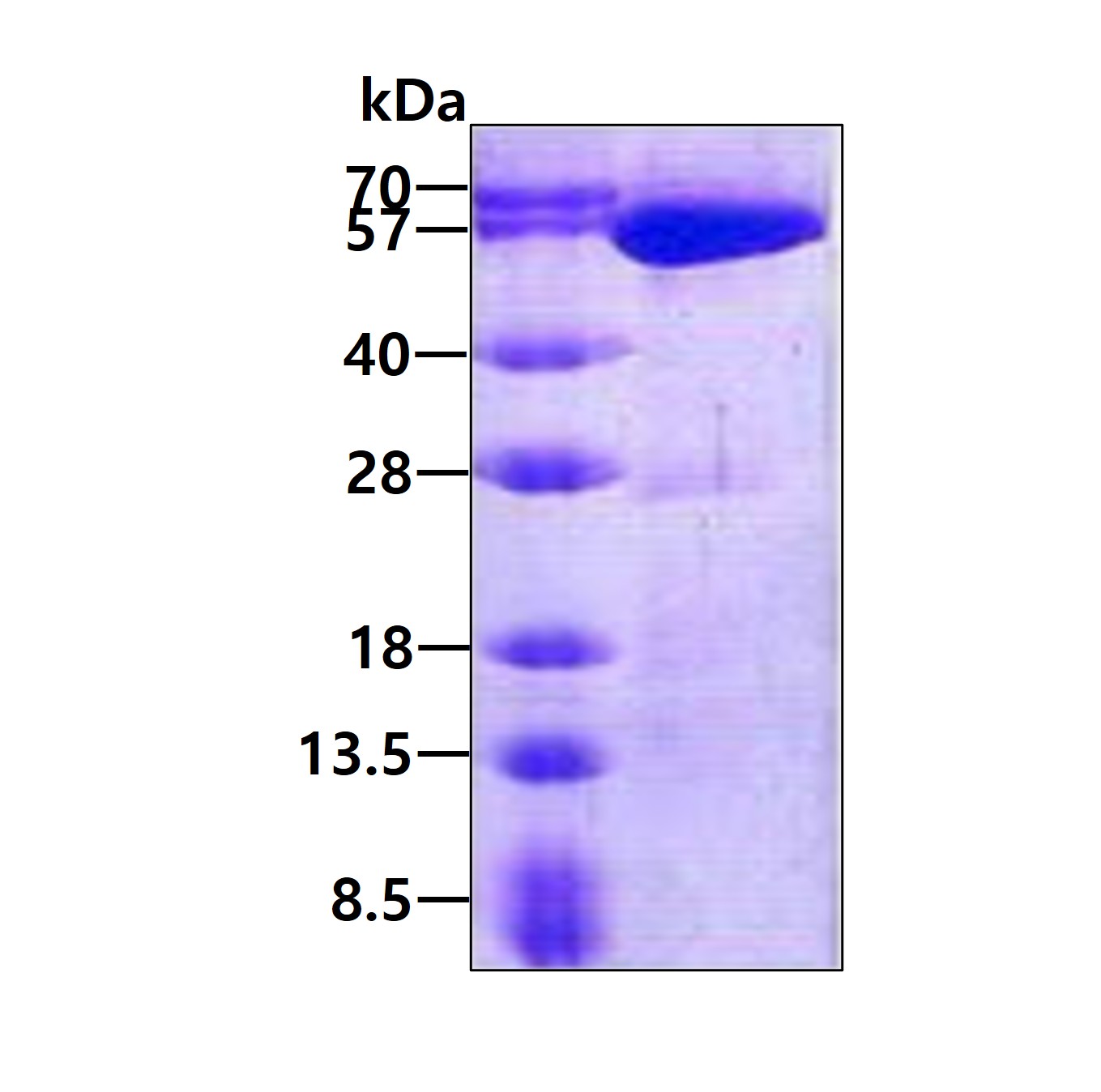

Human USP14 protein (Recombinant) (His-Tag) (STJP018028)
SPECIFICATIONS
HostE.coli
ImmunogenHuman
General Information
| Short Description | Recombinant-Human USP14-His-Tag protein was developed from e.coli and has a target region of His-Tag. For use in research applications. |
| Applications | SDS-PAGE |
| Host | E.coli |
| Note | STRICTLY FOR FURTHER SCIENTIFIC RESEARCH USE ONLY (RUO). MUST NOT TO BE USED IN DIAGNOSTIC OR THERAPEUTIC APPLICATIONS. |
Product Properties
| Concentration | 1 mg/mL |
| Formulation | Liquid in 20mM Tris-HCl buffer (pH 8.0) containing 0.2M NaCl, 20% Glycerol, 1mM DTT |
| Storage Instruction | For short term storage, keep at +2C to +8C for up to 1 week. For long term storage, aliquot and store at-20C, and avoid repeat freeze-thaw cycles. |
Target Information
| Gene Symbol | USP14 |
| Gene ID | 9097 |
| Uniprot ID | UBP14_HUMAN |
| Accession Number | NP_005142 |
| Immunogen | Human |
| Immunogen Region | 1-494aa |
| Immunogen Sequence |
Additional Info
| Function | Proteasome-associated deubiquitinase which releases ubiquitin from the proteasome targeted ubiquitinated proteins. Ensures the regeneration of ubiquitin at the proteasome. Is a reversibly associated subunit of the proteasome and a large fraction of proteasome-free protein exists within the cell. Required for the degradation of the chemokine receptor CXCR4 which is critical for CXCL12-induced cell chemotaxis. Also serves as a physiological inhibitor of endoplasmic reticulum-associated degradation (ERAD) under the non-stressed condition by inhibiting the degradation of unfolded endoplasmic reticulum proteins via interaction with ERN1. Indispensable for synaptic development and function at neuromuscular junctions (NMJs). Plays a role in the innate immune defense against viruses by stabilizing the viral DNA sensor CGAS and thus inhibiting its autophagic degradation. Inhibits OPTN-mediated selective autophagic degradation of KDM4D and thereby negatively regulates H3K9me2 and H3K9me3. |
| Protein Name | Ubiquitin Carboxyl-Terminal Hydrolase 14Deubiquitinating Enzyme 14Ubiquitin Thioesterase 14Ubiquitin-Specific-Processing Protease 14 |
| Database Links | Reactome: R-HSA-5689880Reactome: R-HSA-9758274 |
| Cellular Localisation | CytoplasmCell MembranePeripheral Membrane Protein |
| Alternative Protein Names | Ubiquitin Carboxyl-Terminal Hydrolase 14 proteinDeubiquitinating Enzyme 14 proteinUbiquitin Thioesterase 14 proteinUbiquitin-Specific-Processing Protease 14 proteinUSP14 proteinTGT protein |
Information sourced from Uniprot.org