
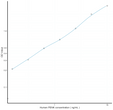


Human PENK (Proenkephalin) Sandwich ELISA Kit (STJE0011400)
SPECIFICATIONS
General Information
| Short Description | This PENK Sandwich ELISA Kit is an in-vitro enzyme-linked immunosorbent assay for the measurement of samples in human serum, plasma, tissue homogenates or other biological fluids.. |
| Applications | ELISA |
| Reactivity | Human |
| Sensitivity | 0.062ng/mL |
| Detection Limit | 0.156-10ng/mL |
| Note | STRICTLY FOR FURTHER SCIENTIFIC RESEARCH USE ONLY (RUO). MUST NOT TO BE USED IN DIAGNOSTIC OR THERAPEUTIC APPLICATIONS. |
Product Properties
| Storage Instruction | Store the unopened kit in the fridge at 2-8°C for up to 6 months. Once opened store individual kit contents according to components table provided with the kit. |
| Assay Time | 4.5 hrs |
Target Information
| Gene Symbol | PENK |
| Gene ID | 5179 |
| Uniprot ID | PENK_HUMAN |
| Sample Type | serum, plasma, tissue homogenates or other biological fluids. |
Additional Info
| Tissue Specificity | |
| Post Translational Modifications | Proenkephalin-A is cleaved by CTSL to generate Met-enkephalin. Met-enkephalin: Processed and degraded by ACE. Leu-enkephalin: Processed and degraded by ACE. Met-enkephalin-Arg-Gly-Leu: Probably cleaved by ACE. Met-enkephalin-Arg-Phe: Processed by ACE to generate Met-enkephalin in the nucleus accumbens of the brain. The N-terminal domain contains 6 conserved cysteines thought to be involved in disulfide bonding and/or processing. |
| Function | Met-enkephalin: Neuropeptide that competes with and mimic the effects of opiate drugs. They play a role in a number of physiologic functions, including pain perception and responses to stress. Leu-enkephalin: Neuropeptide that competes with and mimic the effects of opiate drugs. They play a role in a number of physiologic functions, including pain perception and responses to stress. Met-enkephalin-Arg-Phe: Met-enkephalin-Arg-Phe neuropeptide acts as a strong ligand of Mu-type opioid receptor OPRM1. Met-enkephalin-Arg-Phe-binding to OPRM1 in the nucleus accumbens of the brain increases activation of OPRM1, leading to long-term synaptic depression of glutamate release. PENK(114-133): Increases glutamate release in the striatum and decreases GABA concentration in the striatum. PENK(237-258): Increases glutamate release in the striatum. |
| Protein Name | Proenkephalin-A Cleaved Into - Synenkephalin - Met-EnkephalinOpioid Growth FactorOgf - Penk(114-133 - Penk(143-183 - Met-Enkephalin-Arg-Gly-Leu - Leu-Enkephalin - Penk(237-258 - Met-Enkephalin-Arg-Phe |
| Database Links | Reactome: R-HSA-375276Reactome: R-HSA-381426Reactome: R-HSA-418594Reactome: R-HSA-8957275 |
| Cellular Localisation | Cytoplasmic VesicleSecretory VesicleChromaffin Granule LumenSecreted |
| Alternative ELISA Names | Proenkephalin-A Cleaved Into - Synenkephalin - Met-Enkephalin ELISA kitOpioid Growth Factor ELISA kitOgf - Penk(114-133 - Penk(143-183 - Met-Enkephalin-Arg-Gly-Leu - Leu-Enkephalin - Penk(237-258 - Met-Enkephalin-Arg-Phe ELISA kitPENK ELISA kit |
| output |
Information sourced from Uniprot.org