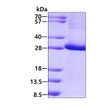
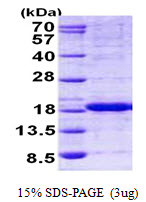
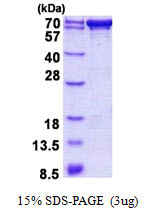
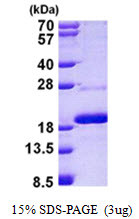
| Tissue Specificity | Higher expression in cerebellum than in whole brain and lower expression in medulloblastoma. |
| Function | Plays a role as a marker and a regulator of neuronal differentiation.Up-regulated by a variety of neurogenic signals, such as retinoic acid, epidermal growth factor/EGF and NGFB/nerve growth factor. Induces apoptosis, growth arrest and the expression of cyclin-dependent kinase inhibitor CDKN1B. Plays a role as a tumor repressor and inhibits cell growth and tumorigenicity of medulloblastoma (MDB). Acts as a probable substrate-specific adapter for a BCR (BTB-CUL3-RBX1) E3 ubiquitin-protein ligase complex towards HDAC1. Functions as antagonist of the Hedgehog pathway on cell proliferation and differentiation by affecting the nuclear transfer of transcription factor GLI1, thus maintaining cerebellar granule cells in undifferentiated state, this effect probably occurs via HDAC1 down-regulation, keeping GLI1 acetylated and inactive. When knock-down, Hedgehog antagonism is impaired and proliferation of granule cells is sustained. Activates the caspase cascade. |
| Protein Name | Btb/Poz Domain-Containing Protein Kctd11Kcash1 ProteinPotassium Channel Tetramerization Domain-Containing Protein 11Ring-Type E3 Ubiquitin Transferase Subunit Kctd11 |
| Database Links | |
| Cellular Localisation | |
| Alternative Protein Names | Btb/Poz Domain-Containing Protein Kctd11 proteinKcash1 Protein proteinPotassium Channel Tetramerization Domain-Containing Protein 11 proteinRing-Type E3 Ubiquitin Transferase Subunit Kctd11 proteinKCTD11 proteinC17orf36 proteinREN protein |
Information sourced from Uniprot.org