
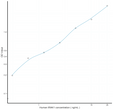


Human IRAK1 (Interleukin 1 Receptor Associated Kinase 1) Sandwich ELISA Kit (STJE0010046)
SPECIFICATIONS
General Information
| Short Description | This IRAK1 Sandwich ELISA Kit is an in-vitro enzyme-linked immunosorbent assay for the measurement of samples in human tissue homogenates, cell lysates or other biological fluids.. |
| Applications | ELISA |
| Reactivity | Human |
| Sensitivity | 0.105ng/mL |
| Detection Limit | 0.312-20ng/mL |
| Note | STRICTLY FOR FURTHER SCIENTIFIC RESEARCH USE ONLY (RUO). MUST NOT TO BE USED IN DIAGNOSTIC OR THERAPEUTIC APPLICATIONS. |
Product Properties
| Storage Instruction | Store the unopened kit in the fridge at 2-8°C for up to 6 months. Once opened store individual kit contents according to components table provided with the kit. |
| Assay Time | 4.5 hrs |
Target Information
| Gene Symbol | IRAK1 |
| Gene ID | 3654 |
| Uniprot ID | IRAK1_HUMAN |
| Sample Type | tissue homogenates, cell lysates or other biological fluids. |
Additional Info
| Tissue Specificity | Isoform 1 and isoform 2 are ubiquitously expressed in all tissues examined, with isoform 1 being more strongly expressed than isoform 2. |
| Post Translational Modifications | Following recruitment on the activated receptor complex, phosphorylated on Thr-209, probably by IRAK4, resulting in a conformational change of the kinase domain, allowing further phosphorylations to take place. Thr-387 phosphorylation in the activation loop is required to achieve full enzymatic activity. Polyubiquitinated by TRAF6 after cell stimulation with IL-1-beta by PELI1, PELI2 and PELI3. Polyubiquitination occurs with polyubiquitin chains linked through 'Lys-63'. Ubiquitination promotes interaction with NEMO/IKBKG. Also sumoylated.leading to nuclear translocation. |
| Function | Serine/threonine-protein kinase that plays a critical role in initiating innate immune response against foreign pathogens. Involved in Toll-like receptor (TLR) and IL-1R signaling pathways. Is rapidly recruited by MYD88 to the receptor-signaling complex upon TLR activation. Association with MYD88 leads to IRAK1 phosphorylation by IRAK4 and subsequent autophosphorylation and kinase activation. Phosphorylates E3 ubiquitin ligases Pellino proteins (PELI1, PELI2 and PELI3) to promote pellino-mediated polyubiquitination of IRAK1. Then, the ubiquitin-binding domain of IKBKG/NEMO binds to polyubiquitinated IRAK1 bringing together the IRAK1-MAP3K7/TAK1-TRAF6 complex and the NEMO-IKKA-IKKB complex. In turn, MAP3K7/TAK1 activates IKKs (CHUK/IKKA and IKBKB/IKKB) leading to NF-kappa-B nuclear translocation and activation. Alternatively, phosphorylates TIRAP to promote its ubiquitination and subsequent degradation. Phosphorylates the interferon regulatory factor 7 (IRF7) to induce its activation and translocation to the nucleus, resulting in transcriptional activation of type I IFN genes, which drive the cell in an antiviral state. When sumoylated, translocates to the nucleus and phosphorylates STAT3. |
| Protein Name | Interleukin-1 Receptor-Associated Kinase 1Irak-1 |
| Database Links | Reactome: R-HSA-1257604Reactome: R-HSA-166058Reactome: R-HSA-168638Reactome: R-HSA-209543Reactome: R-HSA-209560Reactome: R-HSA-445989Reactome: R-HSA-450302Reactome: R-HSA-450321Reactome: R-HSA-6811558Reactome: R-HSA-8986944Reactome: R-HSA-9020702Reactome: R-HSA-937039Reactome: R-HSA-9705671Reactome: R-HSA-975110Reactome: R-HSA-975138Reactome: R-HSA-975144Reactome: R-HSA-975155Reactome: R-HSA-975871 |
| Cellular Localisation | CytoplasmNucleusLipid DropletTranslocates To The Nucleus When SumoylatedRsad2/Viperin Recruits It To The Lipid Droplet |
| Alternative ELISA Names | Interleukin-1 Receptor-Associated Kinase 1 ELISA kitIrak-1 ELISA kitIRAK1 ELISA kitIRAK ELISA kit |
| output |
Information sourced from Uniprot.org