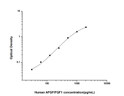
This FGF1 Sandwich ELISA is an in-vitro enzyme-linked immunosorbent assay for the measurement of samples in human serum, plasma and other biological fluids.
Applications
ELISA
Reactivity
Human
Sensitivity
18.75pg/mL
Detection Limit
31.25~2000pg/mL
Note
FOR SCIENTIFIC EDUCATIONAL RESEARCH USE ONLY (RUO). MUST NOT BE USED IN DIAGNOSTIC OR OTHER MEDICAL APPLICATIONS.
Product Properties
Storage Instruction
If unopened the kit may be stored at 2-8°C for up to 1 month. If the kit will not be used within 1 month, store the components separately, according to the component table in the manual.
This kit recognizes Human AFGF/FGF1 in samples. No significant cross-reactivity or interference between Human AFGF/FGF1 and analogues was observed.
Sample Type
Serum, plasma and other biological fluids
Additional Info
Post Translational Modifications
In the nucleus, phosphorylated by PKC/PRKCD.
Function
Plays an important role in the regulation of cell survival, cell division, angiogenesis, cell differentiation and cell migration. Functions as a potent mitogen in vitro. Acts as a ligand for FGFR1 and integrins. Binds to FGFR1 in the presence of heparin leading to FGFR1 dimerization and activation via sequential autophosphorylation on tyrosine residues which act as docking sites for interacting proteins, leading to the activation of several signaling cascades. Binds to integrin ITGAV:ITGB3. Its binding to integrin, subsequent ternary complex formation with integrin and FGFR1, and the recruitment of PTPN11 to the complex are essential for FGF1 signaling. Induces the phosphorylation and activation of FGFR1, FRS2, MAPK3/ERK1, MAPK1/ERK2 and AKT1. Can induce angiogenesis.
SecretedCytoplasmCell CortexCytosolNucleusLacks A Cleavable Signal SequenceWithin The CytoplasmIt Is Transported To The Cell Membrane And Then Secreted By A Non-Classical Pathway That Requires Cu(2+) Ions And S100a13Secreted In A Complex With Syt1Binding Of Exogenous Fgf1 To Fgfr Facilitates Endocytosis Followed By Translocation Of Fgf1 Across Endosomal Membrane Into The CytosolNuclear Import From The Cytosol Requires The Classical Nuclear Import MachineryInvolving Proteins Kpna1 And Kpnb1As Well As Lrrc59