


Human EphB1 protein (Recombinant) (His-Tag) (STJP019478)
SPECIFICATIONS
HostHEK293 Cells
ImmunogenHuman
General Information
| Short Description | Recombinant-Human EphB1-His-Tag protein was developed from hek293 cells and has a target region of His-Tag. For use in research applications. |
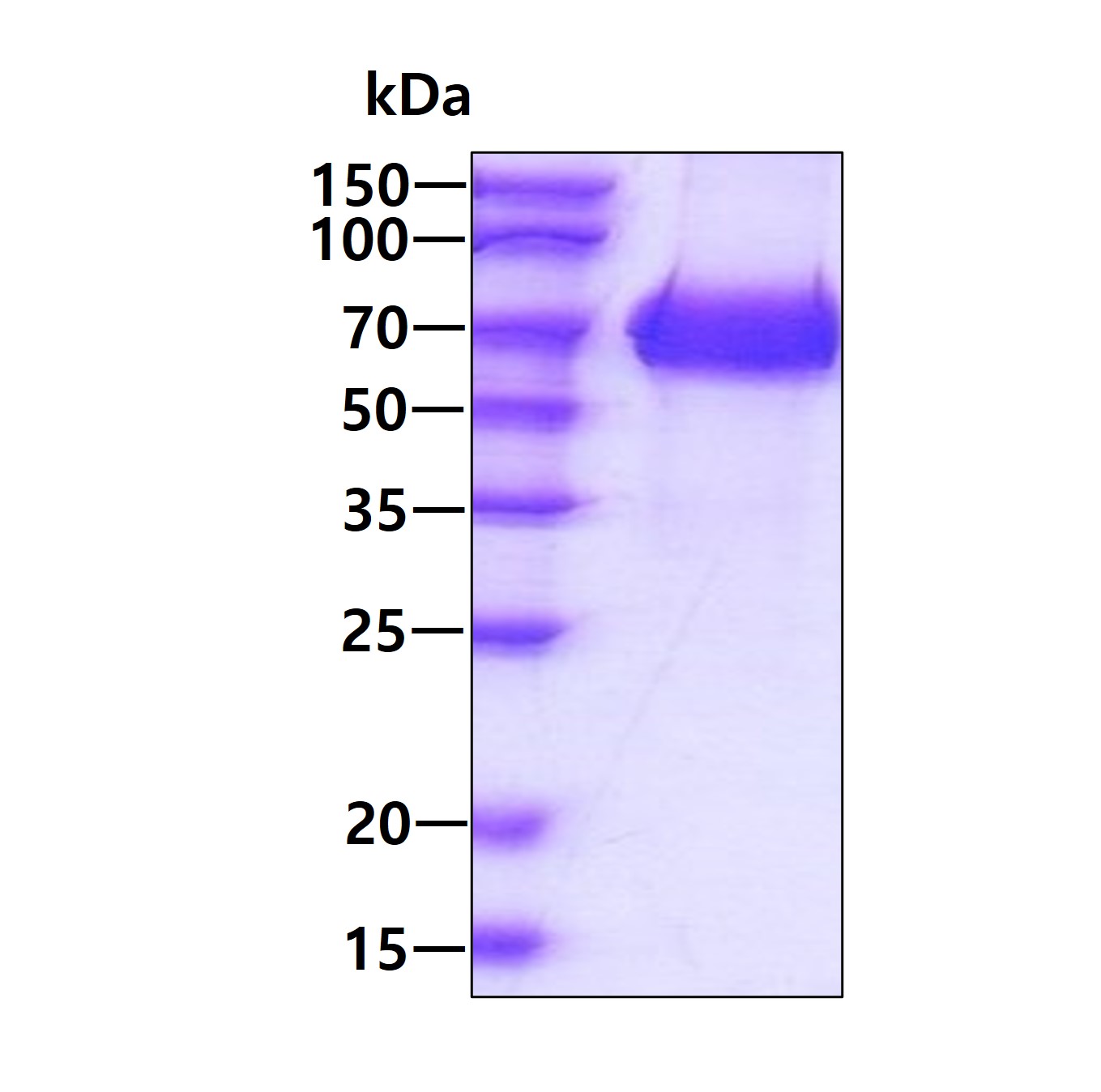
| Applications | SDS-PAGE/Bioactivity |
| Host | HEK293 Cells |
| Note | STRICTLY FOR FURTHER SCIENTIFIC RESEARCH USE ONLY (RUO). MUST NOT TO BE USED IN DIAGNOSTIC OR THERAPEUTIC APPLICATIONS. |
Product Properties
| Concentration | 0.25 mg/mL |
| Formulation | Liquid In Phosphate-Buffered Saline (pH 7.4) containing 10% Glycerol |
| Storage Instruction | For short term storage, keep at +2C to +8C for up to 1 week. For long term storage, aliquot and store at-20C, and avoid repeat freeze-thaw cycles. |
| Endotoxin | < 1 EU per 1ug of protein (determined by LAL method) |
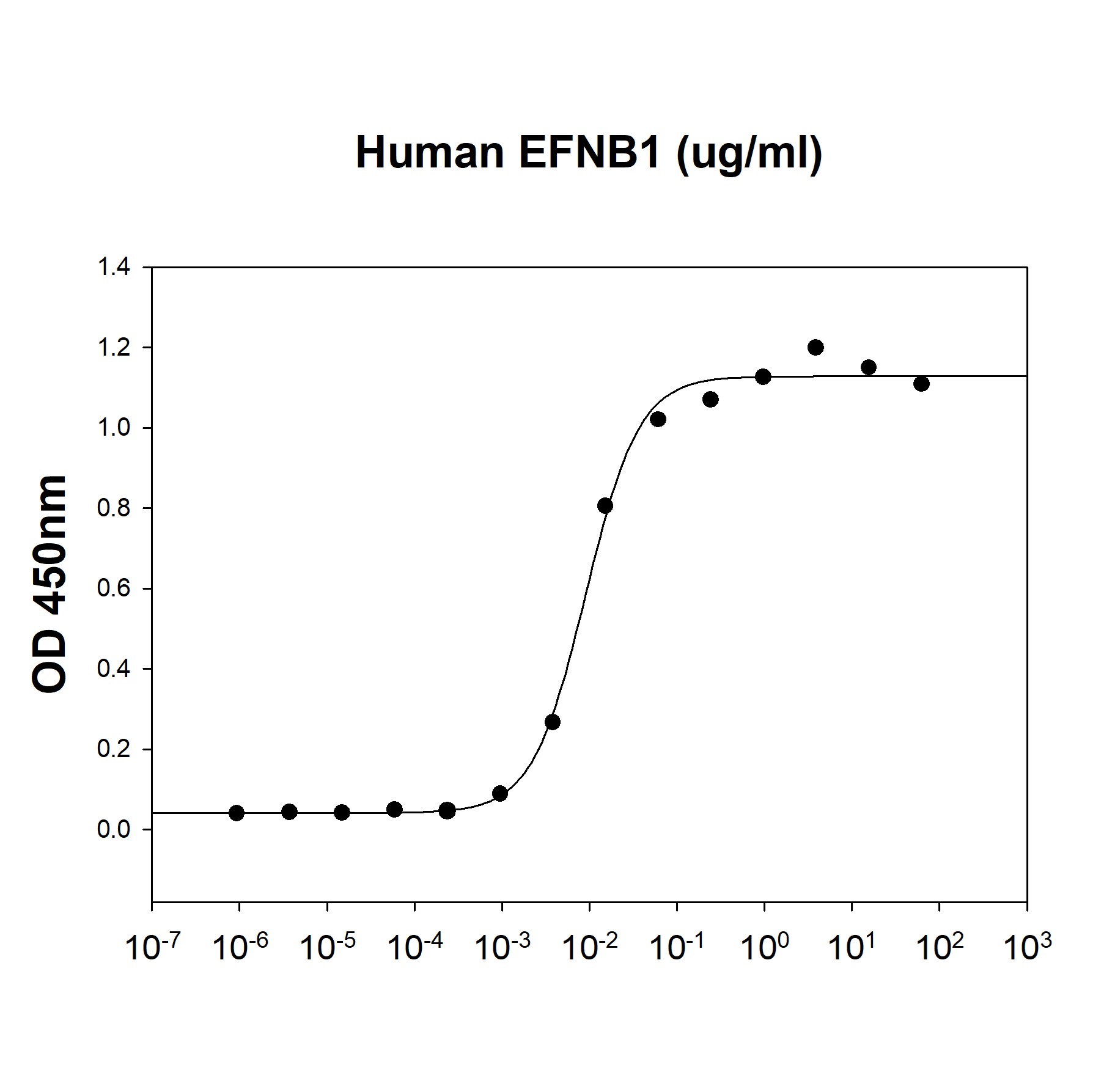
| Immunoreactivity | Measured by its binding ability in a functional ELISA with Human EFNB1. |
Target Information
| Gene Symbol | EPHB1 |
| Gene ID | 2047 |
| Uniprot ID | EPHB1_HUMAN |
| Accession Number | NP_004432.1 |
| Immunogen | Human |
| Immunogen Region | 18-540aa |
| Immunogen Sequence | MEETLMDTRT ATAELGWTAN PASGWEEVSG YDENLNTIRT YQVCNVFEPN QNNWLLTTFI NRRGAHRIYT EMRFTVRDCS SLPNVPGSCK ETFNLYYYET DSVIATKKSA FWSEAPYLKV DTIAADESFS QVDFGGRLMK VNTEVRSFGP LTRNGFYLAF QDYGACMSLL SVRVFFKKCP SIVQNFAVFP ETMTGAESTS LVIARGTCIP NAEEVDVPIK LYCNGDGE |
Additional Info
| Tissue Specificity | Preferentially expressed in brain. |
| Post Translational Modifications | Phosphorylated. Autophosphorylation is stimulated by the ligand EFNB1. Required for interaction with SH2 domain-containing interactors, for activation of the MAPK/ERK and JUN signaling cascades and for ubiquitination by CBL. Ubiquitinated.(EFNB1)ligand-induced poly- and/or multi-ubiquitination by CBL is regulated by SRC and leads to lysosomal degradation. |
| Function | Receptor tyrosine kinase which binds promiscuously transmembrane ephrin-B family ligands residing on adjacent cells, leading to contact-dependent bidirectional signaling into neighboring cells. The signaling pathway downstream of the receptor is referred to as forward signaling while the signaling pathway downstream of the ephrin ligand is referred to as reverse signaling. Cognate/functional ephrin ligands for this receptor include EFNB1, EFNB2 and EFNB3. During nervous system development, regulates retinal axon guidance redirecting ipsilaterally ventrotemporal retinal ganglion cells axons at the optic chiasm midline. This probably requires repulsive interaction with EFNB2. In the adult nervous system together with EFNB3, regulates chemotaxis, proliferation and polarity of the hippocampus neural progenitors. In addition to its role in axon guidance also plays an important redundant role with other ephrin-B receptors in development and maturation of dendritic spines and synapse formation. May also regulate angiogenesis. More generally, may play a role in targeted cell migration and adhesion. Upon activation by EFNB1 and probably other ephrin-B ligands activates the MAPK/ERK and the JNK signaling cascades to regulate cell migration and adhesion respectively. Involved in the maintenance of the pool of satellite cells (muscle stem cells) by promoting their self-renewal and reducing their activation and differentiation. |
| Protein Name | Ephrin Type-B Receptor 1ElkEph Tyrosine Kinase 2Eph-Like Kinase 6Ek6Hek6Neuronally-Expressed Eph-Related Tyrosine KinaseNetTyrosine-Protein Kinase Receptor Eph-2 |
| Database Links | Reactome: R-HSA-2682334Reactome: R-HSA-3928662Reactome: R-HSA-3928664Reactome: R-HSA-3928665 |
| Cellular Localisation | Cell MembraneSingle-Pass Type I Membrane ProteinEarly Endosome MembraneCell ProjectionDendrite |
| Alternative Protein Names | Ephrin Type-B Receptor 1 proteinElk proteinEph Tyrosine Kinase 2 proteinEph-Like Kinase 6 proteinEk6 proteinHek6 proteinNeuronally-Expressed Eph-Related Tyrosine Kinase proteinNet proteinTyrosine-Protein Kinase Receptor Eph-2 proteinEPHB1 proteinELK proteinEPHT2 proteinHEK6 proteinNET protein |
Information sourced from Uniprot.org