

Human Cystatin-9 protein (Recombinant) (His-Tag) (STJP017381)
SPECIFICATIONS
HostE.coli
ImmunogenHuman
General Information
| Short Description | Recombinant-Human Cystatin-9-His-Tag protein was developed from e.coli and has a target region of His-Tag. For use in research applications. |
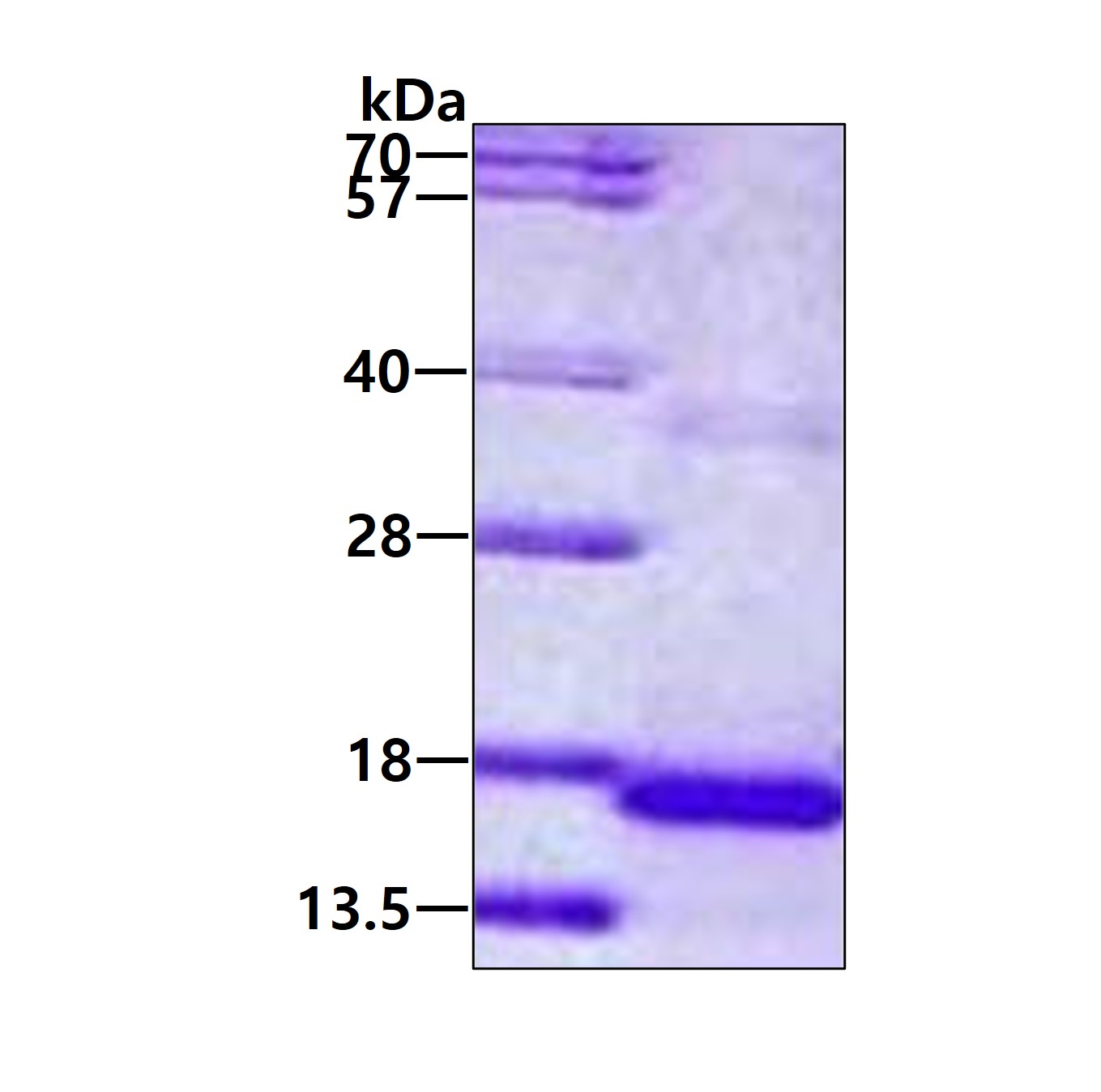
| Applications | SDS-PAGE/Denatured |
| Host | E.coli |
| Note | STRICTLY FOR FURTHER SCIENTIFIC RESEARCH USE ONLY (RUO). MUST NOT TO BE USED IN DIAGNOSTIC OR THERAPEUTIC APPLICATIONS. |
Product Properties
| Concentration | 1 mg/mL |
| Formulation | Liquid in 20mM Tris-HCl buffer (pH 8.0) containing 0.4M urea, 10% Glycerol |
| Storage Instruction | For short term storage, keep at +2C to +8C for up to 1 week. For long term storage, aliquot and store at-20C, and avoid repeat freeze-thaw cycles. |
Target Information
| Gene Symbol | CST9 |
| Gene ID | 128822 |
| Uniprot ID | CST9_HUMAN |
| Accession Number | NP_001008693 |
| Immunogen | Human |
| Immunogen Region | 29-159aa |
| Immunogen Sequence |
Additional Info
| Tissue Specificity | Expressed in heart, placenta, lung, liver, skeletal muscle and pancreas. Not expressed in brain. Expressed in epididymis, kidney, testis, spinal cord, and thymus with a strong expression in epididymis and kidney and a weak expression in the spinal cord and thymus. |
| Function | May be involved in testis development. May play a role in hematopoietic differentiation or inflammation. Has immunomodulatory and antimicrobial functions against Francisella tularensis, a Gram-negative bacteria. |
| Protein Name | Cystatin-9Cystatin-Like Molecule |
| Database Links | |
| Cellular Localisation | SecretedMay Be Targeted Through The Golgi Via The Secretory Pathway |
| Alternative Protein Names | Cystatin-9 proteinCystatin-Like Molecule proteinCST9 proteinCLM proteinCTES7A protein |
Information sourced from Uniprot.org