
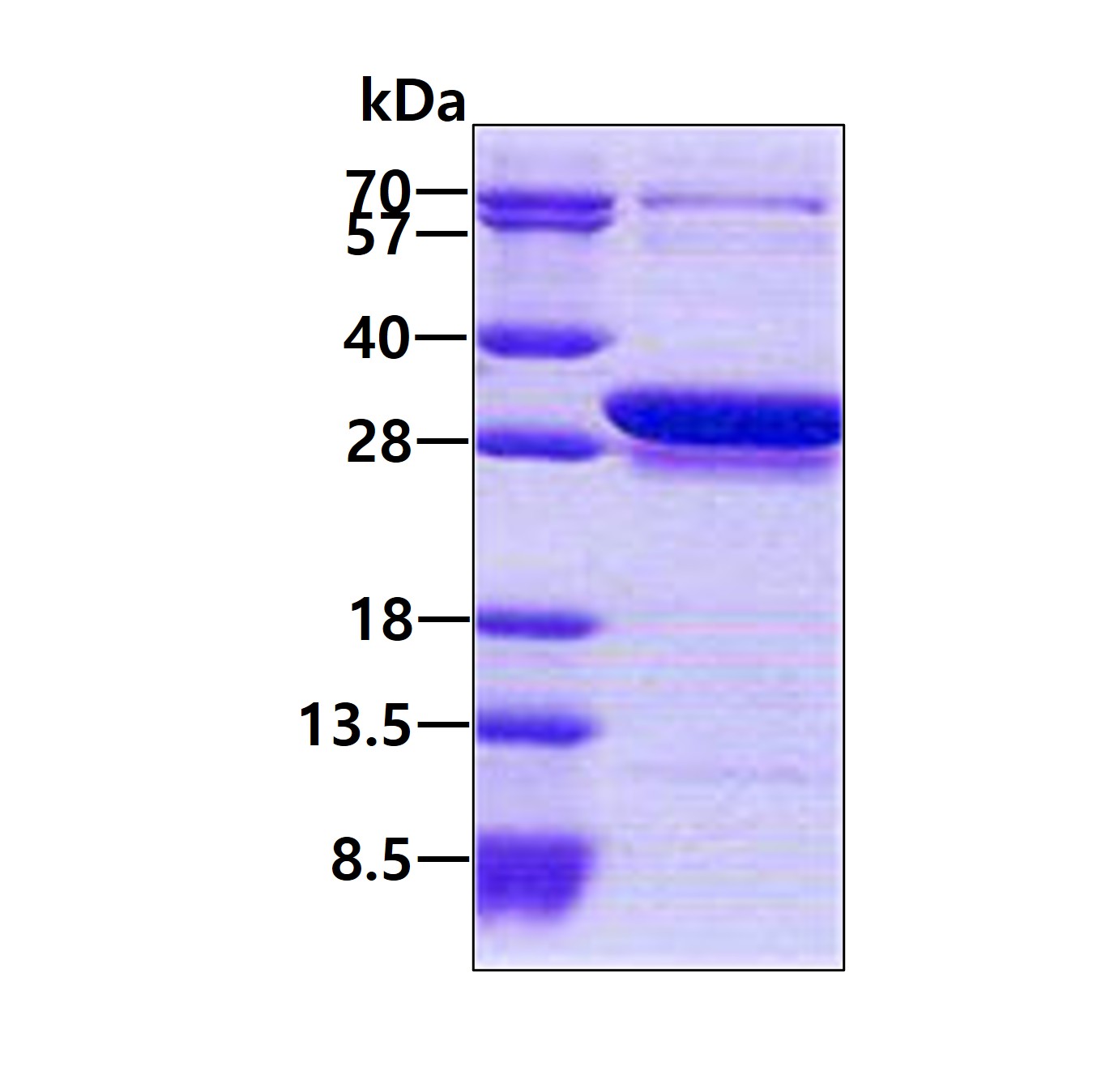

Human CCDC25 protein (Recombinant) (His-Tag) (STJP018372)
SPECIFICATIONS
HostE.coli
ImmunogenHuman
General Information
| Short Description | Recombinant-Human CCDC25-His-Tag protein was developed from e.coli and has a target region of His-Tag. For use in research applications. |
| Applications | SDS-PAGE |
| Host | E.coli |
| Note | STRICTLY FOR FURTHER SCIENTIFIC RESEARCH USE ONLY (RUO). MUST NOT TO BE USED IN DIAGNOSTIC OR THERAPEUTIC APPLICATIONS. |
Product Properties
| Concentration | 1 mg/mL |
| Formulation | Liquid in 20mM Tris-HCl buffer (pH 8.0) containing 0.15M NaCl, 20% Glycerol, 1mM DTT |
| Storage Instruction | For short term storage, keep at +2C to +8C for up to 1 week. For long term storage, aliquot and store at-20C, and avoid repeat freeze-thaw cycles. |
Target Information
| Gene Symbol | CCDC25 |
| Gene ID | 55246 |
| Uniprot ID | CCD25_HUMAN |
| Accession Number | NP_060716 |
| Immunogen | Human |
| Immunogen Region | 1-208aa |
| Immunogen Sequence |
Additional Info
| Function | Transmembrane receptor that senses neutrophil extracellular traps (NETs) and triggers the ILK-PARVB pathway to enhance cell motility. NETs are mainly composed of DNA fibers and are released by neutrophils to bind pathogens during inflammation. Formation of NETs is also associated with cancer metastasis, NET-DNA acting as a chemotactic factor to attract cancer cells. Specifically binds NETs on its extracellular region, in particular the 8-OHdG-enriched DNA present in NETs, and recruits ILK, initiating the ILK-PARVB cascade to induce cytoskeleton rearrangement and directional migration of cells. In the context of cancer, promotes cancer metastasis by sensing NETs and promoting migration of tumor cells. |
| Protein Name | Coiled-Coil Domain-Containing Protein 25 |
| Database Links | |
| Cellular Localisation | Cell MembraneSingle-Pass Membrane ProteinEndomembrane SystemLocalizes To Cytoplasmic Membrane In Tumor Cells |
| Alternative Protein Names | Coiled-Coil Domain-Containing Protein 25 proteinCCDC25 protein |
Information sourced from Uniprot.org