

Human BAALC protein (Recombinant) (His-Tag) (STJP016580)
SPECIFICATIONS
HostE.coli
ImmunogenHuman
General Information
| Short Description | Recombinant-Human BAALC-His-Tag protein was developed from e.coli and has a target region of His-Tag. For use in research applications. |
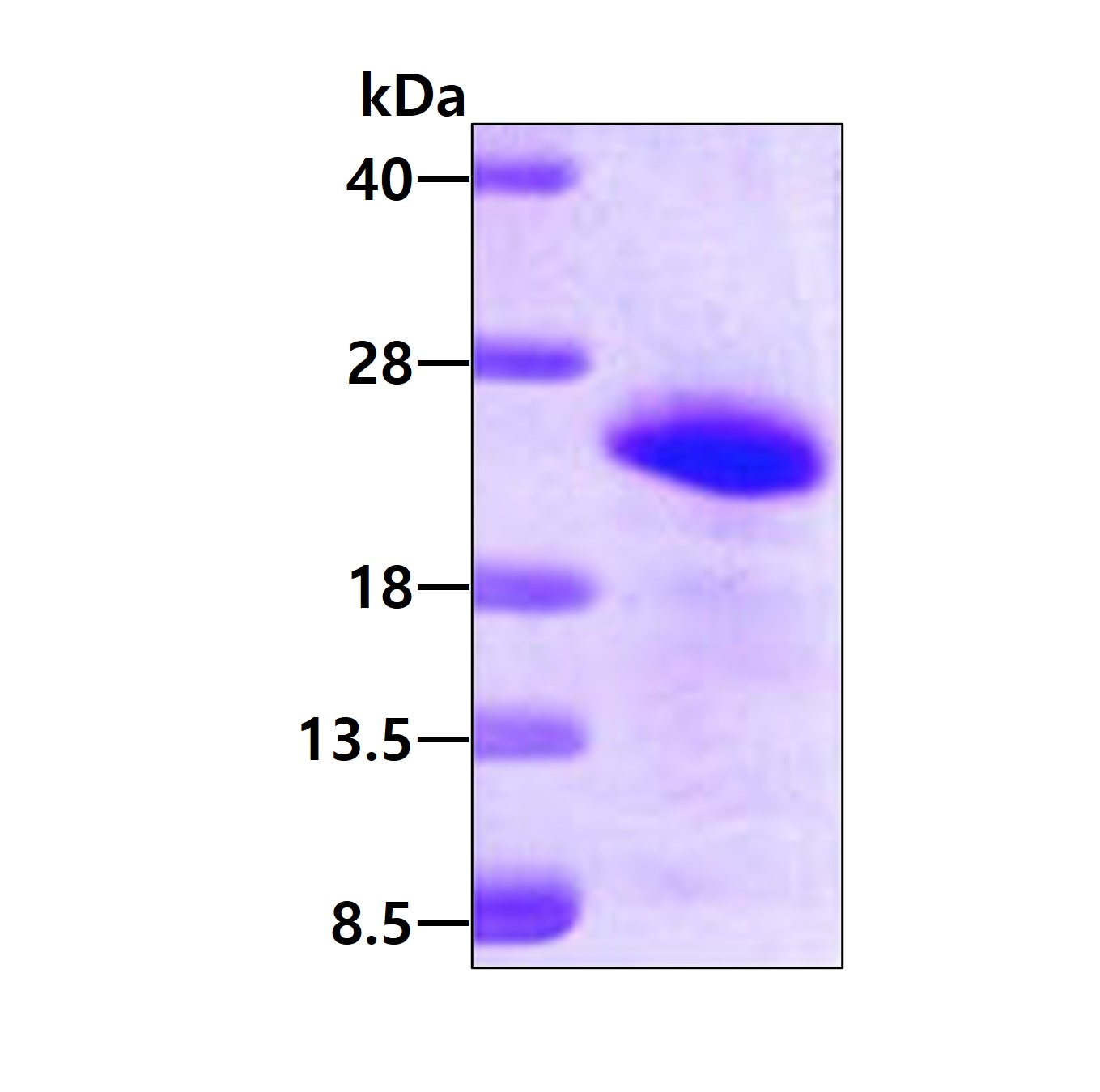
| Applications | SDS-PAGE |
| Host | E.coli |
| Note | STRICTLY FOR FURTHER SCIENTIFIC RESEARCH USE ONLY (RUO). MUST NOT TO BE USED IN DIAGNOSTIC OR THERAPEUTIC APPLICATIONS. |
Product Properties
| Concentration | 0.5 mg/mL |
| Formulation | Liquid in 20mM Tris-HCl buffer (pH 8.0) containing 1mM DTT, 20% Glycerol, 2mM EDTA |
| Storage Instruction | For short term storage, keep at +2C to +8C for up to 1 week. For long term storage, aliquot and store at-20C, and avoid repeat freeze-thaw cycles. |
Target Information
| Gene Symbol | BAALC |
| Gene ID | 79870 |
| Uniprot ID | BAALC_HUMAN |
| Accession Number | NP_079088 |
| Immunogen | Human |
| Immunogen Region | 1-145aa |
| Immunogen Sequence |
Additional Info
| Tissue Specificity | Predominantly expressed in neuroectoderm-derived tissues. Expressed in the brain and spinal cord, and at low levels, in the adrenal gland. In the bone marrow, confined to the CD34+ progenitor cells. Not found in peripheral blood mononuclear cells, nor lymph nodes. Tends to be expressed at high levels in acute myeloid leukemia and glioblastoma cells. |
| Post Translational Modifications | Palmitoylation and myristoylation target the protein to the lipid rafts. |
| Function | May play a synaptic role at the postsynaptic lipid rafts possibly through interaction with CAMK2A. |
| Protein Name | Brain And Acute Leukemia Cytoplasmic Protein |
| Database Links | |
| Cellular Localisation | CytoplasmSynapseSynaptosomeMembrane RaftPostsynaptic DensityIn NeuronsLocalizes To Postsynaptic Lipid RaftsIn Myocardial And Skeletal Muscle CellsLocalizes To The Cytoplasm Adjacent To The Inner Cell MembranePolarized To One End Of The Myocyte |
| Alternative Protein Names | Brain And Acute Leukemia Cytoplasmic Protein proteinBAALC protein |
Information sourced from Uniprot.org