

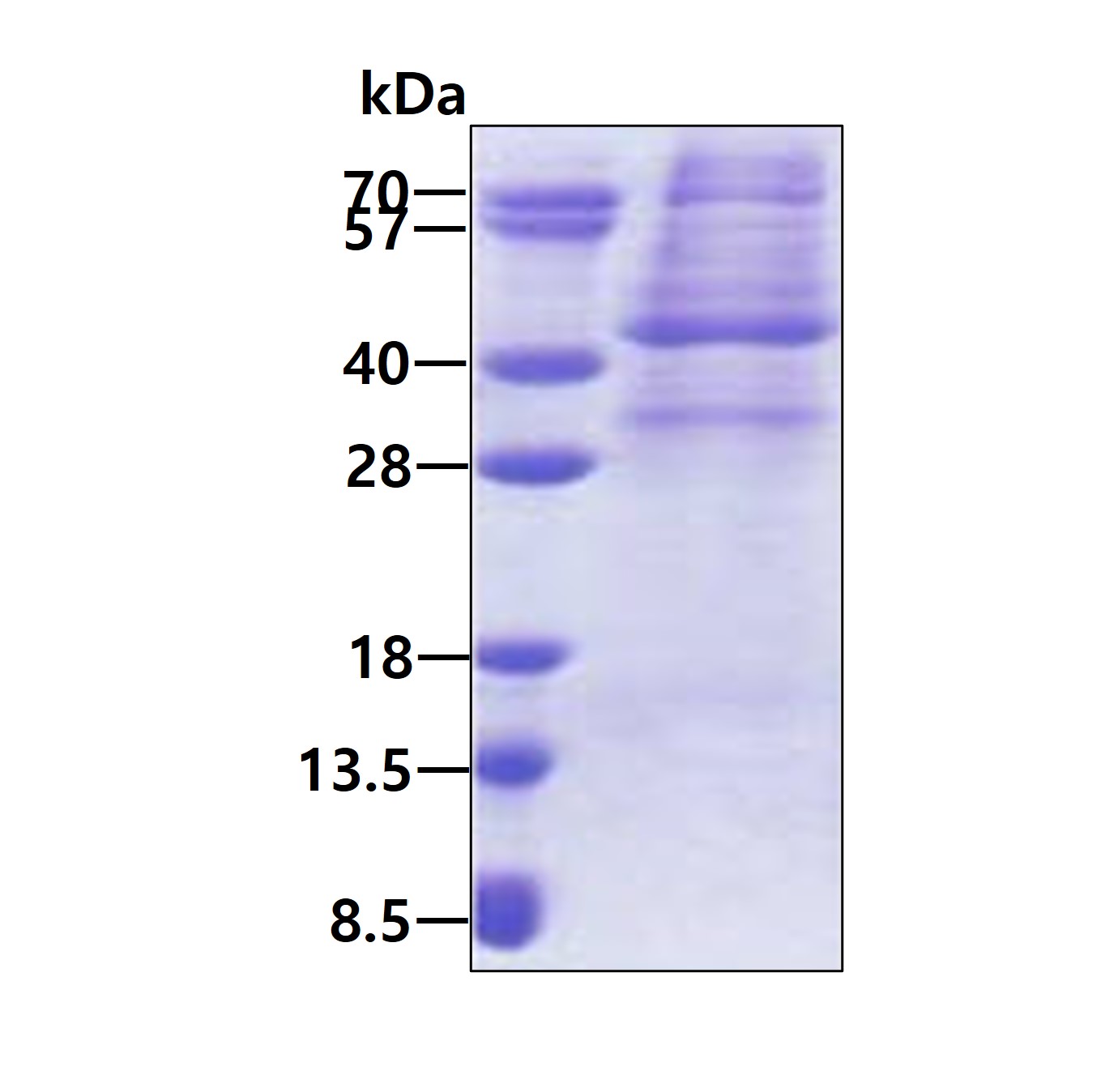

Human AMPK gamma1/PRKAG1 protein (Recombinant) (His-Tag) (STJP018437)
SPECIFICATIONS
HostE.coli
ImmunogenHuman
General Information
| Short Description | Recombinant-Human AMPK gamma1/PRKAG1-His-Tag protein was developed from e.coli and has a target region of His-Tag. For use in research applications. |
| Applications | SDS-PAGE/Denatured |
| Host | E.coli |
| Note | STRICTLY FOR FURTHER SCIENTIFIC RESEARCH USE ONLY (RUO). MUST NOT TO BE USED IN DIAGNOSTIC OR THERAPEUTIC APPLICATIONS. |
Product Properties
| Concentration | 0.25 mg/mL |
| Formulation | Liquid in 20mM Tris-HCl buffer (pH 8.0) containing 0.4M urea, 10% Glycerol |
| Storage Instruction | For short term storage, keep at +2C to +8C for up to 1 week. For long term storage, aliquot and store at-20C, and avoid repeat freeze-thaw cycles. |
Target Information
| Gene Symbol | PRKAG1 |
| Gene ID | 5571 |
| Uniprot ID | AAKG1_HUMAN |
| Accession Number | NP_002724 |
| Immunogen | Human |
| Immunogen Region | 1-331aa |
| Immunogen Sequence |
Additional Info
| Post Translational Modifications | Phosphorylated by ULK1 and ULK2.leading to negatively regulate AMPK activity and suggesting the existence of a regulatory feedback loop between ULK1, ULK2 and AMPK. Glycosylated.O-GlcNAcylated by OGT, promoting the AMP-activated protein kinase (AMPK) activity. |
| Function | AMP/ATP-binding subunit of AMP-activated protein kinase (AMPK), an energy sensor protein kinase that plays a key role in regulating cellular energy metabolism. In response to reduction of intracellular ATP levels, AMPK activates energy-producing pathways and inhibits energy-consuming processes: inhibits protein, carbohydrate and lipid biosynthesis, as well as cell growth and proliferation. AMPK acts via direct phosphorylation of metabolic enzymes, and by longer-term effects via phosphorylation of transcription regulators. Also acts as a regulator of cellular polarity by remodeling the actin cytoskeleton.probably by indirectly activating myosin. Gamma non-catalytic subunit mediates binding to AMP, ADP and ATP, leading to activate or inhibit AMPK: AMP-binding results in allosteric activation of alpha catalytic subunit (PRKAA1 or PRKAA2) both by inducing phosphorylation and preventing dephosphorylation of catalytic subunits. ADP also stimulates phosphorylation, without stimulating already phosphorylated catalytic subunit. ATP promotes dephosphorylation of catalytic subunit, rendering the AMPK enzyme inactive. |
| Protein Name | 5'-Amp-Activated Protein Kinase Subunit Gamma-1Ampk Gamma1Ampk Subunit Gamma-1Ampkg |
| Database Links | Reactome: R-HSA-1445148Reactome: R-HSA-1632852Reactome: R-HSA-2151209Reactome: R-HSA-380972Reactome: R-HSA-5628897Reactome: R-HSA-6804756Reactome: R-HSA-9613354Reactome: R-HSA-9619483 |
| Cellular Localisation | |
| Alternative Protein Names | 5'-Amp-Activated Protein Kinase Subunit Gamma-1 proteinAmpk Gamma1 proteinAmpk Subunit Gamma-1 proteinAmpkg proteinPRKAG1 protein |
Information sourced from Uniprot.org