


canine IL-21 protein (Recombinant) (No-Tag) (STJP019448)
SPECIFICATIONS
HostE.coli
ImmunogenCanine
General Information
| Short Description | Recombinant-canine IL-21-No-Tag protein was developed from e.coli and has a target region of No-Tag. For use in research applications. |
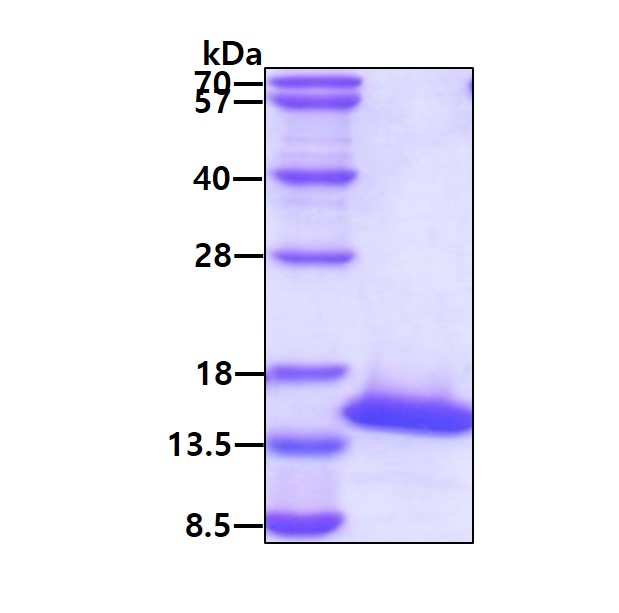
| Applications | SDS-PAGE/Bioactivity |
| Host | E.coli |
| Note | STRICTLY FOR FURTHER SCIENTIFIC RESEARCH USE ONLY (RUO). MUST NOT TO BE USED IN DIAGNOSTIC OR THERAPEUTIC APPLICATIONS. |
Product Properties
| Concentration | 0.5 mg/mL |
| Formulation | Liquid in phosphate-Buffered Saline (pH 7.4) |
| Storage Instruction | For short term storage, keep at +2C to +8C for up to 1 week. For long term storage, aliquot and store at-20C, and avoid repeat freeze-thaw cycles. |
| Endotoxin | < 1 EU per 1ug of protein (determined by LAL method) |
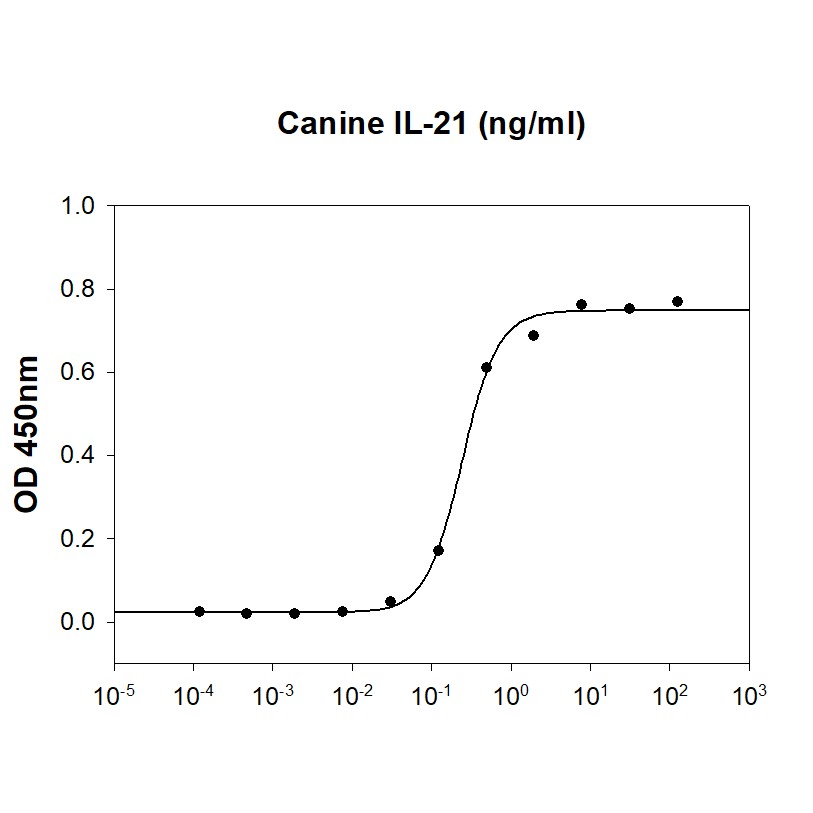
| Immunoreactivity | The activity is determined by the IFN-g ELISA in a using NK-92 human natural killer cells. The ED50 range ≤ 2 ng/ml. |
Target Information
| Accession Number | NP_001003347.1 |
| Immunogen | Canine |
| Immunogen Region | 18-146aa |
| Immunogen Sequence | MHKSSFQEQD LLLIRMRQLI DIVDQLKNYV NDLDPESLPA PEDVKRHCER SAFSCFQKVQ LKAANTGGNE QIINVLTKQL KRKLPPTNAG RRQKHRPACP SCDSYEKAPP KEFLERLKSL IQKMIHQHLS |
Additional Info
| Background | IL-21, also known as Interleukin-21, is an important modulator of natural killer (NK) cell function. However, little is known about IL-21 function in canine NK cells because the phenotype of these cells remains undefined. NK cells proliferated rapidly in response to activation by IL-21 for 3 weeks, and IL-21 was able to induce changes in the mRNA expression of NK cell-related receptors and enhance the effector function of NK cells in perforin-and granzyme-B-dependent manners. The duration, frequency and timing of IL-21 stimulation during culture affected the rate of proliferation, patterns of receptor expression, cytokine production, and anti-tumor activity. It has a potential predicating that synergistic interactions of IL-21 with IL-2 and IL-15 play an important role in the proliferation, receptor expression, and effector function of canine NK cells. Recombinant canine IL-21, was expressed in E. coli and purified by using conventional chromatography techniques. |
Information sourced from Uniprot.org