



Anti-SMYD3 antibody [R03-2I7] (STJA0034870)
SPECIFICATIONS
ClonalityMonoclonal
HostRabbit
ConjugationUnconjugated
IsotypeIgG
ImmunogenA synthetic peptide of human SMYD3
General Information
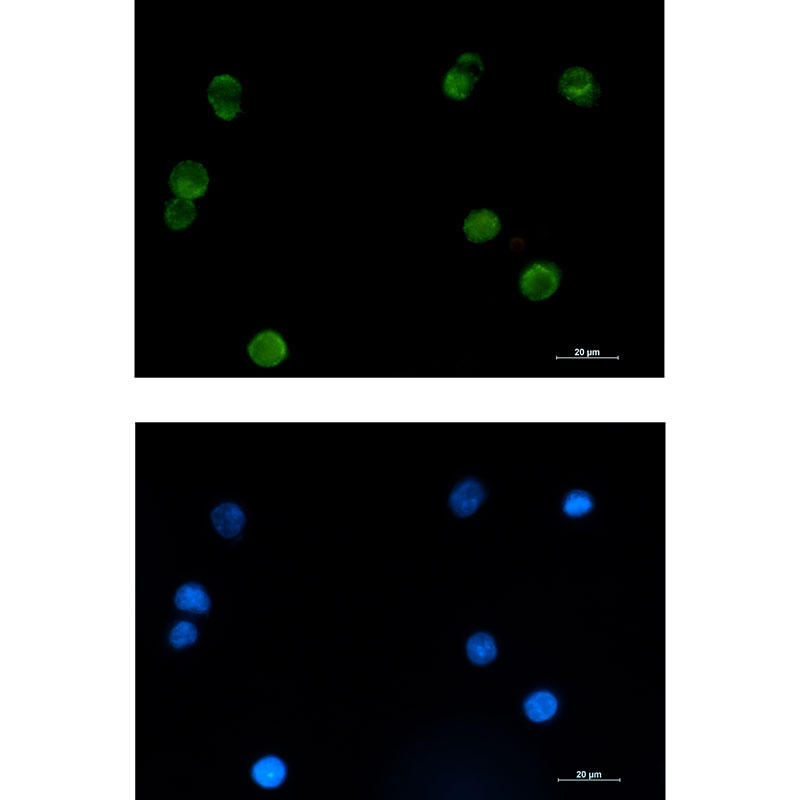
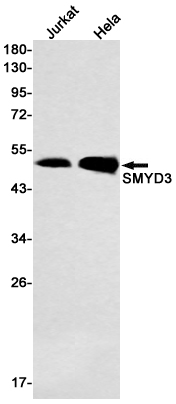
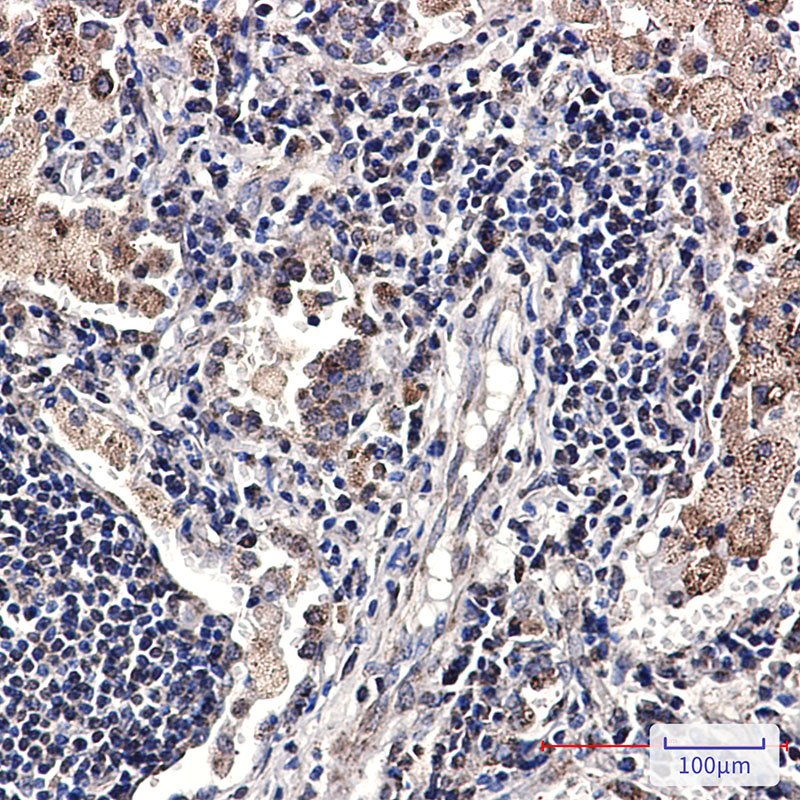
| Short Description | Rabbit monoclonal anti-SMYD3 for use in WB, IHC-F, IHC-P, ICC, IF and IP in Human samples. Datasheet included with dilution recommendations, and related reagents. |
| Applications | WB/IHC-F/IHC-P/ICC/IF/IP |
| Host | Rabbit |
| Reactivity | Human |
| Note | STRICTLY FOR FURTHER SCIENTIFIC RESEARCH USE ONLY (RUO). MUST NOT TO BE USED IN DIAGNOSTIC OR THERAPEUTIC APPLICATIONS. |
Product Properties
| Clonality | Monoclonal |
| Clone ID | R03-2I7 |
| Isotype | IgG |
| Conjugation | Unconjugated |
| Concentration | 0.3 mg/mL |
| Purification | Affinity Purified |
| Dilution Range | WB 1:500-1:1000IHC 1:50-1:100IF 1:50-1:200IP 1:20 |
| Formulation | 50mM Tris-Glycine (pH 7.4) , 0.15M NaCl, 40% Glycerol, 0.01% Sodium azide and 0.05% BSA |
| Storage Instruction | Store at 4°C short term. Aliquot and store at-20°C long term. Avoid freeze/thaw cycles. |
Target Information
| Gene Symbol | SMYD3 |
| Gene ID | 64754 |
| Uniprot ID | SMYD3_HUMAN |
| Immunogen | A synthetic peptide of human SMYD3 |
Additional Info
| Tissue Specificity | Expressed in skeletal muscles and testis. Overexpressed in a majority of colorectal and hepatocellular carcinomas. |
| Function | Histone methyltransferase. Specifically methylates 'Lys-4' of histone H3, inducing di- and tri-methylation, but not monomethylation. Also methylates 'Lys-5' of histone H4. Plays an important role in transcriptional activation as a member of an RNA polymerase complex. Binds DNA containing 5'-CCCTCC-3' or 5'-GAGGGG-3' sequences. |
| Protein Name | Histone-Lysine N-Methyltransferase Smyd3Set And Mynd Domain-Containing Protein 3Zinc Finger Mynd Domain-Containing Protein 1 |
| Database Links | Reactome: R-HSA-3214841 |
| Cellular Localisation | CytoplasmNucleusMainly Cytoplasmic When Cells Are Arrested At G0/G1Accumulates In The Nucleus At S Phase And G2/M |
| Alternative Antibody Names | Anti-Histone-Lysine N-Methyltransferase Smyd3 antibodyAnti-Set And Mynd Domain-Containing Protein 3 antibodyAnti-Zinc Finger Mynd Domain-Containing Protein 1 antibodyAnti-SMYD3 antibodyAnti-ZMYND1 antibodyAnti-ZNFN3A1 antibody |
Information sourced from Uniprot.org