


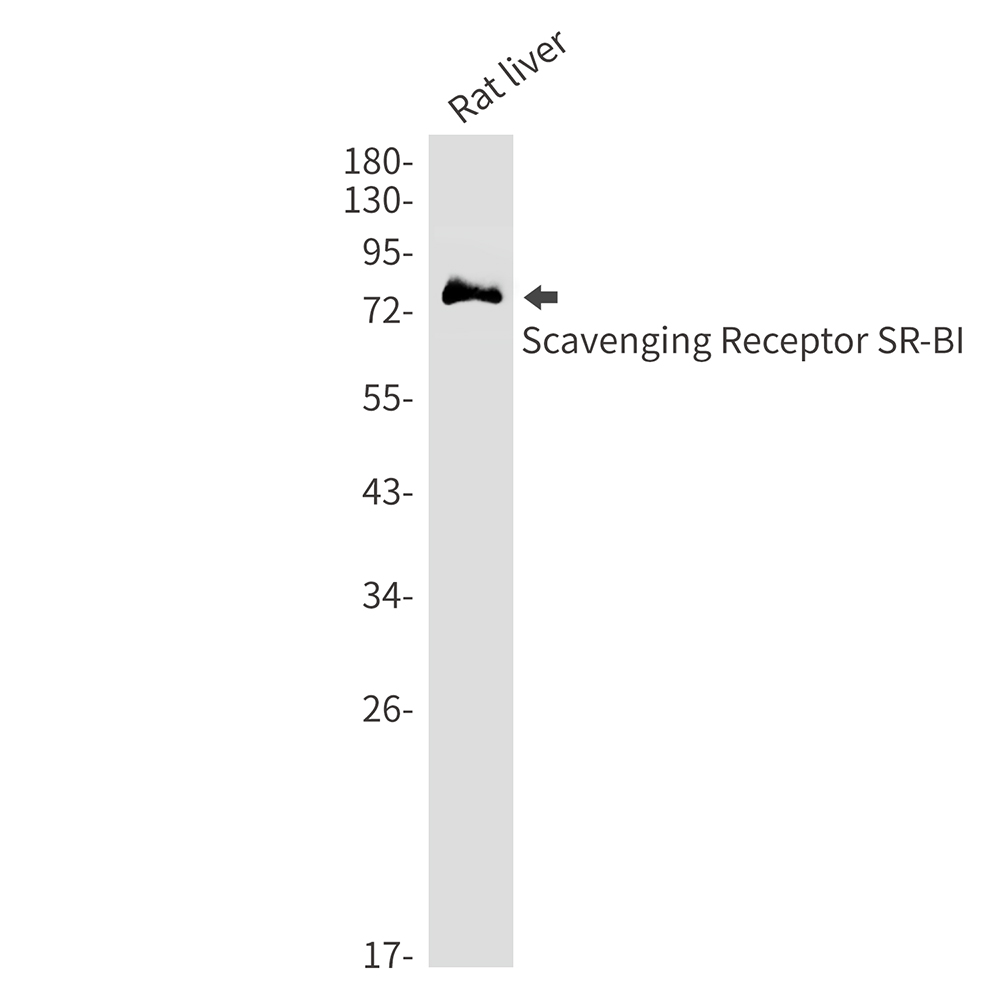
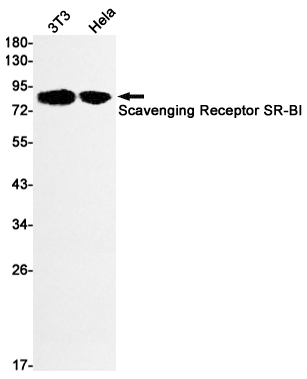

Anti-SCARB1 antibody [R06-6H2] (STJA0034843)
SPECIFICATIONS
ClonalityMonoclonal
HostRabbit
ConjugationUnconjugated
IsotypeIgG
ImmunogenA synthetic peptide of human Scavenging Receptor SR-BI
General Information
| Short Description | Rabbit monoclonal anti-SCARB1 for use in WB in Human, Mouse and Rat samples. Datasheet included with dilution recommendations, and related reagents. |
| Applications | WB |
| Host | Rabbit |
| Reactivity | Human/Mouse/Rat |
| Note | STRICTLY FOR FURTHER SCIENTIFIC RESEARCH USE ONLY (RUO). MUST NOT TO BE USED IN DIAGNOSTIC OR THERAPEUTIC APPLICATIONS. |
Product Properties
| Clonality | Monoclonal |
| Clone ID | R06-6H2 |
| Isotype | IgG |
| Conjugation | Unconjugated |
| Concentration | 0.3 mg/mL |
| Purification | Affinity Purified |
| Dilution Range | WB 1:500-1:1000 |
| Formulation | 50mM Tris-Glycine (pH 7.4) , 0.15M NaCl, 40% Glycerol, 0.01% Sodium azide and 0.05% BSA |
| Storage Instruction | Store at 4°C short term. Aliquot and store at-20°C long term. Avoid freeze/thaw cycles. |
Target Information
| Gene Symbol | SCARB1 |
| Gene ID | 949 |
| Uniprot ID | SCRB1_HUMAN |
| Immunogen | A synthetic peptide of human Scavenging Receptor SR-BI |
Additional Info
| Tissue Specificity | Widely expressed. |
| Post Translational Modifications | N-glycosylated. The six cysteines of the extracellular domain are all involved in intramolecular disulfide bonds. |
| Function | Receptor for different ligands such as phospholipids, cholesterol ester, lipoproteins, phosphatidylserine and apoptotic cells. Receptor for HDL, mediating selective uptake of cholesteryl ether and HDL-dependent cholesterol efflux. Also facilitates the flux of free and esterified cholesterol between the cell surface and apoB-containing lipoproteins and modified lipoproteins, although less efficiently than HDL. May be involved in the phagocytosis of apoptotic cells, via its phosphatidylserine binding activity. (Microbial infection) Acts as a receptor for hepatitis C virus in hepatocytes and appears to facilitate its cell entry. Binding between SCARB1 and the hepatitis C virus glycoprotein E2 is independent of the genotype of the viral isolate. (Microbial infection) Mediates uptake of M.fortuitum, E.coli and S.aureus. (Microbial infection) Facilitates the entry of human coronavirus SARS-CoV-2 by acting as an entry cofactor through HDL binding. |
| Protein Name | Scavenger Receptor Class B Member 1Srb1Cd36 And Limpii Analogous 1Cla-1Cd36 Antigen-Like 1Collagen Type I Receptor - Thrombospondin Receptor-Like 1Sr-BiCd Antigen Cd36 |
| Database Links | Reactome: R-HSA-3000471 Q8WTV0-2Reactome: R-HSA-8964011 Q8WTV0-2 |
| Cellular Localisation | Cell MembraneMulti-Pass Membrane ProteinMembraneCaveolaPredominantly Localized To Cholesterol And Sphingomyelin-Enriched Domains Within The Plasma MembraneCalled Caveolae |
| Alternative Antibody Names | Anti-Scavenger Receptor Class B Member 1 antibodyAnti-Srb1 antibodyAnti-Cd36 And Limpii Analogous 1 antibodyAnti-Cla-1 antibodyAnti-Cd36 Antigen-Like 1 antibodyAnti-Collagen Type I Receptor - Thrombospondin Receptor-Like 1 antibodyAnti-Sr-Bi antibodyAnti-Cd Antigen Cd36 antibodyAnti-SCARB1 antibodyAnti-CD36L1 antibodyAnti-CLA1 antibody |
Information sourced from Uniprot.org