


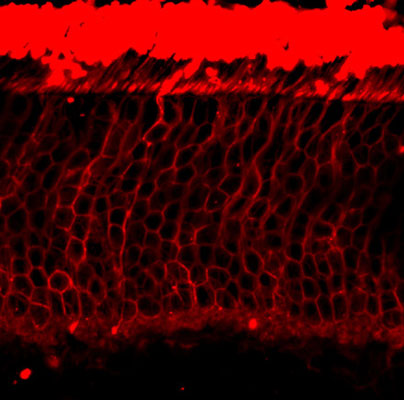


Anti-RHO antibody [1D4] (STJA0003770)
SPECIFICATIONS
ClonalityMonoclonal
HostMouse
ConjugationUnconjugated
IsotypeIgG1
Immunogenpurification native bovine rhodopsin.
General Information
| Short Description | Mouse monoclonal anti-Rhodopsin for use in WB and IHC in Amphibians and Most Mammals samples. Datasheet included with dilution recommendations, and related reagents. |
| Applications | WB/IHC |
| Host | Mouse |
| Reactivity | Amphibians/Most Mammals |
| Note | STRICTLY FOR FURTHER SCIENTIFIC RESEARCH USE ONLY (RUO). MUST NOT TO BE USED IN DIAGNOSTIC OR THERAPEUTIC APPLICATIONS. |
Product Properties
| Clonality | Monoclonal |
| Clone ID | 1D4 |
| Isotype | IgG1 |
| Conjugation | Unconjugated |
| Purification | This antibody was protein g purified culture from supernatant. |
| Dilution Range | WB 1:4000IHC 1:100-1:200 |
| Formulation | 100 µl in 10 mM HEPES (pH 7.5) , 150 mM NaCl, 100 µg per ml BSA and 50% Glycerol. |
| Storage Instruction | Store at-20°C for up to 1 year from the date of receipt, and avoid repeat freeze-thaw cycles. |
Target Information
| Immunogen | purification native bovine rhodopsin. |
Additional Info
| Background | Rhodopsin was a photoreceptor protein found in retinal rods. It was a complex formed by the binding of retinaldehyde, the oxidized form of retinol, to the protein opsin and undergoes a series of complex reactions in response to visible light resulting in the transmission of nerve impulses to the brain. Mutation of the rhodopsin gene was a major contributor to various retinopathies such as retinitis pigmentosa. The disease-causing protein generally aggregates with ubiquitin in inclusion bodies, disrupts the intermediate filament network and impairs the ability of the cell to degrade non-functioning proteins which leads to photoreceptor apoptosis (Berson et al., 1991). Other mutations on rhodopsin lead to X-linked congenital stationary night blindness, mainly due to constitutive activation, when the mutations occur around the chromophore binding pocket of rhodopsin (Dryja et al., 1993). Several other pathological states relating to rhodopsin have been discovered including poor post-Golgi trafficking, dysregulative activation, rod outer segment instability and arrestin binding. |
Information sourced from Uniprot.org