

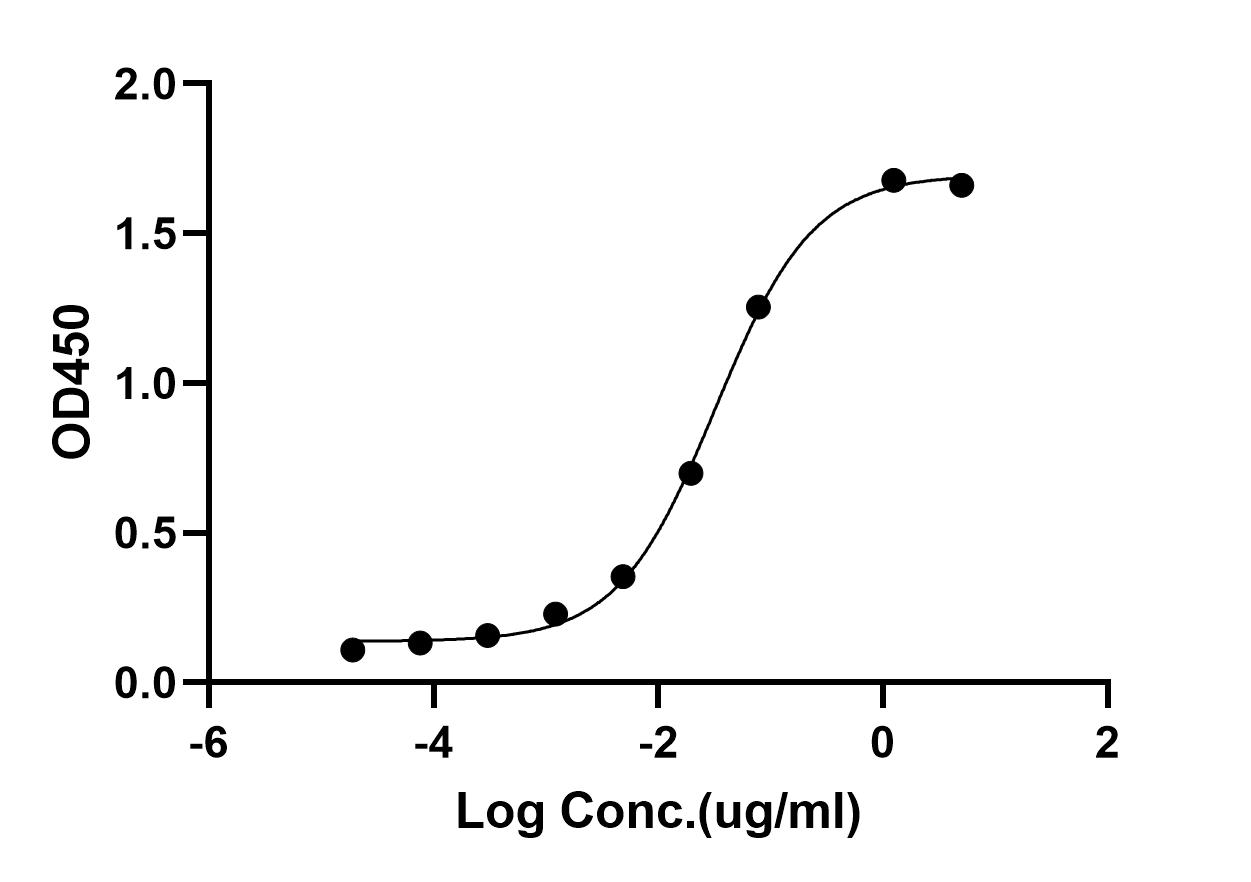

Anti-Recombinant-chimeric-HLA-DRA-Nb-Fc antibody (STJA0038499)
SPECIFICATIONS
ClonalityMonoclonal
Host293F Cells
ConjugationUnconjugated
ImmunogenPurified recombinant Human CD31
General Information
| Short Description | 293f Cells monoclonal anti-Recombinant-chimeric-Hla Class Ii Histocompatibility antigen-Dr Alpha Chain-Nb-Fc for use in ELISA in Human samples. Datasheet included with dilution recommendations, and related reagents. |
| Applications | ELISA |
| Host | 293F Cells |
| Reactivity | Human |
| Note | STRICTLY FOR FURTHER SCIENTIFIC RESEARCH USE ONLY (RUO). MUST NOT TO BE USED IN DIAGNOSTIC OR THERAPEUTIC APPLICATIONS. |
Product Properties
| Clonality | Monoclonal |
| Conjugation | Unconjugated |
| Concentration | Lot specific |
| Purification | Recombinant Expression and Affinity purified |
| Dilution Range | ELISA 1:5000-100000 |
| Formulation | Phosphate-buffered solution |
| Storage Instruction | Store at-20°C for up to 1 year from the date of receipt, and avoid repeat freeze-thaw cycles. |
Target Information
| Gene Symbol | HLA-DRA |
| Gene ID | 3122 |
| Uniprot ID | DRA_HUMAN |
| Immunogen | Purified recombinant Human CD31 |
| Specificity | This recombinant monoclonal antibody can detects endogenous levels of CD31 protein. |
Additional Info
| Post Translational Modifications | Ubiquitinated by MARCHF1 or MARCHF8 at Lys-244 leading to down-regulation of MHCII. When associated with ubiquitination of the beta chain at 'Lys-254', the down-regulation of MHCII may be highly effective. |
| Function | An alpha chain of antigen-presenting major histocompatibility complex class II (MHCII) molecule. In complex with the beta chain HLA-DRB, displays antigenic peptides on professional antigen presenting cells (APCs) for recognition by alpha-beta T cell receptor (TCR) on HLA-DR-restricted CD4-positive T cells. This guides antigen-specific T-helper effector functions, both antibody-mediated immune response and macrophage activation, to ultimately eliminate the infectious agents and transformed cells. Typically presents extracellular peptide antigens of 10 to 30 amino acids that arise from proteolysis of endocytosed antigens in lysosomes. In the tumor microenvironment, presents antigenic peptides that are primarily generated in tumor-resident APCs likely via phagocytosis of apoptotic tumor cells or macropinocytosis of secreted tumor proteins. Presents peptides derived from intracellular proteins that are trapped in autolysosomes after macroautophagy, a mechanism especially relevant for T cell selection in the thymus and central immune tolerance. The selection of the immunodominant epitopes follows two processing modes: 'bind first, cut/trim later' for pathogen-derived antigenic peptides and 'cut first, bind later' for autoantigens/self-peptides. The anchor residue at position 1 of the peptide N-terminus, usually a large hydrophobic residue, is essential for high affinity interaction with MHCII molecules. |
| Protein Name | Hla Class Ii Histocompatibility Antigen - Dr Alpha ChainMhc Class Ii Antigen Dra |
| Database Links | Reactome: R-HSA-202424Reactome: R-HSA-202427Reactome: R-HSA-202430Reactome: R-HSA-202433Reactome: R-HSA-2132295Reactome: R-HSA-389948Reactome: R-HSA-877300 |
| Cellular Localisation | Cell MembraneSingle-Pass Type I Membrane ProteinEndoplasmic Reticulum MembraneEarly Endosome MembraneLate Endosome MembraneLysosome MembraneAutolysosome MembraneThe Mhcii Complex Transits Through A Number Of Intracellular Compartments In The Endocytic Pathway Until It Reaches The Cell Membrane For Antigen PresentationComponent Of Immunological Synapses At The Interface Between T Cell And Apc |
| Alternative Antibody Names | Anti-Hla Class Ii Histocompatibility Antigen - Dr Alpha Chain antibodyAnti-Mhc Class Ii Antigen Dra antibodyAnti-HLA-DRA antibodyAnti-HLA-DRA1 antibody |
Information sourced from Uniprot.org