


Anti-Recombinant-chimeric-CD22-Nb-Fc antibody (STJA0038587)
SPECIFICATIONS
ClonalityMonoclonal
Host293F Cells
ConjugationUnconjugated
ImmunogenPurified recombinant Human CD44
General Information
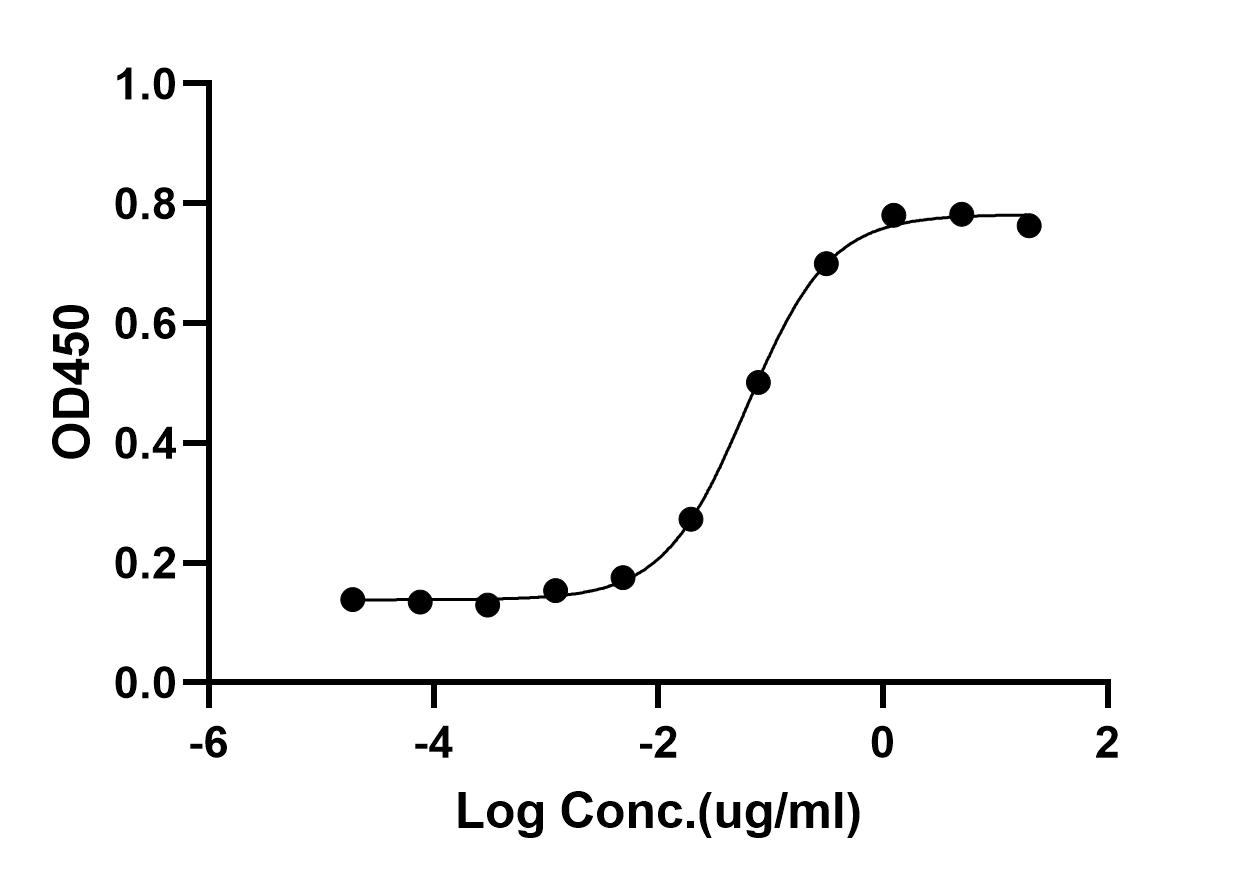
| Short Description | 293f Cells monoclonal anti-Recombinant-chimeric-B-Cell Receptor Cd22-Nb-Fc for use in ELISA in Human samples. Datasheet included with dilution recommendations, and related reagents. |
| Applications | ELISA |
| Host | 293F Cells |
| Reactivity | Human |
| Note | STRICTLY FOR FURTHER SCIENTIFIC RESEARCH USE ONLY (RUO). MUST NOT TO BE USED IN DIAGNOSTIC OR THERAPEUTIC APPLICATIONS. |
Product Properties
| Clonality | Monoclonal |
| Conjugation | Unconjugated |
| Concentration | Lot specific |
| Purification | Recombinant Expression and Affinity purified |
| Dilution Range | ELISA 1:5000-100000 |
| Formulation | Phosphate-buffered solution |
| Storage Instruction | Store at-20°C for up to 1 year from the date of receipt, and avoid repeat freeze-thaw cycles. |
Target Information
| Gene Symbol | CD22 |
| Gene ID | 933 |
| Uniprot ID | CD22_HUMAN |
| Immunogen | Purified recombinant Human CD44 |
| Specificity | This recombinant monoclonal antibody can detects endogenous levels of CD44 protein. |
Additional Info
| Post Translational Modifications | Phosphorylation of Tyr-762, Tyr-807 and Tyr-822 are involved in binding to SYK, GRB2 and SYK, respectively. Phosphorylation of Tyr-842 is involved in binding to SYK, PLCG2 and PIK3R1/PIK3R2. Phosphorylated on tyrosine residues by LYN. |
| Function | Most highly expressed siglec (sialic acid-binding immunoglobulin-like lectin) on B-cells that plays a role in various aspects of B-cell biology including differentiation, antigen presentation, and trafficking to bone marrow. Binds to alpha 2,6-linked sialic acid residues of surface molecules such as CD22 itself, CD45 and IgM in a cis configuration. Can also bind to ligands on other cells as an adhesion molecule in a trans configuration. Acts as an inhibitory coreceptor on the surface of B-cells and inhibits B-cell receptor induced signaling, characterized by inhibition of the calcium mobilization and cellular activation. Mechanistically, the immunoreceptor tyrosine-based inhibitory motif domain is phosphorylated by the Src kinase LYN, which in turn leads to the recruitment of the protein tyrosine phosphatase 1/PTPN6, leading to the negative regulation of BCR signaling. If this negative signaling from is of sufficient strength, apoptosis of the B-cell can be induced. |
| Protein Name | B-Cell Receptor Cd22B-Lymphocyte Cell Adhesion MoleculeBl-CamSialic Acid-Binding Ig-Like Lectin 2Siglec-2T-Cell Surface Antigen Leu-14Cd Antigen Cd22 |
| Database Links | Reactome: R-HSA-198933Reactome: R-HSA-5690714Reactome: R-HSA-983695 |
| Cellular Localisation | Cell MembraneSingle-Pass Type I Membrane Protein |
| Alternative Antibody Names | Anti-B-Cell Receptor Cd22 antibodyAnti-B-Lymphocyte Cell Adhesion Molecule antibodyAnti-Bl-Cam antibodyAnti-Sialic Acid-Binding Ig-Like Lectin 2 antibodyAnti-Siglec-2 antibodyAnti-T-Cell Surface Antigen Leu-14 antibodyAnti-Cd Antigen Cd22 antibodyAnti-CD22 antibodyAnti-SIGLEC2 antibody |
Information sourced from Uniprot.org