


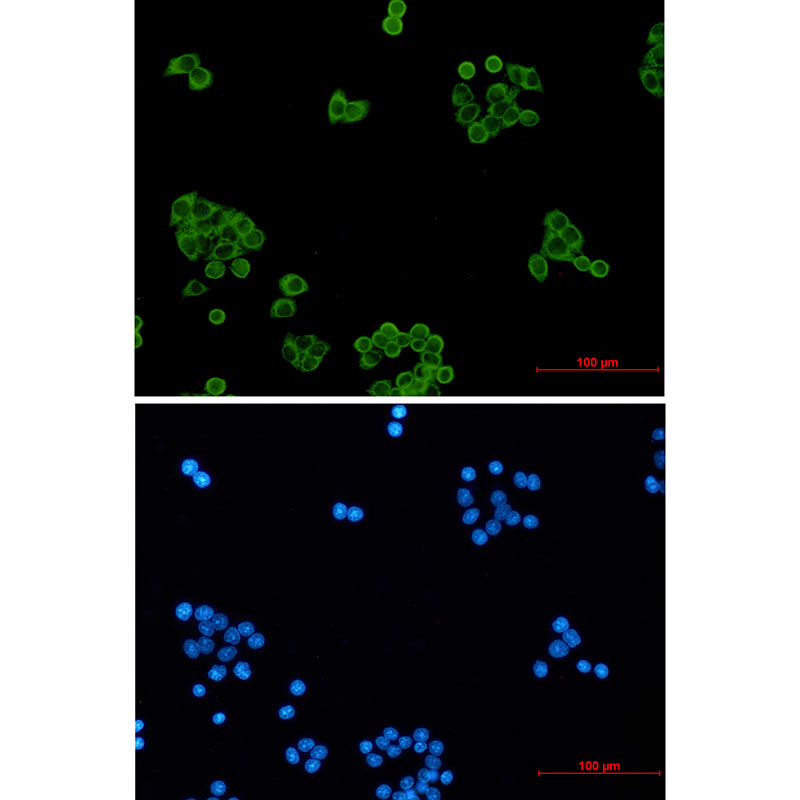
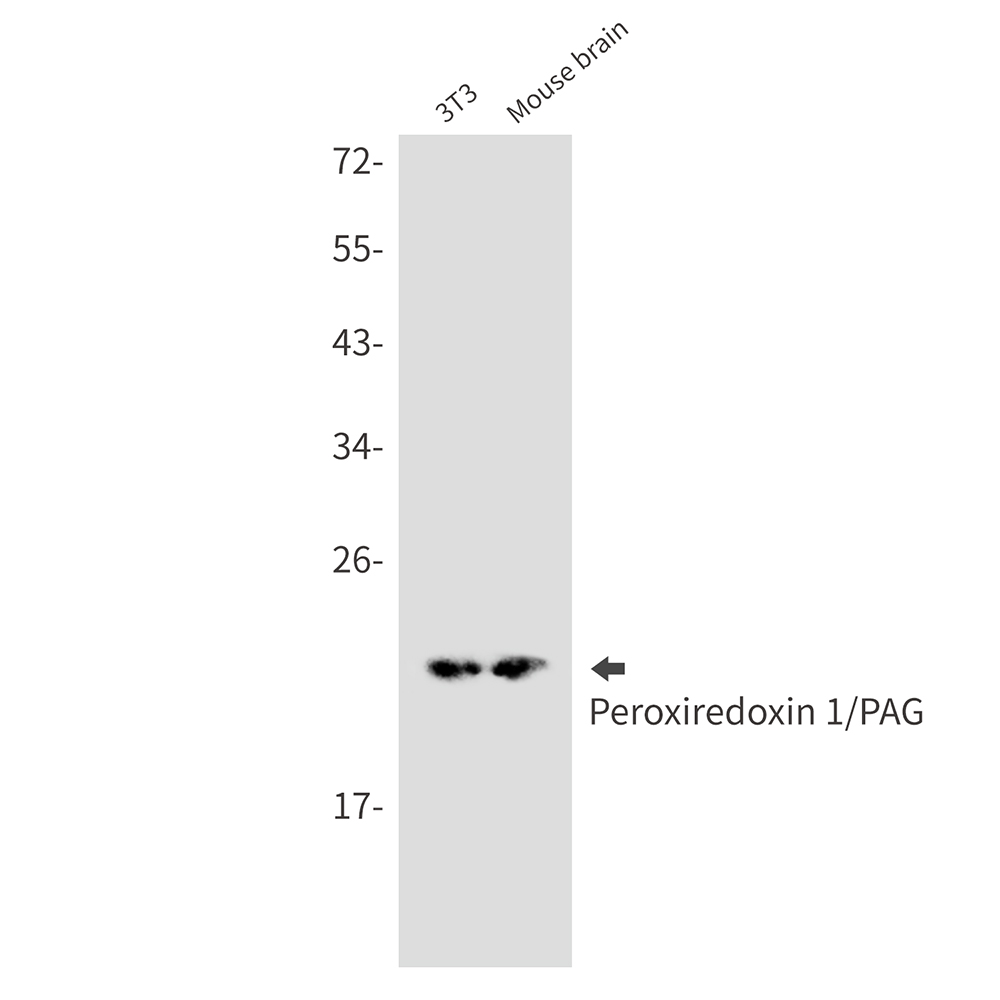


Anti-PRDX1 antibody (186-199 aa) [R04-0H5] (STJA0012529)
SPECIFICATIONS
ClonalityMonoclonal
HostRabbit
ConjugationUnconjugated
IsotypeIgG
ImmunogenA synthetic peptide of human Peroxiredoxin 1/PAG
General Information
| Short Description | Rabbit monoclonal anti-Peroxiredoxin 1 (186-199 aa) for use in WB, ICC, IF and IP in Human and Mouse samples. Datasheet included with dilution recommendations, and related reagents. |
| Applications | WB/ICC/IF/IP |
| Host | Rabbit |
| Reactivity | Human/Mouse |
| Note | STRICTLY FOR FURTHER SCIENTIFIC RESEARCH USE ONLY (RUO). MUST NOT TO BE USED IN DIAGNOSTIC OR THERAPEUTIC APPLICATIONS. |
Product Properties
| Clonality | Monoclonal |
| Clone ID | R04-0H5 |
| Isotype | IgG |
| Conjugation | Unconjugated |
| Concentration | 0.3 mg/mL |
| Purification | Affinity Purified |
| Dilution Range | WB 1:500-1:1000IF 1:50-1:200IP 1:20 |
| Formulation | 50mM Tris-Glycine (pH7.4) , 0.15M NaCl, 40% Glycerol, 0.01% Sodium azide and 0.05% BSA |
| Storage Instruction | Store at 4°C short term. Aliquot and store at-20°C long term. Avoid freeze/thaw cycles. |
Target Information
| Gene Symbol | PRDX1 |
| Gene ID | 5052 |
| Uniprot ID | PRDX1_HUMAN |
| Immunogen | A synthetic peptide of human Peroxiredoxin 1/PAG |
| Immunogen Region | 186-199 aa |
Additional Info
| Post Translational Modifications | Phosphorylated on Thr-90 during the M-phase, which leads to a more than 80% decrease in enzymatic activity. Acetylation increases reducing activity and resistance to superoxidation. Deacetylated by HDAC6 which decreases reducing activity. The enzyme can be inactivated by further oxidation of the cysteine sulfenic acid (C(P)-SOH) to sulphinic acid (C(P)-SO2H) instead of its condensation to a disulfide bond. It can be reactivated by forming a transient disulfide bond with sulfiredoxin SRXN1, which reduces the cysteine sulfinic acid in an ATP- and Mg-dependent manner. |
| Function | Thiol-specific peroxidase that catalyzes the reduction of hydrogen peroxide and organic hydroperoxides to water and alcohols, respectively. Plays a role in cell protection against oxidative stress by detoxifying peroxides and as sensor of hydrogen peroxide-mediated signaling events. Might participate in the signaling cascades of growth factors and tumor necrosis factor-alpha by regulating the intracellular concentrations of H(2)O(2). Reduces an intramolecular disulfide bond in GDPD5 that gates the ability to GDPD5 to drive postmitotic motor neuron differentiation. |
| Protein Name | Peroxiredoxin-1Natural Killer Cell-Enhancing Factor ANkef-AProliferation-Associated Gene ProteinPagThioredoxin Peroxidase 2Thioredoxin-Dependent Peroxide Reductase 2Thioredoxin-Dependent Peroxiredoxin 1 |
| Database Links | Reactome: R-HSA-3299685Reactome: R-HSA-5628897Reactome: R-HSA-8862803Reactome: R-HSA-9818027 |
| Cellular Localisation | CytoplasmMelanosomeIdentified By Mass Spectrometry In Melanosome Fractions From Stage I To Stage Iv |
| Alternative Antibody Names | Anti-Peroxiredoxin-1 antibodyAnti-Natural Killer Cell-Enhancing Factor A antibodyAnti-Nkef-A antibodyAnti-Proliferation-Associated Gene Protein antibodyAnti-Pag antibodyAnti-Thioredoxin Peroxidase 2 antibodyAnti-Thioredoxin-Dependent Peroxide Reductase 2 antibodyAnti-Thioredoxin-Dependent Peroxiredoxin 1 antibodyAnti-PRDX1 antibodyAnti-PAGA antibodyAnti-PAGB antibodyAnti-TDPX2 antibody |
Information sourced from Uniprot.org