


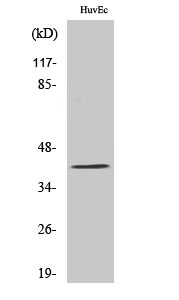
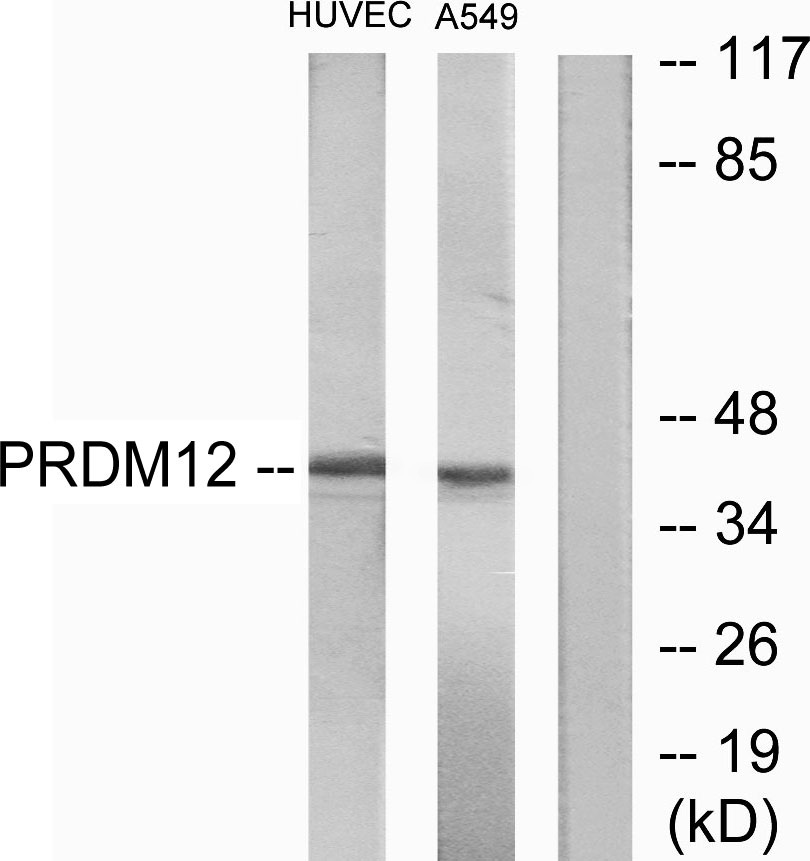
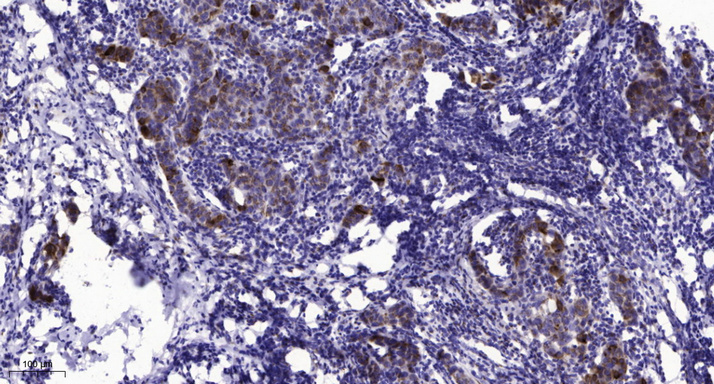

Anti-PRDM12 antibody (191-240 aa) (STJ95217)
SPECIFICATIONS
ClonalityPolyclonal
HostRabbit
ConjugationUnconjugated
IsotypeIgG
ImmunogenThe antiserum was produced against synthesized peptide derived from the human PRDM12 at the amino acid range 191-240
General Information
| Short Description | Rabbit polyclonal anti-PR domain zinc finger protein 12 (191-240 aa) for use in IF, ELISA and IHC in Human and Mouse samples. Datasheet included with dilution recommendations, and related reagents. |
| Applications | IF/ELISA/IHC |
| Host | Rabbit |
| Reactivity | Human/Mouse |
| Note | STRICTLY FOR FURTHER SCIENTIFIC RESEARCH USE ONLY (RUO). MUST NOT TO BE USED IN DIAGNOSTIC OR THERAPEUTIC APPLICATIONS. |
Product Properties
| Clonality | Polyclonal |
| Isotype | IgG |
| Conjugation | Unconjugated |
| Concentration | 1 mg/mL |
| Purification | The antibody was affinity-purified from rabbit antiserum by affinity-chromatography using epitope-specific immunogen. |
| Dilution Range | IF ICC 1:50-300ELISA 1:2000-20000IHC-P 1:50-200 |
| Formulation | Liquid in PBS containing 50% Glycerol, 0.5% BSA and 0.02% Sodium Azide. |
| Storage Instruction | Store at-20°C for up to 1 year from the date of receipt, and avoid repeat freeze-thaw cycles. |
Target Information
| Gene Symbol | PRDM12 |
| Gene ID | 59335 |
| Uniprot ID | PRD12_HUMAN |
| Immunogen | The antiserum was produced against synthesized peptide derived from the human PRDM12 at the amino acid range 191-240 |
| Immunogen Region | 191-240 aa |
| Specificity | PRDM12 Polyclonal Antibody detects endogenous levels of PRDM12 protein. |
Additional Info
| Function | Transcriptional regulator necessary for the development of nociceptive neurons, playing a key role in determining the nociceptive lineage from neural crest cell progenitors. Initiates neurogenesis and activates downstream pro-neuronal transcription factors, such as NEUROD1, BRN3A, and ISL1, specifically within nociceptive neurons, while repressing non-nociceptor cell fates. Essential for the proper function of nociceptors in adults, influencing both their excitability and their gene expression, thereby impacting how these neurons respond to various pain stimuli. |
| Protein Name | Pr Domain Zinc Finger Protein 12Pr Domain-Containing Protein 12 |
| Database Links | |
| Cellular Localisation | Nucleus |
| Alternative Antibody Names | Anti-Pr Domain Zinc Finger Protein 12 antibodyAnti-Pr Domain-Containing Protein 12 antibodyAnti-PRDM12 antibodyAnti-PFM9 antibody |
Information sourced from Uniprot.org