



Anti-Phospho-IRS1-Tyr896 antibody (862-911 aa) (STJ90605)
SPECIFICATIONS
ClonalityPolyclonal
HostRabbit
ConjugationUnconjugated
IsotypeIgG
ImmunogenThe antiserum was produced against synthesized peptide derived from the human IRS-1 around the phosphorylation site of Tyr896 at the amino acid range 862-911
General Information
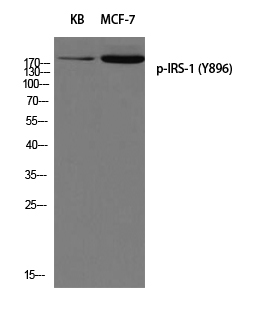
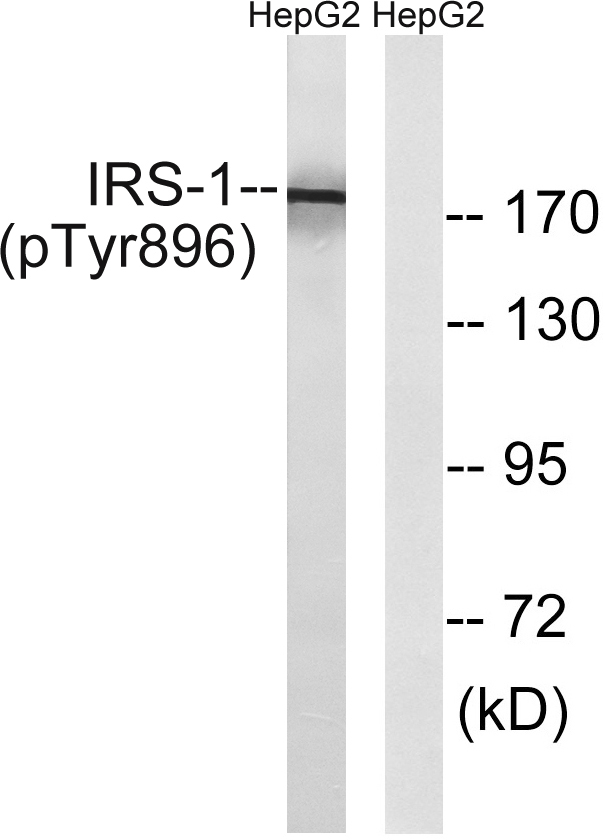
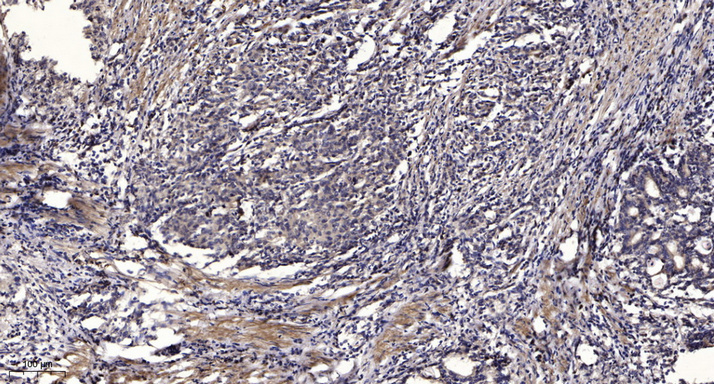
| Short Description | Rabbit polyclonal anti-Phospho-Insulin receptor substrate 1-Tyr896 (862-911 aa) for use in WB and IHC in Human, Mouse and Rat samples. Datasheet included with dilution recommendations, and related reagents. |
| Applications | WB/IHC |
| Host | Rabbit |
| Reactivity | Human/Mouse/Rat |
| Note | STRICTLY FOR FURTHER SCIENTIFIC RESEARCH USE ONLY (RUO). MUST NOT TO BE USED IN DIAGNOSTIC OR THERAPEUTIC APPLICATIONS. |
Product Properties
| Clonality | Polyclonal |
| Isotype | IgG |
| Conjugation | Unconjugated |
| Concentration | 1 mg/mL |
| Purification | The antibody was affinity-purified from rabbit antiserum by affinity-chromatography using epitope-specific immunogen. |
| Dilution Range | WB 1:500-2000IHC-P 1:50-300 |
| Formulation | Liquid in PBS containing 50% Glycerol, 0.5% BSA and 0.02% Sodium Azide. |
| Storage Instruction | Store at-20°C for up to 1 year from the date of receipt, and avoid repeat freeze-thaw cycles. |
Target Information
| Gene Symbol | IRS1 |
| Gene ID | 3667 |
| Uniprot ID | IRS1_HUMAN |
| Immunogen | The antiserum was produced against synthesized peptide derived from the human IRS-1 around the phosphorylation site of Tyr896 at the amino acid range 862-911 |
| Immunogen Region | 862-911 aa |
| Specificity | Phospho-IRS-1 (Y896) Polyclonal Antibody detects endogenous levels of IRS-1 protein only when phosphorylated at Y896. |
Additional Info
| Function | Signaling adapter protein that participates in the signal transduction from two prominent receptor tyrosine kinases, insulin receptor/INSR and insulin-like growth factor I receptor/IGF1R. Plays therefore an important role in development, growth, glucose homeostasis as well as lipid metabolism. Upon phosphorylation by the insulin receptor, functions as a signaling scaffold that propagates insulin action through binding to SH2 domain-containing proteins including the p85 regulatory subunit of PI3K, NCK1, NCK2, GRB2 or SHP2. Recruitment of GRB2 leads to the activation of the guanine nucleotide exchange factor SOS1 which in turn triggers the Ras/Raf/MEK/MAPK signaling cascade. Activation of the PI3K/AKT pathway is responsible for most of insulin metabolic effects in the cell, and the Ras/Raf/MEK/MAPK is involved in the regulation of gene expression and in cooperation with the PI3K pathway regulates cell growth and differentiation. Acts a positive regulator of the Wnt/beta-catenin signaling pathway through suppression of DVL2 autophagy-mediated degradation leading to cell proliferation. |
| Protein Name | Insulin Receptor Substrate 1Irs-1 |
| Database Links | Reactome: R-HSA-109704Reactome: R-HSA-112399Reactome: R-HSA-112412Reactome: R-HSA-1257604Reactome: R-HSA-1266695Reactome: R-HSA-198203Reactome: R-HSA-201556Reactome: R-HSA-2219530Reactome: R-HSA-2428928Reactome: R-HSA-2586552Reactome: R-HSA-5673001Reactome: R-HSA-6811558Reactome: R-HSA-74713Reactome: R-HSA-74749Reactome: R-HSA-9603381Reactome: R-HSA-9725370Reactome: R-HSA-982772Reactome: R-HSA-9842663 |
| Cellular Localisation | CytoplasmNucleusNuclear Or Cytoplasmic Localization Of Irs1 Correlates With The Transition From Proliferation To Chondrogenic Differentiation |
| Alternative Antibody Names | Anti-Insulin Receptor Substrate 1 antibodyAnti-Irs-1 antibodyAnti-IRS1 antibody |
Information sourced from Uniprot.org