


Anti-PDCD4 antibody (420-469 aa) (STJ94990)
SPECIFICATIONS
ClonalityPolyclonal
HostRabbit
ConjugationUnconjugated
IsotypeIgG
ImmunogenThe antiserum was produced against synthesized peptide derived from the human PDCD4 at the amino acid range 420-469
General Information
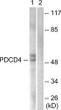
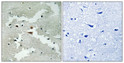
| Short Description | Rabbit polyclonal anti-Programmed cell death protein 4 (420-469 aa) for use in WB, IHC, IF and ELISA in Human, Mouse and Rat samples. Datasheet included with dilution recommendations, and related reagents. |
| Applications | WB/IHC/IF/ELISA |
| Host | Rabbit |
| Reactivity | Human/Mouse/Rat |
| Note | STRICTLY FOR FURTHER SCIENTIFIC RESEARCH USE ONLY (RUO). MUST NOT TO BE USED IN DIAGNOSTIC OR THERAPEUTIC APPLICATIONS. |
Product Properties
| Clonality | Polyclonal |
| Isotype | IgG |
| Conjugation | Unconjugated |
| Concentration | 1 mg/mL |
| Purification | The antibody was affinity-purified from rabbit antiserum by affinity-chromatography using epitope-specific immunogen. |
| Dilution Range | WB 1:500-1:2000IHC 1:100-1:300IF 1:200-1:1000ELISA 1:20000 |
| Formulation | Liquid in PBS containing 50% Glycerol, 0.5% BSA and 0.02% Sodium Azide. |
| Storage Instruction | Store at-20°C for up to 1 year from the date of receipt, and avoid repeat freeze-thaw cycles. |
Target Information
| Gene Symbol | PDCD4 |
| Gene ID | 27250 |
| Uniprot ID | PDCD4_HUMAN |
| Immunogen | The antiserum was produced against synthesized peptide derived from the human PDCD4 at the amino acid range 420-469 |
| Immunogen Region | 420-469 aa |
| Specificity | Pdcd-4 Polyclonal Antibody detects endogenous levels of Pdcd-4 protein. |
Additional Info
| Post Translational Modifications | Polyubiquitinated, leading to its proteasomal degradation. Rapidly degraded in response to mitogens. Phosphorylation of the phosphodegron promotes interaction with BTRC and proteasomal degradation. Phosphorylated at Ser-67 by RPS6KB1 in response to mitogens.phosphorylation promotes proteasomal degradation of PDCD4. |
| Function | Inhibits translation initiation and cap-dependent translation. May excert its function by hindering the interaction between EIF4A1 and EIF4G. Inhibits the helicase activity of EIF4A. Modulates the activation of JUN kinase. Down-regulates the expression of MAP4K1, thus inhibiting events important in driving invasion, namely, MAPK85 activation and consequent JUN-dependent transcription. May play a role in apoptosis. Tumor suppressor. Inhibits tumor promoter-induced neoplastic transformation. Binds RNA. |
| Protein Name | Programmed Cell Death Protein 4Neoplastic Transformation Inhibitor ProteinNuclear Antigen H731-LikeProtein 197/15a |
| Database Links | Reactome: R-HSA-8950505 |
| Cellular Localisation | NucleusCytoplasmShuttles Between The Nucleus And CytoplasmPredominantly Nuclear Under Normal Growth ConditionsAnd When Phosphorylated At Ser-457 |
| Alternative Antibody Names | Anti-Programmed Cell Death Protein 4 antibodyAnti-Neoplastic Transformation Inhibitor Protein antibodyAnti-Nuclear Antigen H731-Like antibodyAnti-Protein 197/15a antibodyAnti-PDCD4 antibodyAnti-H731 antibody |
Information sourced from Uniprot.org