


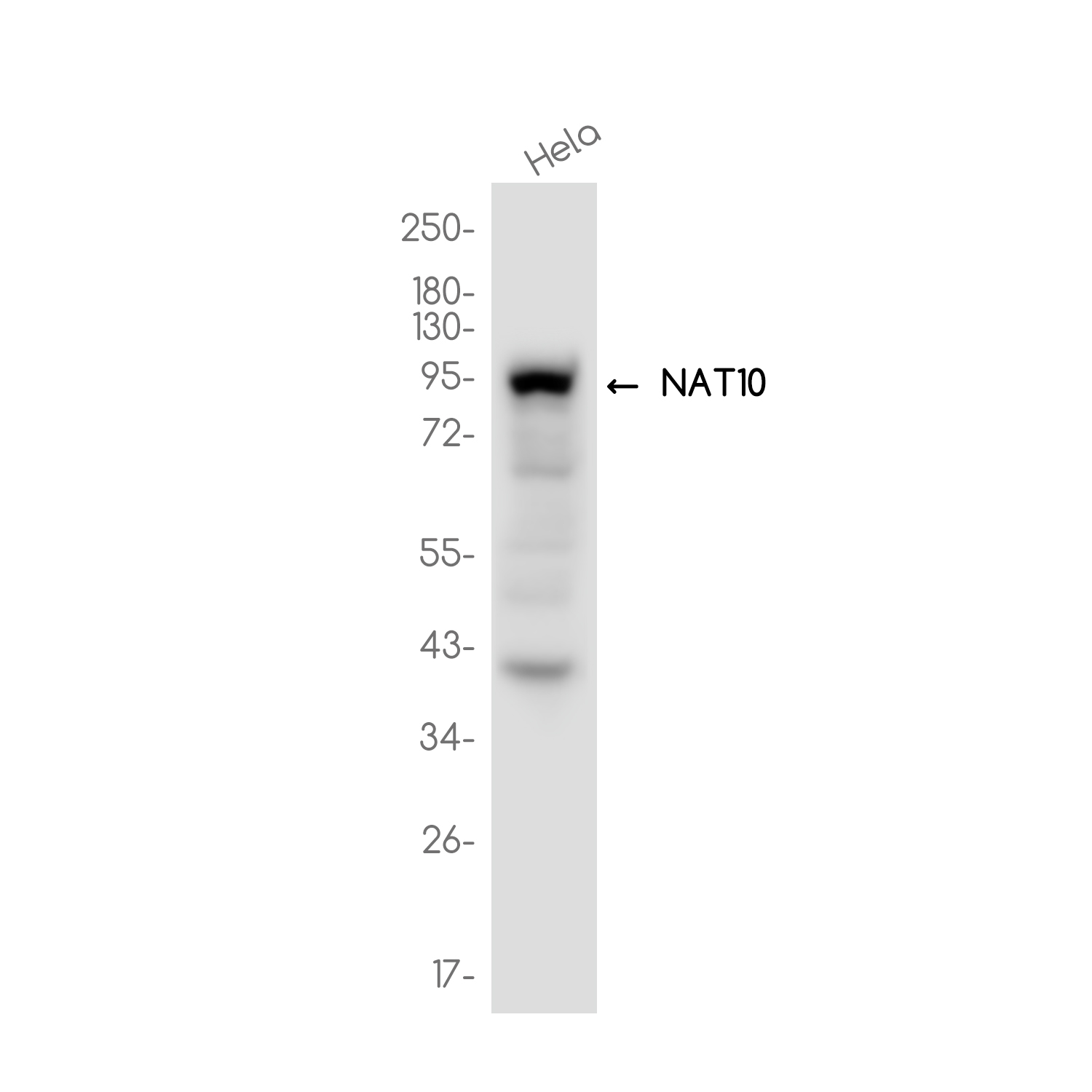
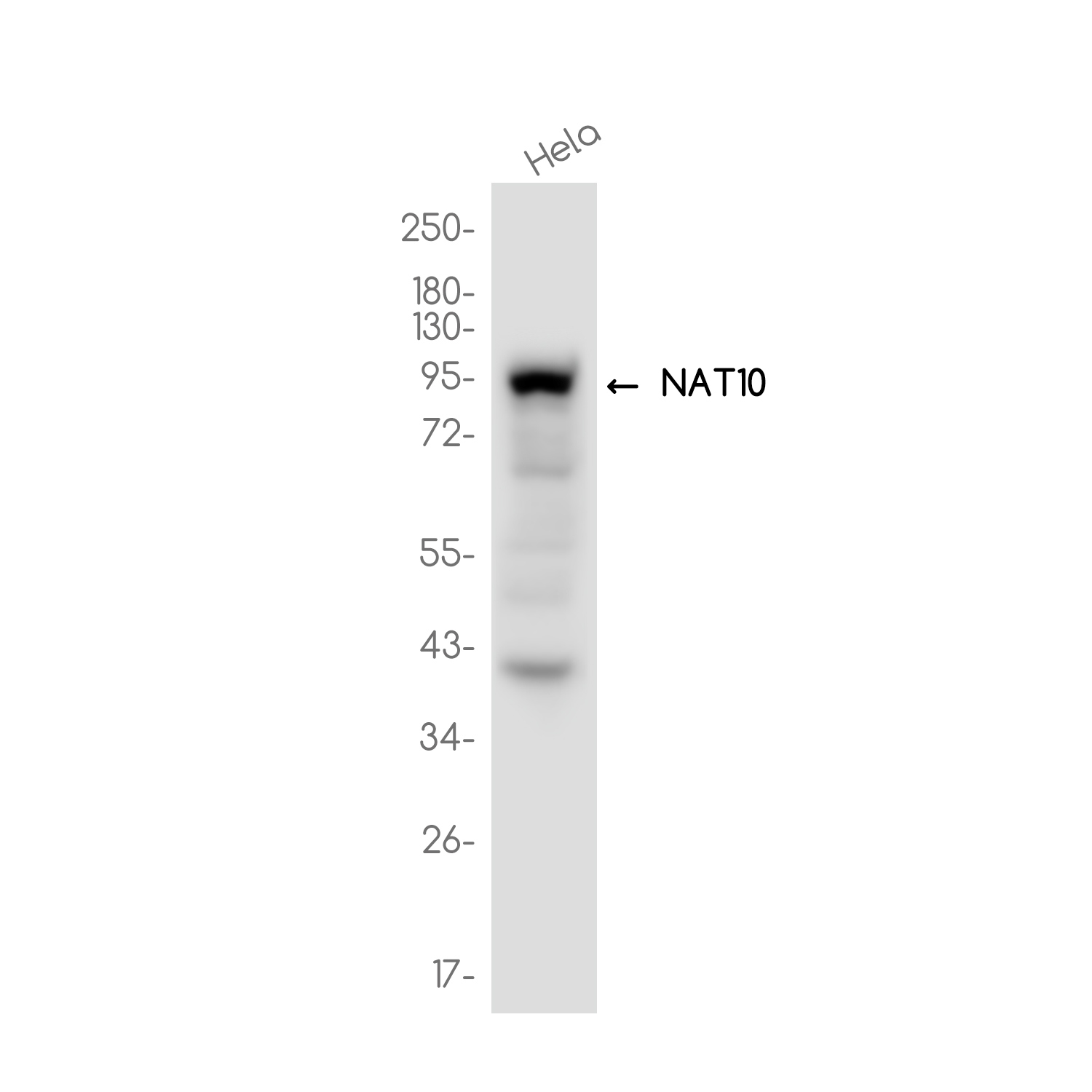

Anti-NAT10 antibody [R05-5J7] (STJA0037461)
SPECIFICATIONS
ClonalityMonoclonal
HostRabbit
ConjugationUnconjugated
IsotypeIgG
ImmunogenA synthesized peptide derived from human NAT10
General Information
| Short Description | Rabbit monoclonal anti-NAT10 for use in WB, IHC-P, ICC, IF, IP and FC in Human, Mouse and Rat samples. Datasheet included with dilution recommendations, and related reagents. |
| Applications | WB/IHC-P/ICC/IF/IP/FC |
| Host | Rabbit |
| Reactivity | Human/Mouse/Rat |
| Note | STRICTLY FOR FURTHER SCIENTIFIC RESEARCH USE ONLY (RUO). MUST NOT TO BE USED IN DIAGNOSTIC OR THERAPEUTIC APPLICATIONS. |
Product Properties
| Clonality | Monoclonal |
| Clone ID | R05-5J7 |
| Isotype | IgG |
| Conjugation | Unconjugated |
| Purification | Affinity Purified |
| Dilution Range | WB 1:500-1:1000IHC 1:50-1:100IF 1:50-1:200IP 1:50FC 1:50-1:100 |
| Formulation | Rabbit IgG in phosphate buffered saline, pH 7.4, 150mM NaCl, 0.02% sodium azide and 50% glycerol. |
| Storage Instruction | Store at 4°C short term. Aliquot and store at-20°C long term. Avoid freeze/thaw cycles. |
Target Information
| Gene Symbol | NAT10 |
| Gene ID | 55226 |
| Uniprot ID | NAT10_HUMAN |
| Immunogen | A synthesized peptide derived from human NAT10 |
Additional Info
| Post Translational Modifications | Acetylation at Lys-426 is required to activation of rRNA transcription. May be autoacetylated.however ability to autoacetylate in vivo requires additional evidences. |
| Function | RNA cytidine acetyltransferase that catalyzes the formation of N(4)-acetylcytidine (ac4C) modification on mRNAs, 18S rRNA and tRNAs. Catalyzes ac4C modification of a broad range of mRNAs, enhancing mRNA stability and translation. mRNA ac4C modification is frequently present within wobble cytidine sites and promotes translation efficiency. Mediates the formation of ac4C at position 1842 in 18S rRNA. May also catalyze the formation of ac4C at position 1337 in 18S rRNA. Required for early nucleolar cleavages of precursor rRNA at sites A0, A1 and A2 during 18S rRNA synthesis. Catalyzes the formation of ac4C in serine and leucine tRNAs. Requires the tRNA-binding adapter protein THUMPD1 for full tRNA acetyltransferase activity but not for 18S rRNA acetylation. In addition to RNA acetyltransferase activity, also able to acetylate lysine residues of proteins, such as histones, microtubules, p53/TP53 and MDM2, in vitro. The relevance of the protein lysine acetyltransferase activity is however unsure in vivo. Activates telomerase activity by stimulating the transcription of TERT, and may also regulate telomerase function by affecting the balance of telomerase subunit assembly, disassembly, and localization. Involved in the regulation of centrosome duplication by acetylating CENATAC during mitosis, promoting SASS6 proteasome degradation. Part of the small subunit (SSU) processome, first precursor of the small eukaryotic ribosomal subunit. During the assembly of the SSU processome in the nucleolus, many ribosome biogenesis factors, an RNA chaperone and ribosomal proteins associate with the nascent pre-rRNA and work in concert to generate RNA folding, modifications, rearrangements and cleavage as well as targeted degradation of pre-ribosomal RNA by the RNA exosome. |
| Protein Name | Rna Cytidine Acetyltransferase18s Rrna Cytosine AcetyltransferaseN-Acetyltransferase 10N-Acetyltransferase-Like ProteinHalp |
| Database Links | Reactome: R-HSA-6790901 |
| Cellular Localisation | NucleusNucleolusMidbodyNucleolar In Interphase And Redistributes To The Perichromosomal Layer And To The Midbody During Telophase |
| Alternative Antibody Names | Anti-Rna Cytidine Acetyltransferase antibodyAnti-18s Rrna Cytosine Acetyltransferase antibodyAnti-N-Acetyltransferase 10 antibodyAnti-N-Acetyltransferase-Like Protein antibodyAnti-Halp antibodyAnti-NAT10 antibodyAnti-ALP antibodyAnti-KIAA1709 antibody |
Information sourced from Uniprot.org