


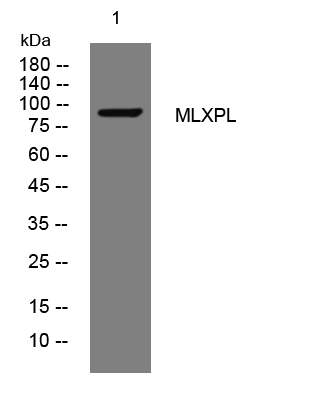
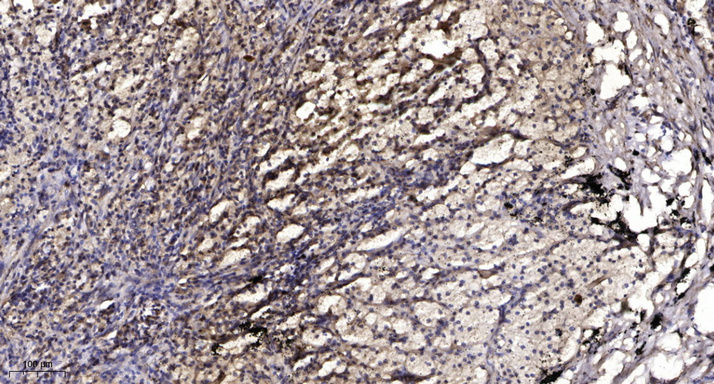

Anti-MLXIPL antibody (303-353 aa) (STJ195227)
SPECIFICATIONS
ClonalityPolyclonal
HostRabbit
ConjugationUnconjugated
IsotypeIgG
ImmunogenSynthesized peptide derived from the human MLXPL at the amino acid range 303-353
General Information
| Short Description | Rabbit polyclonal anti-Carbohydrate-responsive element-binding protein (303-353 aa) for use in WB, ELISA and IHC in Human, Mouse and Rat samples. Datasheet included with dilution recommendations, and related reagents. |
| Applications | WB/ELISA/IHC |
| Host | Rabbit |
| Reactivity | Human/Mouse/Rat |
| Note | STRICTLY FOR FURTHER SCIENTIFIC RESEARCH USE ONLY (RUO). MUST NOT TO BE USED IN DIAGNOSTIC OR THERAPEUTIC APPLICATIONS. |
Product Properties
| Clonality | Polyclonal |
| Isotype | IgG |
| Conjugation | Unconjugated |
| Concentration | 1 mg/mL |
| Purification | The antibody was affinity-purified from rabbit antiserum by affinity-chromatography using epitope-specific immunogen. |
| Dilution Range | WB 1:500-2000IHC-P 1:50-300ELISA 2000-20000 |
| Formulation | Liquid in PBS containing 50% Glycerol, 0.5% BSA and 0.02% Sodium Azide. |
| Storage Instruction | Store at-20°C for up to 1 year from the date of receipt, and avoid repeat freeze-thaw cycles. |
Target Information
| Gene Symbol | MLXIPL |
| Gene ID | 51085 |
| Uniprot ID | MLXPL_HUMAN |
| Immunogen | Synthesized peptide derived from the human MLXPL at the amino acid range 303-353 |
| Immunogen Region | 303-353 aa |
| Specificity | This antibody detects endogenous levels of MLXPL at Human/Mouse/Rat |
Additional Info
| Post Translational Modifications | Phosphorylation at Ser-556 by AMPK inactivates the DNA-binding activity. |
| Function | Binds DNA as a heterodimer with MLX/TCFL4 and activates transcription. Binds to the canonical E box sequence 5'-CACGTG-3'. Plays a role in transcriptional activation of glycolytic target genes. Involved in glucose-responsive gene regulation. Regulates transcription in response to changes in cellular carbohydrate abundance such as occurs during fasting to feeding metabolic transition. Refeeding stimulates MLXIPL/ChREBP transcription factor, leading to increased BCKDK to PPM1K expression ratio, phosphorylation and activation of ACLY that ultimately results in the generation of malonyl-CoA and oxaloacetate immediate substrates of de novo lipogenesis and gluconeogenesis, respectively. |
| Protein Name | Carbohydrate-Responsive Element-Binding ProteinChrebpClass D Basic Helix-Loop-Helix Protein 14Bhlhd14Mlx InteractorMlx-Interacting Protein-LikeWs Basic-Helix-Loop-Helix Leucine Zipper ProteinWs-BhlhWilliams-Beuren Syndrome Chromosomal Region 14 Protein |
| Database Links | Reactome: R-HSA-163358Reactome: R-HSA-163680Reactome: R-HSA-163765Reactome: R-HSA-163767 |
| Cellular Localisation | Nucleus |
| Alternative Antibody Names | Anti-Carbohydrate-Responsive Element-Binding Protein antibodyAnti-Chrebp antibodyAnti-Class D Basic Helix-Loop-Helix Protein 14 antibodyAnti-Bhlhd14 antibodyAnti-Mlx Interactor antibodyAnti-Mlx-Interacting Protein-Like antibodyAnti-Ws Basic-Helix-Loop-Helix Leucine Zipper Protein antibodyAnti-Ws-Bhlh antibodyAnti-Williams-Beuren Syndrome Chromosomal Region 14 Protein antibodyAnti-MLXIPL antibodyAnti-BHLHD14 antibodyAnti-MIO antibodyAnti-WBSCR14 antibody |
Information sourced from Uniprot.org