

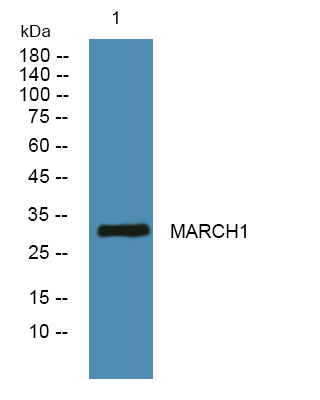
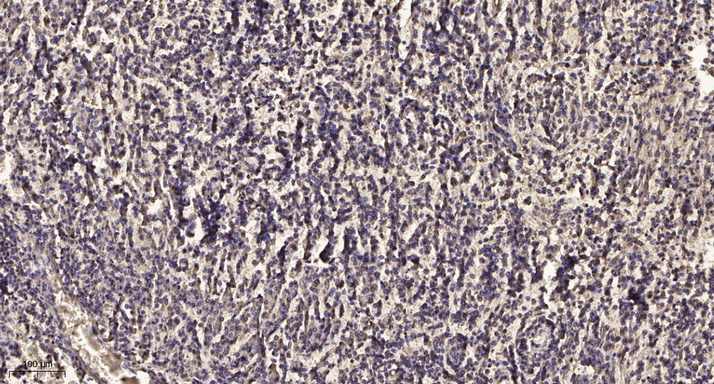

Anti-MARCHF1 antibody (Internal) (STJ94007)
SPECIFICATIONS
ClonalityPolyclonal
HostRabbit
ConjugationUnconjugated
IsotypeIgG
ImmunogenSynthesized peptide derived from the Internal region of human 40603.
General Information
| Short Description | Rabbit polyclonal anti-E3 ubiquitin-protein ligase MARCHF1 (Internal) for use in IHC, IF, WB and ELISA in Human, Rat and Mouse samples. Datasheet included with dilution recommendations, and related reagents. |
| Applications | IHC/IF/WB/ELISA |
| Host | Rabbit |
| Reactivity | Human/Rat/Mouse |
| Note | STRICTLY FOR FURTHER SCIENTIFIC RESEARCH USE ONLY (RUO). MUST NOT TO BE USED IN DIAGNOSTIC OR THERAPEUTIC APPLICATIONS. |
Product Properties
| Clonality | Polyclonal |
| Isotype | IgG |
| Conjugation | Unconjugated |
| Concentration | 1 mg/mL |
| Purification | The antibody was affinity-purified from rabbit antiserum by affinity-chromatography using epitope-specific immunogen. |
| Dilution Range | WB 1:500-2000IHC 1:100-1:300ELISA 1:40000IF 1:50-200 |
| Formulation | Liquid in PBS containing 50% Glycerol, 0.5% BSA and 0.02% Sodium Azide. |
| Storage Instruction | Store at-20°C for up to 1 year from the date of receipt, and avoid repeat freeze-thaw cycles. |
Target Information
| Gene Symbol | MARCHF1 |
| Gene ID | 55016 |
| Uniprot ID | MARH1_HUMAN |
| Immunogen | Synthesized peptide derived from the Internal region of human 40603. |
| Immunogen Region | Internal |
| Specificity | MARCH1 Polyclonal Antibody detects endogenous levels of 40603 protein. |
Additional Info
| Post Translational Modifications | Ubiquitinated via ubiquitin-conjugating enzyme E2 D1/UBE2D1 independently of lysines, leading to proteolytic degradation. Has a short half-life. Instability/short half-life permits rapid changes that allow efficient induction of antigen presentation once antigen presenting cells, APCs, receive maturation signals. Small changes in protein levels significantly alter the cell surface display of MHC class II proteins. |
| Function | E3 ubiquitin-protein ligase that mediates ubiquitination of TFRC, CD86, FAS and MHC class II proteins, such as HLA-DR alpha and beta, and promotes their subsequent endocytosis and sorting to lysosomes via multivesicular bodies. By constitutively ubiquitinating MHC class II proteins in immature dendritic cells, down-regulates their cell surface localization thus sequestering them in the intracellular endosomal system. Also regulates insulin sensitivity by controlling surface expression of the insulin receptor subunit beta/INSR by direct ubiquitination and degradation. (Microbial infection) Plays a role in iron metabolism by regulating the levels of the transferrin receptor TFRC during human cytomegalovirus infection, subsequently contributing to a proviral effect. |
| Protein Name | E3 Ubiquitin-Protein Ligase Marchf1Membrane-Associated Ring Finger Protein 1Membrane-Associated Ring-Ch Protein IMarch-IRing Finger Protein 171Ring-Type E3 Ubiquitin Transferase Marchf1 |
| Database Links | |
| Cellular Localisation | Golgi ApparatusTrans-Golgi Network MembraneMulti-Pass Membrane ProteinLysosome MembraneCytoplasmic Vesicle MembraneLate Endosome MembraneEarly Endosome MembraneCell Membrane |
| Alternative Antibody Names | Anti-E3 Ubiquitin-Protein Ligase Marchf1 antibodyAnti-Membrane-Associated Ring Finger Protein 1 antibodyAnti-Membrane-Associated Ring-Ch Protein I antibodyAnti-March-I antibodyAnti-Ring Finger Protein 171 antibodyAnti-Ring-Type E3 Ubiquitin Transferase Marchf1 antibodyAnti-MARCHF1 antibodyAnti-MARCH1 antibodyAnti-RNF171 antibody |
Information sourced from Uniprot.org