


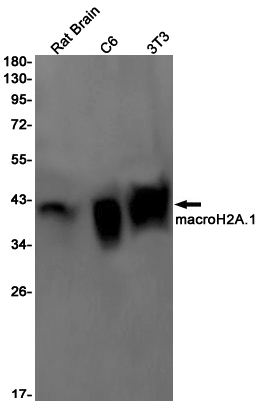
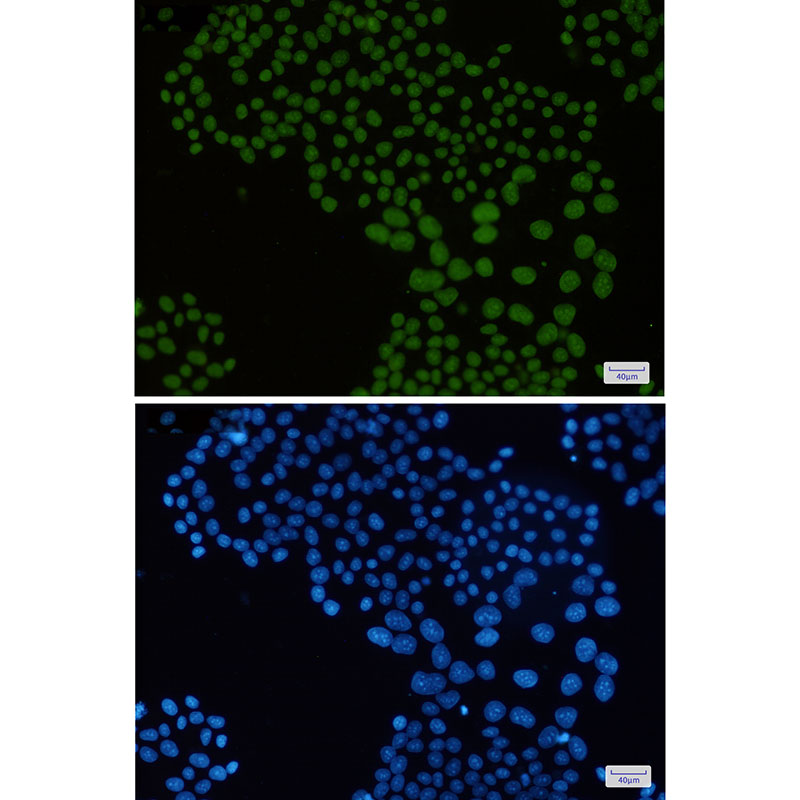

Anti-Macro H2A.1 antibody [R04-8E5] (STJA0034538)
SPECIFICATIONS
ClonalityMonoclonal
HostRabbit
ConjugationUnconjugated
IsotypeIgG
ImmunogenA synthetic peptide of human macroH2A.1
General Information
| Short Description | Rabbit monoclonal anti-Macro H2A.1 for use in WB, ICC and IF in Mouse and Rat samples. Datasheet included with dilution recommendations, and related reagents. |
| Applications | WB/ICC/IF |
| Host | Rabbit |
| Reactivity | Mouse/Rat |
| Note | STRICTLY FOR FURTHER SCIENTIFIC RESEARCH USE ONLY (RUO). MUST NOT TO BE USED IN DIAGNOSTIC OR THERAPEUTIC APPLICATIONS. |
Product Properties
| Clonality | Monoclonal |
| Clone ID | R04-8E5 |
| Isotype | IgG |
| Conjugation | Unconjugated |
| Concentration | 0.3 mg/mL |
| Purification | Affinity Purified |
| Dilution Range | WB 1:500-1:1000IF 1:50-1:200 |
| Formulation | 50mM Tris-Glycine (pH 7.4) , 0.15M NaCl, 40% Glycerol, 0.01% Sodium azide and 0.05% BSA |
| Storage Instruction | Store at 4°C short term. Aliquot and store at-20°C long term. Avoid freeze/thaw cycles. |
Target Information
| Gene Symbol | MACROH2A1 |
| Gene ID | 9555 |
| Uniprot ID | H2AY_HUMAN |
| Immunogen | A synthetic peptide of human macroH2A.1 |
Additional Info
| Tissue Specificity | Widely expressed. |
| Post Translational Modifications | Monoubiquitinated at either Lys-116 or Lys-117. May also be polyubiquitinated. Ubiquitination is mediated by the CUL3/SPOP E3 complex and does not promote proteasomal degradation. Instead, it is required for enrichment in inactive X chromosome chromatin. |
| Function | Variant histone H2A which replaces conventional H2A in a subset of nucleosomes where it represses transcription. Nucleosomes wrap and compact DNA into chromatin, limiting DNA accessibility to the cellular machineries which require DNA as a template. Histones thereby play a central role in transcription regulation, DNA repair, DNA replication and chromosomal stability. DNA accessibility is regulated via a complex set of post-translational modifications of histones, also called histone code, and nucleosome remodeling. Involved in stable X chromosome inactivation. Inhibits the binding of transcription factors, including NF-kappa-B, and interferes with the activity of remodeling SWI/SNF complexes. Inhibits histone acetylation by EP300 and recruits class I HDACs, which induces a hypoacetylated state of chromatin. Isoform 1: Isoform that specifically binds poly-ADP-ribose and O-acetyl-ADP-ribose and plays a key role in NAD(+) metabolism. Able to bind to the ends of poly-ADP-ribose chains created by PARP1 and cap them. This prevents PARP1 from further addition of ADP-ribose and thus limits the consumption of nuclear NAD(+), allowing the cell to maintain proper NAD(+) levels in both the nucleus and the mitochondria to promote proper mitochondrial respiration. Increases the expression of genes involved in redox metabolism, including SOD3. Isoform 2: In contrast to isoform 1, does not bind poly-ADP-ribose. Represses SOD3 gene expression. |
| Protein Name | Core Histone Macro-H2a.1Histone Macroh2a1Mh2a1Histone H2a.yH2a/YMedulloblastoma Antigen Mu-Mb-50.205 |
| Database Links | |
| Cellular Localisation | NucleusChromosomeEnriched In Inactive X Chromosome Chromatin And In Senescence-Associated HeterochromatinRecruited To Dna Damage Sites In An Aplf-Dependent Manner |
| Alternative Antibody Names | Anti-Core Histone Macro-H2a.1 antibodyAnti-Histone Macroh2a1 antibodyAnti-Mh2a1 antibodyAnti-Histone H2a.y antibodyAnti-H2a/Y antibodyAnti-Medulloblastoma Antigen Mu-Mb-50.205 antibodyAnti-MACROH2A1 antibodyAnti-H2AFY antibody |
Information sourced from Uniprot.org