


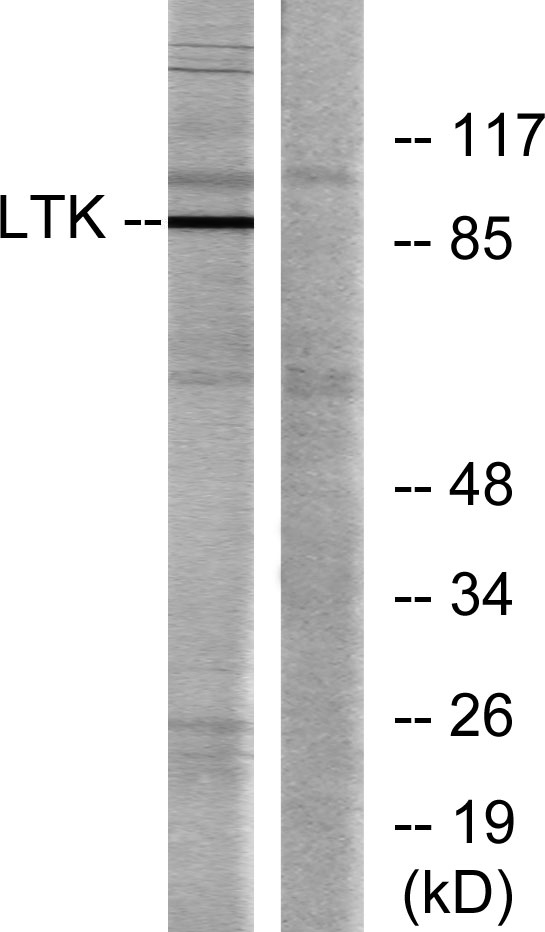
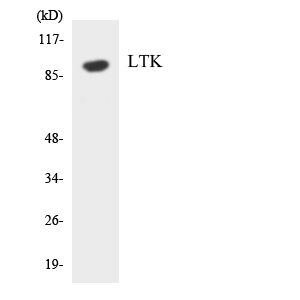
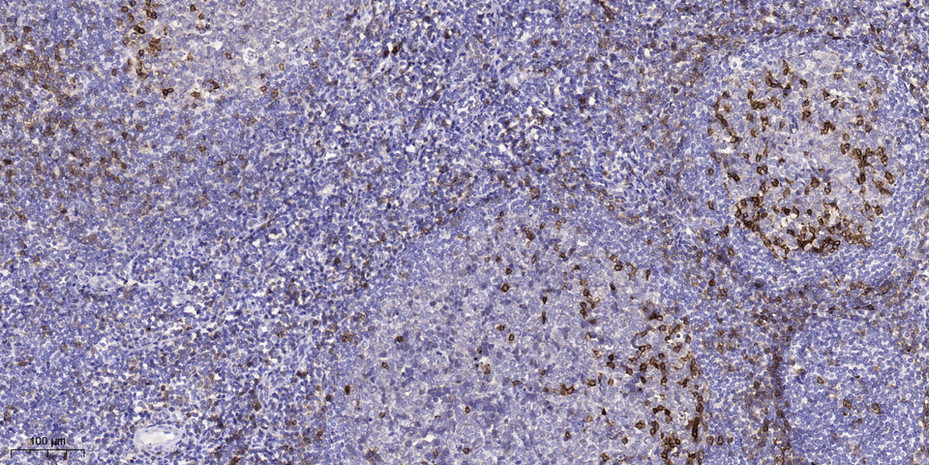

Anti-LTK antibody (206-255 aa) (STJ93963)
SPECIFICATIONS
ClonalityPolyclonal
HostRabbit
ConjugationUnconjugated
IsotypeIgG
ImmunogenThe antiserum was produced against synthesized peptide derived from the human LTK at the amino acid range 206-255
General Information
| Short Description | Rabbit polyclonal anti-Leukocyte tyrosine kinase receptor (206-255 aa) for use in WB, IHC, IF and ELISA in Human and Mouse samples. Datasheet included with dilution recommendations, and related reagents. |
| Applications | WB/IHC/IF/ELISA |
| Host | Rabbit |
| Reactivity | Human/Mouse |
| Note | STRICTLY FOR FURTHER SCIENTIFIC RESEARCH USE ONLY (RUO). MUST NOT TO BE USED IN DIAGNOSTIC OR THERAPEUTIC APPLICATIONS. |
Product Properties
| Clonality | Polyclonal |
| Isotype | IgG |
| Conjugation | Unconjugated |
| Concentration | 1 mg/mL |
| Purification | The antibody was affinity-purified from rabbit antiserum by affinity-chromatography using epitope-specific immunogen. |
| Dilution Range | WB 1:500-1:2000IHC 1:100-1:300IF 1:200-1:1000ELISA 1:5000 |
| Formulation | Liquid in PBS containing 50% Glycerol, 0.5% BSA and 0.02% Sodium Azide. |
| Storage Instruction | Store at-20°C for up to 1 year from the date of receipt, and avoid repeat freeze-thaw cycles. |
Target Information
| Gene Symbol | LTK |
| Gene ID | 4058 |
| Uniprot ID | LTK_HUMAN |
| Immunogen | The antiserum was produced against synthesized peptide derived from the human LTK at the amino acid range 206-255 |
| Immunogen Region | 206-255 aa |
| Specificity | LTK Polyclonal Antibody detects endogenous levels of LTK protein. |
Additional Info
| Post Translational Modifications | Phosphorylated at tyrosine residues by autocatalysis, which activates kinase activity. |
| Function | Receptor with a tyrosine-protein kinase activity. Following activation by ALKAL1 or ALKAL2 ligands at the cell surface, transduces an extracellular signal into an intracellular response. Ligand-binding to the extracellular domain induces tyrosine kinase activation, leading to activation of the mitogen-activated protein kinase (MAPK) pathway. Phosphorylates almost exclusively at the first tyrosine of the Y-x-x-x-Y-Y motif. The exact function of this protein is not known.studies with chimeric proteins demonstrate its ability to promote growth and specifically neurite outgrowth, and cell survival. Involved in regulation of the secretory pathway involving endoplasmic reticulum (ER) export sites (ERESs) and ER to Golgi transport. |
| Protein Name | Leukocyte Tyrosine Kinase ReceptorProtein Tyrosine Kinase 1 |
| Database Links | Reactome: R-HSA-9842663 |
| Cellular Localisation | Cell MembraneSingle-Pass Type I Membrane Protein |
| Alternative Antibody Names | Anti-Leukocyte Tyrosine Kinase Receptor antibodyAnti-Protein Tyrosine Kinase 1 antibodyAnti-LTK antibodyAnti-TYK1 antibody |
Information sourced from Uniprot.org