


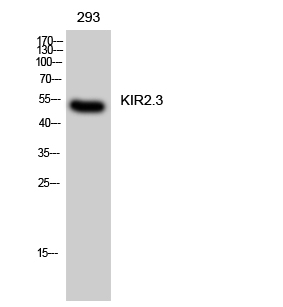
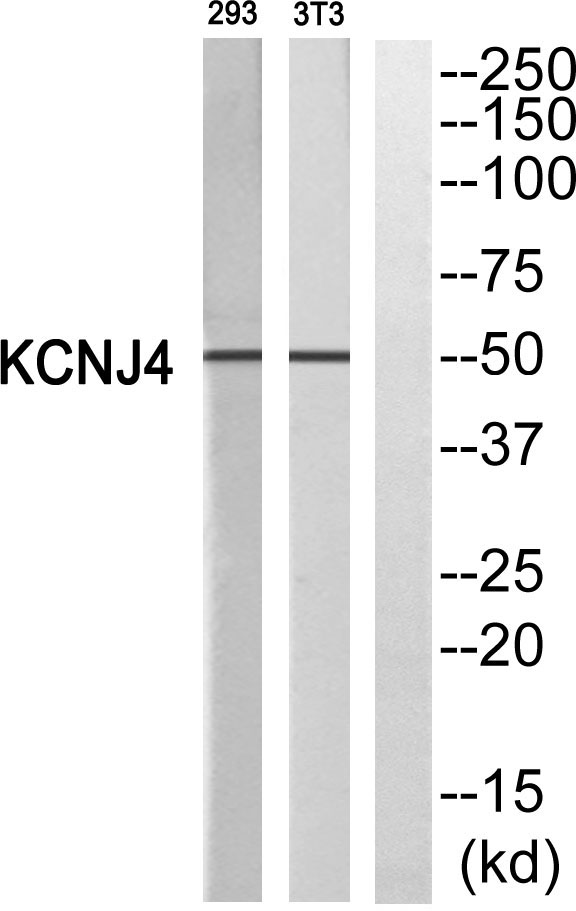
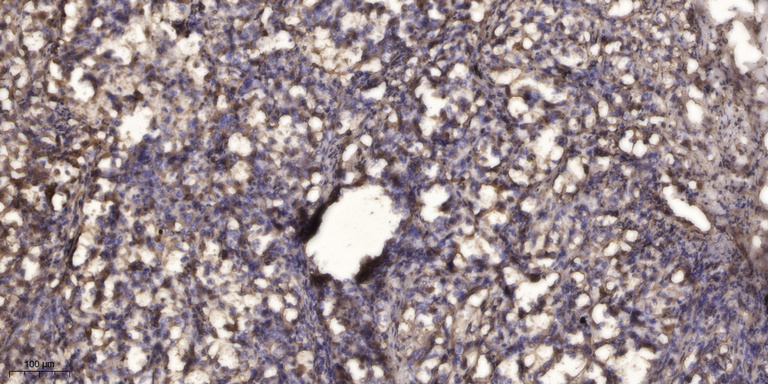

Anti-KCNJ4 antibody (251-300 aa) (STJ93839)
SPECIFICATIONS
ClonalityPolyclonal
HostRabbit
ConjugationUnconjugated
IsotypeIgG
ImmunogenThe antiserum was produced against synthesized peptide derived from the human KCNJ4 at the amino acid range 251-300
General Information
| Short Description | Rabbit polyclonal anti-Inward rectifier potassium channel 4 channel Kir2.3 (251-300 aa) for use in WB, ELISA and IHC in Human, Mouse and Rat samples. Datasheet included with dilution recommendations, and related reagents. |
| Applications | WB/ELISA/IHC |
| Host | Rabbit |
| Reactivity | Human/Mouse/Rat |
| Note | STRICTLY FOR FURTHER SCIENTIFIC RESEARCH USE ONLY (RUO). MUST NOT TO BE USED IN DIAGNOSTIC OR THERAPEUTIC APPLICATIONS. |
Product Properties
| Clonality | Polyclonal |
| Isotype | IgG |
| Conjugation | Unconjugated |
| Concentration | 1 mg/mL |
| Purification | The antibody was affinity-purified from rabbit antiserum by affinity-chromatography using epitope-specific immunogen. |
| Dilution Range | WB 1:500-2000IHC-P 1:50-300ELISA 2000-20000 |
| Formulation | Liquid in PBS containing 50% Glycerol, 0.5% BSA and 0.02% Sodium Azide. |
| Storage Instruction | Store at-20°C for up to 1 year from the date of receipt, and avoid repeat freeze-thaw cycles. |
Target Information
| Gene Symbol | KCNJ4 |
| Gene ID | 3761 |
| Uniprot ID | KCNJ4_HUMAN |
| Immunogen | The antiserum was produced against synthesized peptide derived from the human KCNJ4 at the amino acid range 251-300 |
| Immunogen Region | 251-300 aa |
| Specificity | KIR2.3 Polyclonal Antibody detects endogenous levels of KIR2.3 protein. |
Additional Info
| Function | Inward rectifier potassium channels are characterized by a greater tendency to allow potassium to flow into the cell rather than out of it. Their voltage dependence is regulated by the concentration of extracellular potassium.as external potassium is raised, the voltage range of the channel opening shifts to more positive voltages. The inward rectification is mainly due to the blockage of outward current by internal magnesium. Can be blocked by extracellular barium and cesium. |
| Protein Name | Inward Rectifier Potassium Channel 4Hirk2Hrk1Hippocampal Inward RectifierHirInward Rectifier K(+ Channel Kir2.3Irk-3Potassium Channel - Inwardly Rectifying Subfamily J Member 4 |
| Database Links | Reactome: R-HSA-1296041Reactome: R-HSA-1296053Reactome: R-HSA-5576886Reactome: R-HSA-997272 |
| Cellular Localisation | Cell MembraneMulti-Pass Membrane ProteinPostsynaptic Cell MembraneCytoplasmic Vesicle MembraneTax1bp3 Binding Promotes Dissociation Of Kcnj4 From Lin7 Famaly Members And Kcnj4 Internalization |
| Alternative Antibody Names | Anti-Inward Rectifier Potassium Channel 4 antibodyAnti-Hirk2 antibodyAnti-Hrk1 antibodyAnti-Hippocampal Inward Rectifier antibodyAnti-Hir antibodyAnti-Inward Rectifier K(+ Channel Kir2.3 antibodyAnti-Irk-3 antibodyAnti-Potassium Channel - Inwardly Rectifying Subfamily J Member 4 antibodyAnti-KCNJ4 antibodyAnti-IRK3 antibody |
Information sourced from Uniprot.org