

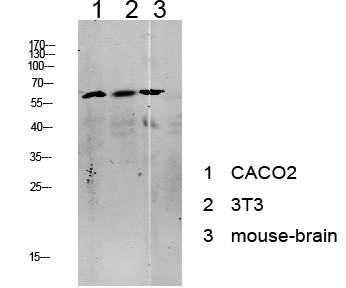
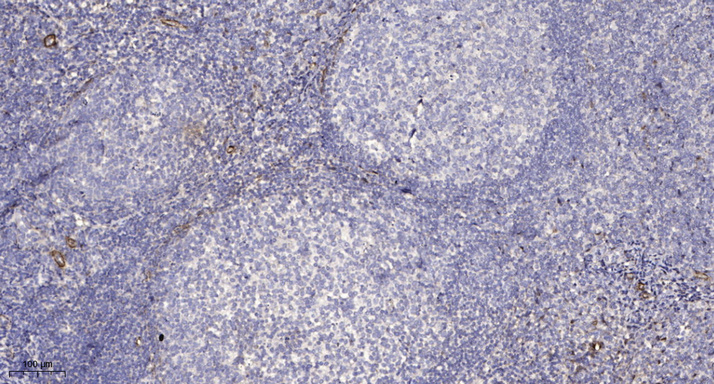

Anti-KAT5 antibody (STJ99631)
SPECIFICATIONS
ClonalityPolyclonal
HostRabbit
ConjugationUnconjugated
IsotypeIgG
ImmunogenSynthesized peptide derived from the human Tip60 Polyclonal
General Information
| Short Description | Rabbit polyclonal anti-Histone acetyltransferase KAT5-interacting protein for use in WB and IHC in Human, Mouse and Rat samples. Datasheet included with dilution recommendations, and related reagents. |
| Applications | WB/IHC |
| Host | Rabbit |
| Reactivity | Human/Mouse/Rat |
| Note | STRICTLY FOR FURTHER SCIENTIFIC RESEARCH USE ONLY (RUO). MUST NOT TO BE USED IN DIAGNOSTIC OR THERAPEUTIC APPLICATIONS. |
Product Properties
| Clonality | Polyclonal |
| Isotype | IgG |
| Conjugation | Unconjugated |
| Concentration | 1 mg/mL |
| Purification | The antibody was affinity-purified from rabbit antiserum by affinity-chromatography using epitope-specific immunogen. |
| Dilution Range | WB 1:500-2000IHC-P 1:50-300 |
| Formulation | Liquid in PBS containing 50% Glycerol, 0.5% BSA and 0.02% Sodium Azide. |
| Storage Instruction | Store at-20°C for up to 1 year from the date of receipt, and avoid repeat freeze-thaw cycles. |
Target Information
| Gene Symbol | KAT5 |
| Gene ID | 10524 |
| Uniprot ID | KAT5_HUMAN |
| Immunogen | Synthesized peptide derived from the human Tip60 Polyclonal |
| Specificity | This antibody detects endogenous levels of Tip60. |
Additional Info
| Function | Catalytic subunit of the NuA4 histone acetyltransferase complex, a multiprotein complex involved in transcriptional activation of select genes principally by acetylation of nucleosomal histones H2A and H4. Histone acetylation alters nucleosome-DNA interactions and promotes interaction of the modified histones with other proteins which positively regulate transcription. The NuA4 histone acetyltransferase complex is required for the activation of transcriptional programs associated with proto-oncogene mediated growth induction, tumor suppressor mediated growth arrest and replicative senescence, apoptosis, and DNA repair. The NuA4 complex plays a direct role in repair of DNA double-strand breaks (DSBs) by promoting homologous recombination (HR): the complex inhibits TP53BP1 binding to chromatin via MBTD1, which recognizes and binds histone H4 trimethylated at 'Lys-20' (H4K20me), and KAT5 that catalyzes acetylation of 'Lys-15' of histone H2A (H2AK15ac), thereby blocking the ubiquitination mark required for TP53BP1 localization at DNA breaks. Also involved in DSB repair by mediating acetylation of 'Lys-5' of histone H2AX (H2AXK5ac), promoting NBN/NBS1 assembly at the sites of DNA damage. The NuA4 complex plays a key role in hematopoietic stem cell maintenance and is required to maintain acetylated H2A.Z/H2AZ1 at MYC target genes. The NuA4 complex is also required for spermatid development by promoting acetylation of histones: histone hyperacetylation is required for histone replacement during the transition from round to elongating spermatids. Component of a SWR1-like complex that specifically mediates the removal of histone H2A.Z/H2AZ1 from the nucleosome. Also acetylates non-histone proteins, such as BMAL1, ATM, AURKB, CHKA, CGAS, ERCC4/XPF, LPIN1, TP53/p53, NDC80/HEC1, NR1D2, RAN, SOX4, FOXP3, SQSTM1, ULK1 and RUBCNL/Pacer. Directly acetylates and activates ATM. Promotes nucleotide excision repair (NER) by mediating acetylation of ERCC4/XPF, thereby promoting formation of the ERCC4-ERCC1 complex. Relieves NR1D2-mediated inhibition of APOC3 expression by acetylating NR1D2. Acts as a regulator of regulatory T-cells (Treg) by catalyzing FOXP3 acetylation, thereby promoting FOXP3 transcriptional repressor activity. Involved in skeletal myoblast differentiation by mediating acetylation of SOX4. Catalyzes acetylation of APBB1/FE65, increasing its transcription activator activity. Promotes transcription elongation during the activation phase of the circadian cycle by catalyzing acetylation of BMAL1, promoting elongation of circadian transcripts. Together with GSK3 (GSK3A or GSK3B), acts as a regulator of autophagy: phosphorylated at Ser-86 by GSK3 under starvation conditions, leading to activate acetyltransferase activity and promote acetylation of key autophagy regulators, such as ULK1 and RUBCNL/Pacer. Acts as a regulator of the cGAS-STING innate antiviral response by catalyzing acetylation the N-terminus of CGAS, thereby promoting CGAS DNA-binding and activation. Also regulates lipid metabolism by mediating acetylation of CHKA or LPIN1. Promotes lipolysis of lipid droplets following glucose deprivation by mediating acetylation of isoform 1 of CHKA, thereby promoting monomerization of CHKA and its conversion into a tyrosine-protein kinase. Acts as a regulator of fatty-acid-induced triacylglycerol synthesis by catalyzing acetylation of LPIN1, thereby promoting the synthesis of diacylglycerol. In addition to protein acetyltransferase, can use different acyl-CoA substrates, such as (2E)-butenoyl-CoA (crotonyl-CoA), S-lactoyl-CoA (lactyl-CoA) and 2-hydroxyisobutanoyl-CoA (2-hydroxyisobutyryl-CoA), and is able to mediate protein crotonylation, lactylation and 2-hydroxyisobutyrylation, respectively. Acts as a key regulator of chromosome segregation and kinetochore-microtubule attachment during mitosis by mediating acetylation or crotonylation of target proteins. Catalyzes acetylation of AURKB at kinetochores, increasing AURKB activity and promoting accurate chromosome segregation in mitosis. Acetylates RAN during mitosis, promoting microtubule assembly at mitotic chromosomes. Acetylates NDC80/HEC1 during mitosis, promoting robust kinetochore-microtubule attachment. Catalyzes crotonylation of MAPRE1/EB1, thereby ensuring accurate spindle positioning in mitosis. Catalyzes lactylation of NBN/NBS1 in response to DNA damage, thereby promoting DNA double-strand breaks (DSBs) via homologous recombination (HR). (Microbial infection) Catalyzes the acetylation of flavivirus NS3 protein to modulate their RNA-binding and -unwinding activities leading to facilitate viral replication. |
| Protein Name | Histone Acetyltransferase Kat560 Kda Tat-Interactive ProteinTip60Histone Acetyltransferase HtatipHiv-1 Tat Interactive ProteinLysine Acetyltransferase 5Protein 2-Hydroxyisobutyryltransferase Kat5Protein Acetyltransferase Kat5Protein Crotonyltransferase Kat5Protein Lactyltransferase Kat5Cpla(2-Interacting Protein |
| Database Links | Reactome: R-HSA-201722Reactome: R-HSA-2559586Reactome: R-HSA-3214847Reactome: R-HSA-5685938Reactome: R-HSA-5685942Reactome: R-HSA-5693548Reactome: R-HSA-5693554Reactome: R-HSA-5693565Reactome: R-HSA-5693568Reactome: R-HSA-5693571Reactome: R-HSA-5693579Reactome: R-HSA-5693607Reactome: R-HSA-5693616Reactome: R-HSA-6804756Reactome: R-HSA-69473Reactome: R-HSA-9018519Reactome: R-HSA-9701192Reactome: R-HSA-9704331Reactome: R-HSA-9704646Reactome: R-HSA-9709570Reactome: R-HSA-9709603Reactome: R-HSA-9733709 |
| Cellular Localisation | NucleusChromosomeCytoplasmCentromereKinetochoreCytoskeletonSpindle PoleNucleolusPerinuclear RegionUpon Stimulation With Edn1It Is Exported From The Nucleus To The Perinuclear Region And Uv Irradiation Induces Translocation Into Punctuate Subnuclear Structures Named Nuclear BodiesTransiently Localizes To Kinetochores In Early MitosisLocalizes To Spindle Poles When Chromosomes Align During MetaphaseLocalizes In The Cytoplasm And Nucleus Of Round Spermatids(Microbial Infection) Relocalizes From The Nucleus To Zika Virus Replication Complexes In The Cytoplasm |
| Alternative Antibody Names | Anti-Histone Acetyltransferase Kat5 antibodyAnti-60 Kda Tat-Interactive Protein antibodyAnti-Tip60 antibodyAnti-Histone Acetyltransferase Htatip antibodyAnti-Hiv-1 Tat Interactive Protein antibodyAnti-Lysine Acetyltransferase 5 antibodyAnti-Protein 2-Hydroxyisobutyryltransferase Kat5 antibodyAnti-Protein Acetyltransferase Kat5 antibodyAnti-Protein Crotonyltransferase Kat5 antibodyAnti-Protein Lactyltransferase Kat5 antibodyAnti-Cpla(2-Interacting Protein antibodyAnti-KAT5 antibodyAnti-HTATIP antibodyAnti-TIP60 antibody |
Information sourced from Uniprot.org